NICHOLAS DUVERNAY BRINGS HEART, HUMOR, AND HUNGER TO NOT SUITABLE FOR WORK
INTERVIEW BY IRVIN RIVERA

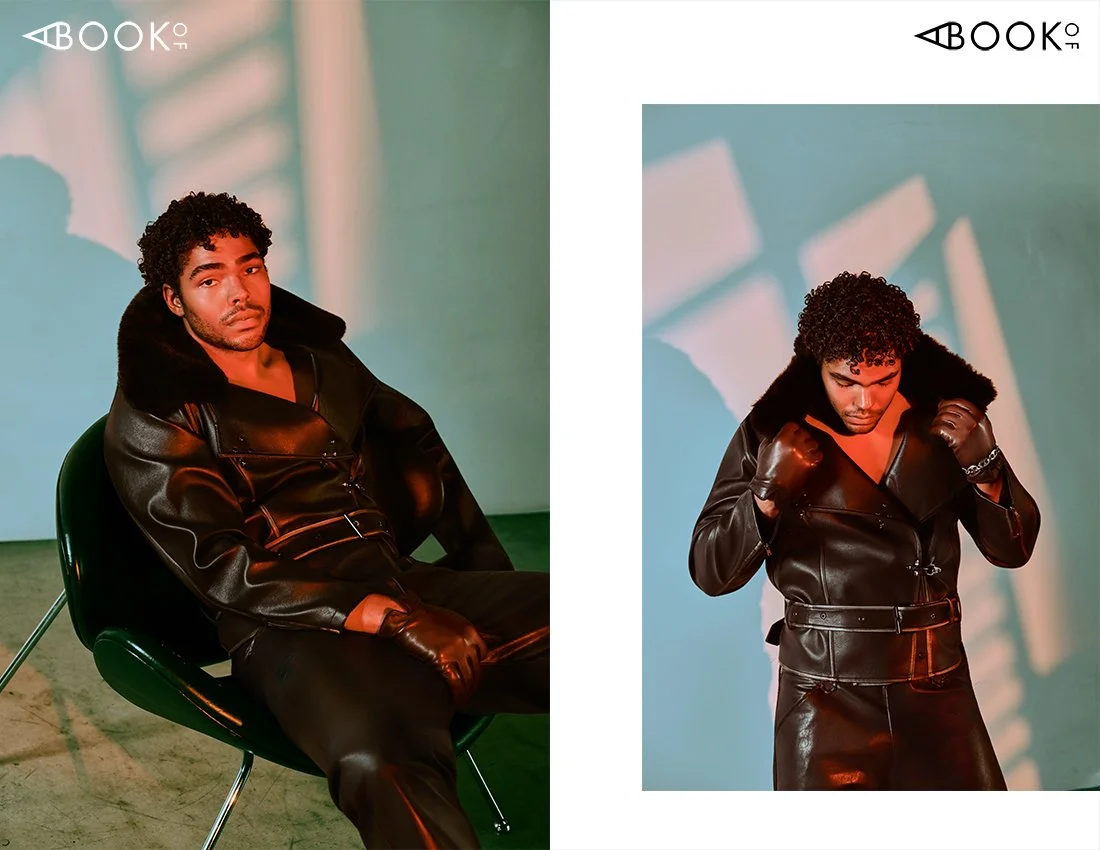
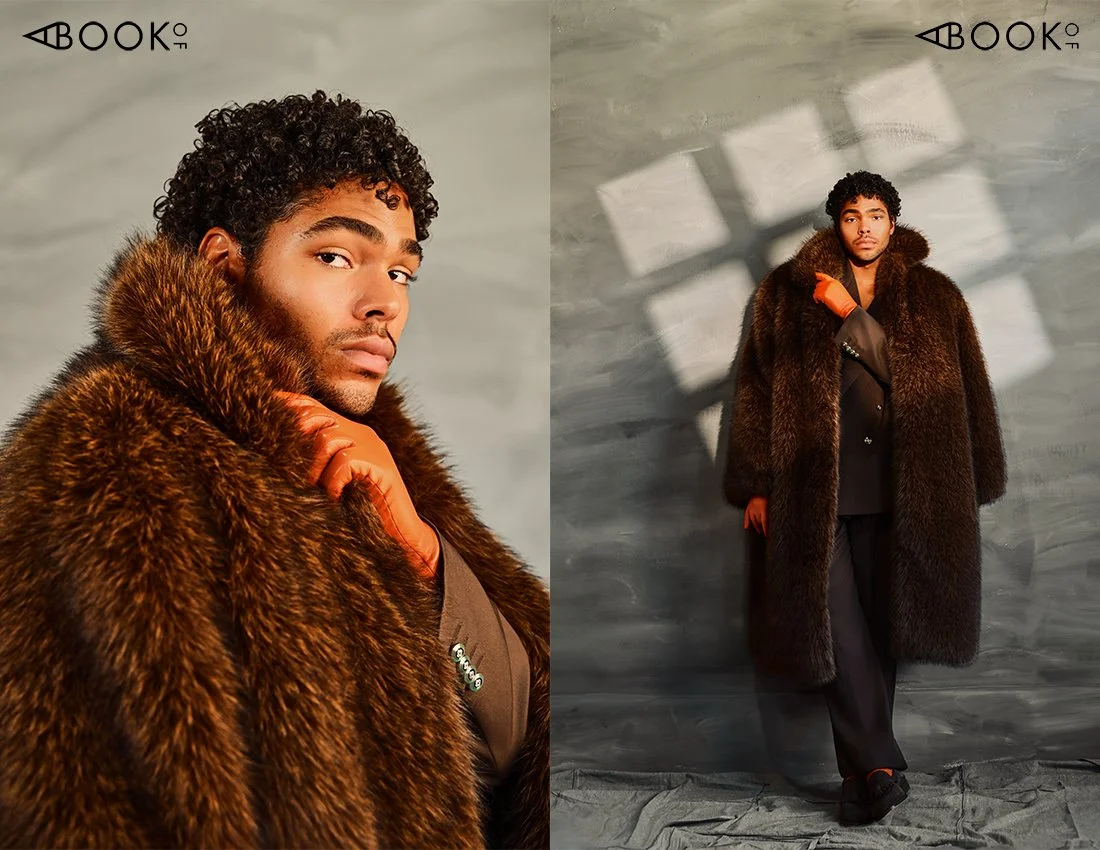
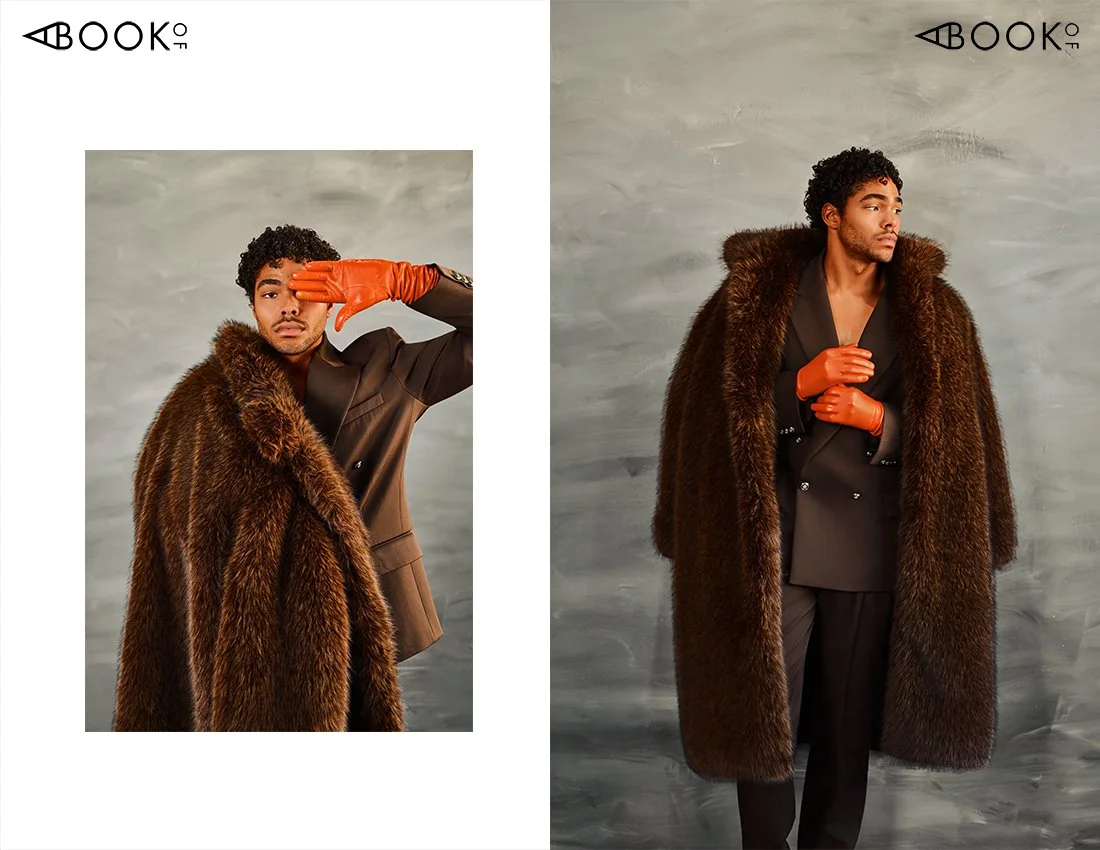
PHOTOGRAPHER: IRVIN RIVERA, STYLING: AVO YERMAGYAN, GROOMING: ARAXI LINDSEY, DIGITECH: PHIL LIMPRASERTWONG, LIGHT TECH: ANDREW LOPEZ, LOCTAION: STUDIO METROPOLIS LA
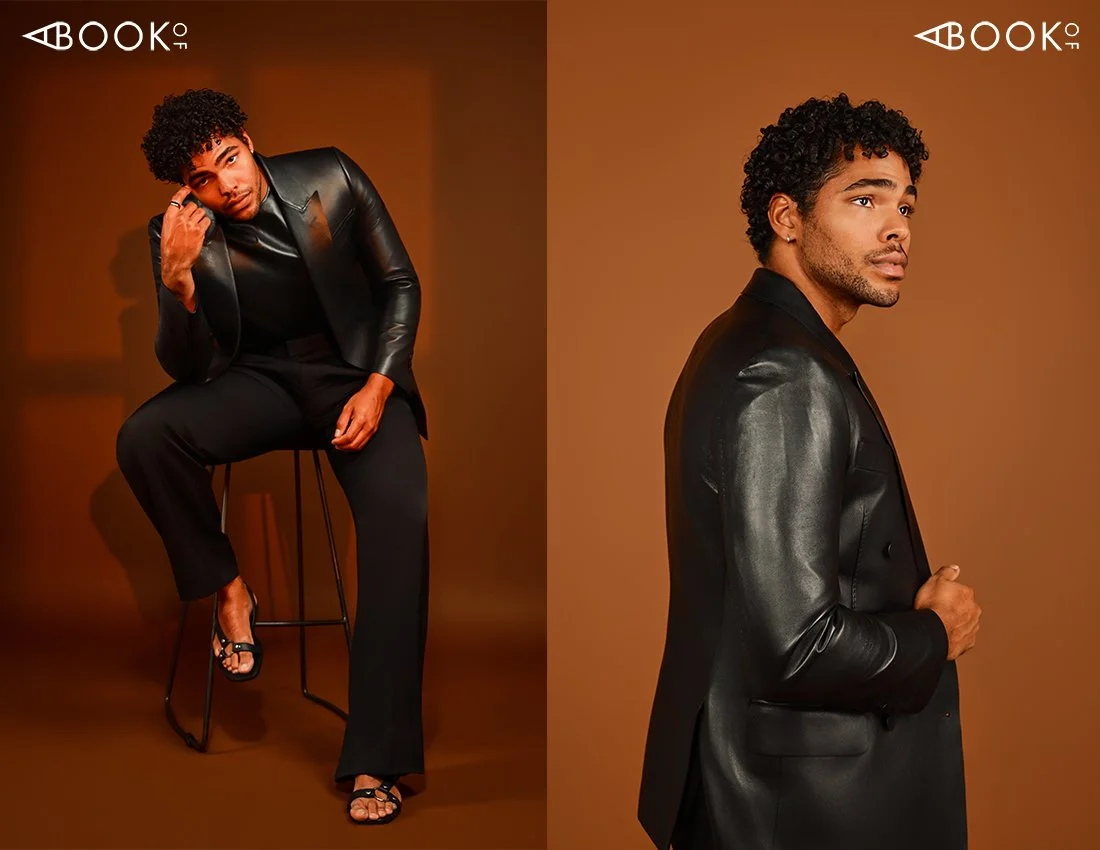
NICHOLAS DUVERNAY’s story is about choosing the truest version of yourself, even when the safer life is easier to explain. Before he became Kel Washington in Mindy Kaling’s Hulu comedy Not Suitable For Work, starring alongside Ella Hunt, Avantika, Will Angus, Jack Martin, and Jay Ellis, Duvernay was a kid in the South carrying two different dreams in the same body: the helmeted certainty of football and the open nerve of acting. One demanded toughness, the other asked for tenderness. Somewhere between the locker room, acting class, injuries, odd jobs, faith, and a one-way move to Los Angeles at 19, he began to understand that the real performance was not becoming someone else, but finally refusing to leave himself out of the story.
In Not Suitable For Work, Kel is a med student, aspiring actor, substitute teacher, romantic, worrier, and work-in-progress, which makes him less of a sitcom archetype and more of a mirror held up to every twenty-something who has ever tried to look confident while quietly asking, “Do I really want this?” Duvernay plays him with humor, but never mockery, finding poetry in the uncomfortable parts: the auditions, the loneliness, the family sacrifice, the pressure to be a certain kind of man, the comedy of trying to grow up before the world gives you permission. What emerges is a conversation about ambition without armor, masculinity without performance, and persistence as both a survival tool and a creative engine. As Duvernay puts it, “Strength isn’t about hiding parts of yourself. It’s about having the courage to be fully seen.”

You have spoken before about being raised primarily in Georgia, starting your acting path in Atlanta, and learning early what it feels like to move between cultures. In Not Suitable for Work, Kel is also moving between worlds: medicine, acting, friendship, pressure, and self-invention. How did the place that raised you teach you to walk into different rooms without shrinking yourself to fit them?
Growing up in the South, the dream for a lot of kids is to become an athlete. For me, that dream was the NFL. But at the same time, I always wanted to be an actor. I started acting when I was 13, so my teenage years were spent moving between two very different worlds.
Football rewarded toughness, confidence, and performance. Acting required vulnerability, sensitivity, and emotional honesty; qualities that weren’t always celebrated in the locker room. Most weekdays, I’d leave football practice and head straight to acting class, working just as hard at both and trying to figure out where I fit.
After a series of injuries, it became clear that football wasn’t going to be my path. That’s when I decided to put all my stake into acting. I obviously got teased a little by teammates, but honestly, most of them were supportive and would celebrate if they saw me in a local commercial or something
For a long time, I wondered whether I’d regret walking away from sports. Eventually, I realized the bigger regret would have been staying committed to something my heart was no longer in simply because it felt safer or more accepted. I’ve come to believe that if you’re not trying to be the most authentic version of yourself, you’re doing yourself a disservice. If you spend your life chasing what’s expected of you, sooner or later you realize you’ve been living for everyone else and leaving yourself out of the equation.
I never felt like I was good enough to make it in football, and because of that, acting became the place where I wanted to prove to myself what was possible. I was willing to be uncomfortable, to keep showing up, and to trust that if I stayed committed long enough, I’d come out a working actor on the other side.
Kel is not chasing acting from a polished, romantic distance. He is in the awkward middle of it, where you are still learning which auditions are real, which doors are locked, and which dreams cost more than people admit. How did you build him from your own memories of starting out without turning his struggle into a joke?
It honestly wasn’t very difficult for me to imagine playing a struggling actor because I’ve been one for most of my life. A lot of Kel came from my own experiences and from reliving those moments that feel almost surreal when you’re trying to make acting a full-time career.
You’re constantly confronting the reality of what it actually takes to pursue this dream: the uncertainty, the rejection, the sacrifices, and all the hoops you have to jump through just to stay in the game.
At the same time, there is humor in it. Every actor has found themselves in situations so ridiculous that all you can do is laugh. I think that’s what makes Kel relatable. He’s experiencing those moments that make you stop and ask yourself, “Why am I doing this?” or “Do I really want this?” Most actors have asked themselves those questions at some point. The struggle is real, but sometimes the only way through it is to find the humor in it.
Mindy Kaling has described this show as being rooted in that painful early-adult moment when ambition is bigger than access. You have lived your own version of that, from early jobs to waiting for momentum to finally meet preparation. How did you tap into the specific frustration of wanting a life before the life is ready to open up for you?
I think that’s true of pursuing any dream. You start because you believe life can be bigger than it is right now, and you hope that if you work hard enough, you’ll eventually see progress and your circumstances begin to change.
For me, it always came back to faith. Faith that God has a plan and that my responsibility is simply to do my best with whatever opportunities are in front of me.
I dreamed about moving to Los Angeles for years, and when I finally moved at 19, it was with the hope that my dreams might actually become reality. My dad helped me when I didn't have my rent money; he paid to ship my car to Los Angeles. I was willing to work long hours, take odd jobs, have very little money, and start over socially. I accepted all of that as the price of admission. Chasing a dream isn’t always glamorous. A lot of the time it’s uncomfortable, uncertain, and lonely. But I believed it would be worth it and still do. I definitely feel like I missed a lot of time away from my family. I’m desperately trying to find a free moment to go home and spend time with my family without their support. My dream wouldn’t have been possible.
Kel finds part of his confidence in an unexpected place: a classroom, Jane Austen, and a group of young women who immediately see through him. How did playing those scenes shift your understanding of Kel, especially as a man who has to earn authority by listening first?
I loved working with Alice, Alyssa, and Hampton. Those classroom scenes were some of my favorite days on set.
At first, everything the girls said completely threw Kel off his game. They challenged him in ways he wasn’t expecting and made him even more uncomfortable. But then I started thinking about where Kel comes from. He grew up surrounded by strong women—his mother and his sister, played by April Matthis and Sydney Cole Alexander.
I imagined a household where respect was earned, not given. Those young women reminded Kel of that. They reminded him that just like his acting career wasn’t going to be handed to him, neither was authority in the classroom. He had to earn it.
Once he stopped trying to prove himself and started listening, he found purpose.
One of the freshest things about Not Suitable for Work is that the male friendship is not built on cruelty, posturing, or the usual bro-comedy shorthand. How did you, Will Angus, and Jack Martin create a friendship that still feels funny, messy, and flawed, but also emotionally safe?
Creating that relationship with Jack and Will was one of the easiest things I’ve ever done. They’re both incredibly open people who wear their hearts on their sleeves, and I tend to be the same way.
When you meet people who are willing to be honest about what they’re feeling, it’s easy to break through those initial barriers. We talked openly about our fears, our excitement, and the pressure we felt as we took on these roles. That honesty brought us close very quickly.
I think friendships like these are important to show on television. We often see male friendships portrayed as constant digging at each other, and that’s definitely part of it, but what’s often missing is the love underneath. Men do care deeply about each other. We do open up. We do get vulnerable. I love that this show allows those things to exist alongside the humor.
You have talked about growing up with long curly hair and learning that another person’s idea of masculinity does not get to define you. With Kel, how did you want to show a young man who is ambitious and anxious, romantic and insecure, funny and soft, without making any of those things feel like contradictions?
Because they’re not contradictions. I think all of us are those things at different times, and often all at once.
Human beings are full of contradictions and conflicting emotions. That’s part of what makes us human. Sometimes our feelings don’t make sense. Sometimes we’re confident AND insecure at the same time
To me, that’s especially true in your twenties. You’re trying to figure out who you are while navigating relationships, work, ambition, and all the pressure that comes with growing up. Kel embodies that uncertainty. He’s trying to hold all of those emotions at once, and I think that’s something a lot of people will recognize in themselves.
There is a bigger cultural conversation inside this show about young men, pressure, ambition, and what it means to grow up without hiding behind performance. How has your own relationship with masculinity changed from Georgia to Hollywood, and what parts of Kel allowed you to challenge an old version of yourself?
Growing up in Atlanta, there was definitely this idea that you shouldn’t smile too much because it made you look soft. Being guarded, being tough, and never showing vulnerability was often seen as masculine.
The funny thing is, that was the complete opposite of how my parents raised me.
When you’re young, you spend a lot of time trying to fit whatever version of masculinity you think people expect. You think people will like you more if you talk a certain way, dress a certain way, or carry yourself a certain way. But eventually you realize that performing for other people’s expectations only pulls you further away from yourself.
For a long time, I felt like I didn’t fit in, and if I’m being honest, there were years when that made me resent where I grew up. I felt different from a lot of the people around me, and because of that, I convinced myself that if I could just get to California, where artists were accepted and creativity was celebrated, I would finally feel a sense of belonging.
What I eventually learned is that belonging isn’t something a place gives you. It comes from accepting yourself. Moving to Los Angeles gave me the freedom to explore who I was, but the real work was learning to stop measuring myself against other people’s expectations.
And I’d be lying if I said those thoughts never come up anymore. The world is loud. There are always voices telling you who you should be, what a man should look like, or how a man should behave. Sometimes it can be hard to separate all of that from your own truth.
Sensitivity and empathy are the very things that made me feel out of place in Atlanta, and they are the very thing that helps me connect with stories today.
That’s one of the things I loved about Kel. He isn’t pretending to have it all figured out. He’s ambitious and insecure, confident and vulnerable, sometimes all at once. Playing him reminded me that strength isn’t about hiding parts of yourself. It’s about having the courage to be fully seen.
You have already had physically and emotionally demanding work, especially with The White Lotus, where you had to carry panic, secrecy, family stakes, and survival inside a very precise world. On Not Suitable for Work, what was the hardest part of creating Kel in a comedy ensemble, and how did that challenge sharpen you as an actor?
What’s fun about comedy is that all of those stakes still exist. The panic, the secrecy, the family dynamics, the survival instincts they’re all real. You’re just looking at them through a different lens.
The biggest challenge for me was the pace. Comedy moves fast. The timing has to be precise. You don’t have the luxury of sitting in a moment for ten or fifteen seconds. Everything keeps moving.
You’re constantly riding this roller coaster of emotions, and you have to stay present enough to hit every turn. It taught me a lot about rhythm, timing, and trusting my instincts.

You once shared that your father told you, “Persistence overcomes resistance.” When you look at the current chapter of your career, with The White Lotus, Not Suitable for Work, and Reminders of Him all expanding the frame around you, how has that lesson changed from something you survived by into something you now create with?
Honestly, it’s still something I survive by.
That lesson has carried me through some difficult seasons where quitting would’ve been easier. But I think persistence and creativity are connected. You don’t always feel inspired. You don’t always feel like creating. You don’t always feel like showing up. The key is to do it anyway. Do it tired, do it scared.
I think every day you put in the work, even when you don’t feel like it, you’re building something. Progress compounds. The effort you made yesterday still matters today, and today’s effort will matter tomorrow. That’s what my father’s words mean to me now: keep going and trust that the small steps are adding up..

New York is not just the setting of Not Suitable for Work. It becomes the thing pressing against these characters, seducing them, testing them, and sometimes embarrassing them into growth. How did filming in the city change your body language, your rhythm, or the way you understood Kel’s hunger?
New York definitely taught me to walk faster. I thought I already walked fast until I got there and realized I was still slowing people down!
The city moves with a real sense of urgency, and I think that energy naturally found its way into the show. Everything feels alive. Everything feels like it’s happening right now.
That rhythm helped me understand Kel’s hunger. New York doesn’t wait for anyone. If you stop moving, it feels like the city will leave you behind. There’s this constant pressure to keep pushing and keep chasing the thing you’re after.
If you were a book, what book would you be and why?
I’d probably be Hercules.
I’ve always loved that story because it’s about relentlessly pursuing greatness despite setbacks, criticism, and obstacles. But what resonates with me even more is that Hercules is ultimately willing to leave everything behind when he’s called toward something greater.
I really relate to that drive to achieve, while also staying open to wherever I'm being called to next.