KEILYN DURREL JONES ON MICHAEL, MASCULINITY, AND THE QUIET STRENGTH OF BILL BRAY
INTERVIEW BY IRVIN RIVERA
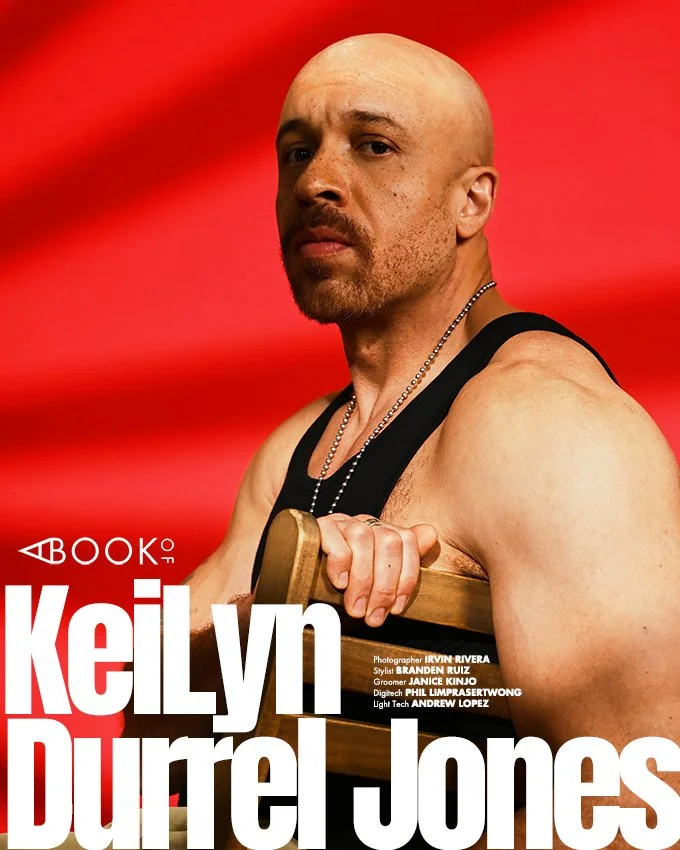
PHOTOGRAPHER: IRVIN RIVERA, STYLING: BRANDEN RUIZ, GROOMING: JANICE KINJO, DIGITECH: PHIL LIMPRASERTWONG, LIGHT TECH: ANDREW LOPEZ, LOCATION: STUDIO METROPOLIS
KEILYN DURREL JONES understands the power of the person standing slightly outside the spotlight. In Michael, Antoine Fuqua’s biographical drama starring Jaafar Jackson as Michael Jackson, alongside Colman Domingo, Nia Long, Miles Teller, and Juliano Krue Valdi, Jones steps into the role of Bill Bray, Michael’s longtime protector and one of the quietest yet most essential presences in the artist’s orbit. It is the kind of role that asks for restraint, not spectacle. Jones meets it with the patience of someone who came up through theater, where silence still has to breathe, stillness still has to work, and everybody onstage must remain alive even when no one is speaking.
That sense of active stillness runs through Jones’s work, from Succession and Better Call Saul to City on a Hill, The Other Two, and How to Die Alone. He has built a career playing men who understand pressure, proximity, loyalty, and the delicate art of holding power without needing to announce it. In conversation, Jones speaks about masculinity with the same clarity he brings to his characters: protective, tender, humorous, wounded, complicated, and deeply human. What emerges is a portrait of an actor who studies people, stories, movies, and himself with equal devotion. “I’m a hard worker with an artist’s soul,” he says, a line that feels less like a declaration and more like a promise.
You came out of theater, with UMBC and NYU as major parts of your training, and one of your early UMBC performances even required a very physical transformation onstage. How did that kind of stage discipline teach you how to make stillness feel active, especially when you are playing someone like Bill Bray, whose power is often quiet?
Acting on stage and on camera are very similar in many ways. One of the main differences is that on stage, the proverbial “camera” is always on you. By that I just mean that, in film, the camera tells the audience where to look, especially with different-sized frames: wide shot, medium shot, close up, extreme close-ups, cut-aways, cut tos, etc. In a theatre, the audience can see the whole stage at all times. Sure, you can guide them where to look with lighting and blocking, but you can’t control where they place their attention. So, when you’re on stage in a scene with a lot of people and/ or moving parts, you have to remain actively a part of the world, even with no lines and “nothing to do.” It’s almost like meditation; remaining active and engaged even in stillness and silence.
Your career has moved through very different worlds, from Succession and Better Call Saul to City on a Hill, The Other Two, and How to Die Alone. How has playing men who live close to systems, power, work, pressure, and ambition taught you what to reveal and what to keep private on screen?
It’s the ones with access and proximity to power who have as much power, if not more so, than the figure who is the face of the power. We see that time and time again in the real world and in films. So when I’m playing someone who has proximity to power, all you're seeing is more disciplined, active stillness and the old actor's trick of having a secret. In any given scene on any given day, that “secret” may morph and evolve, may become more true or less, but it’s a way for me and my character to stay engaged and engaging. My job as an actor is to be interestED, not interestING, but the camera doesn’t lie - so if it’s engaging for me, the intent is that it will be interesting for the audience.
In How to Die Alone, Terrance carries a kind of warmth, humor, and accountability for Mel. In Michael, Bill Bray carries protection, loyalty, and permission for Michael to simply exist. How do you approach men whose strength is not about dominating a room, but about making someone else feel safe enough to be honest?
Maybe I’m just lucky because that’s not something I’m actively thinking about when I’m building a character or when I’m in a scene. In my day-to-day life, though, I do believe that those are qualities that maketh a man: uplifting others, cultivating safe and secure spaces, and encouraging healthy dialogue. I encourage the people in my own life, and I have many dear friends and mentors who pour into me in a similar way. So loyalty, encouragement, protection, security… these are principles I admire, appreciate, and try to practice on a day-to-day basis. So maybe I am lucky, because I get cast as men who embody and employ these qualities, and because I believe so deeply in those qualities, I can amplify and highlight them on screen.
One of the most fascinating things about Bill Bray is that he was present in so many historic spaces, yet often just outside the public’s focus. How did playing someone so visible to Michael, but almost invisible to the world, change the way you think about the people who stand beside greatness without asking to be seen?
I don’t think it changed the way I think about those people. It certainly made me respect and appreciate them even more. Everyone needs someone like Bill Bray in their life. We should all be so lucky. Moreover, those are the kind of figures and characters I’ve always had an affinity for and interest in. Even as an audience, my attention always errs toward that kind of character; your Horatio, right-hand-man, protector type of cat, even if they’re not the lead… foundational, imperative, supportive, loyal - that takes strength and humility. It’s fascinating and endearing.
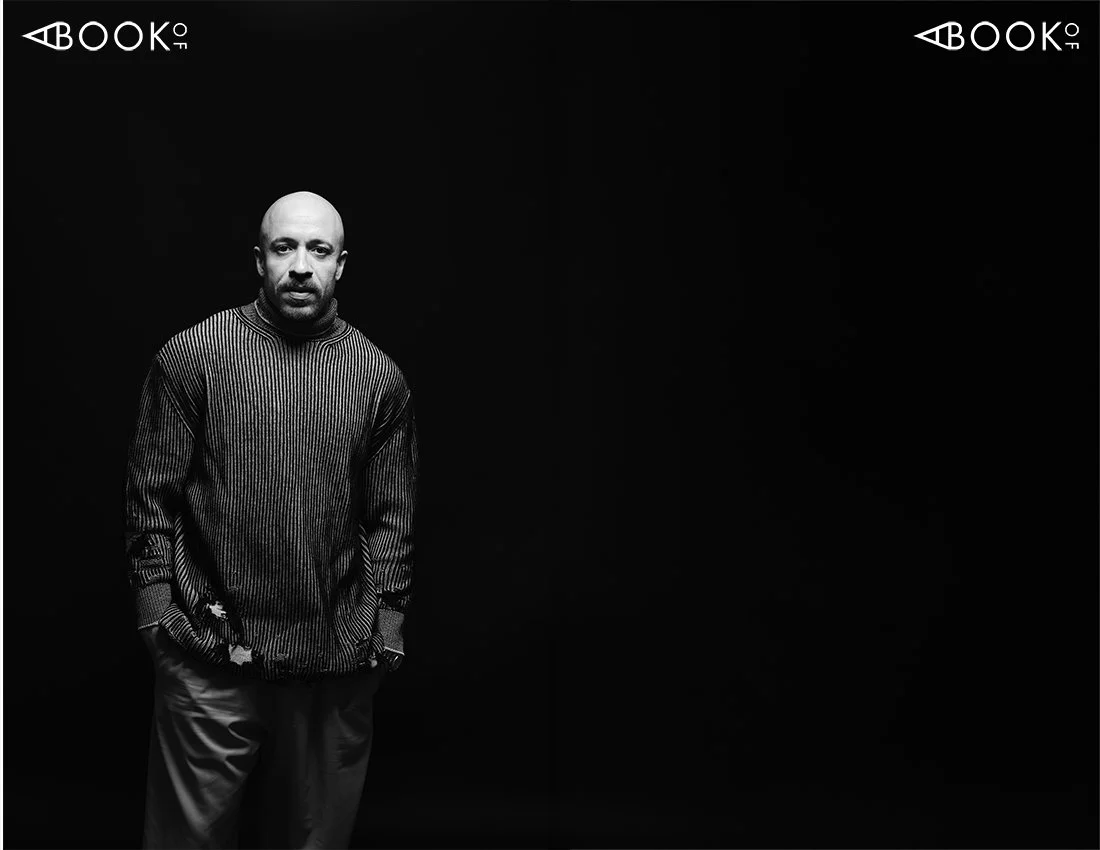
There is real emotional tension in telling the story of a global icon whose life was shaped by genius, pressure, public ownership, family, fame, and scrutiny. How did you protect the humanity of Bill Bray without turning him into a symbol, and how did you leave room for the complexity around Michael without trying to simplify it?
Bill Bray is a symbol, at least he is now… to me. But I didn’t turn him into one. I simply tried to honor this man and his principles, and do justice to the rapport that he and Michael had. Not to oversimplify it, but I didn’t go into it thinking about any of those things you mentioned. I approached it from a place of wanting to create a character who is a real person, because he was a real person, with real dreams and fears, and desires, and flaws, and he had a real love for Michael. Michael Jackson! An icon… the greatest entertainer in history, but to Bill he was a boy who needed fatherly love and protection, and Bill did his best to provide it, and I did my best to recreate it.
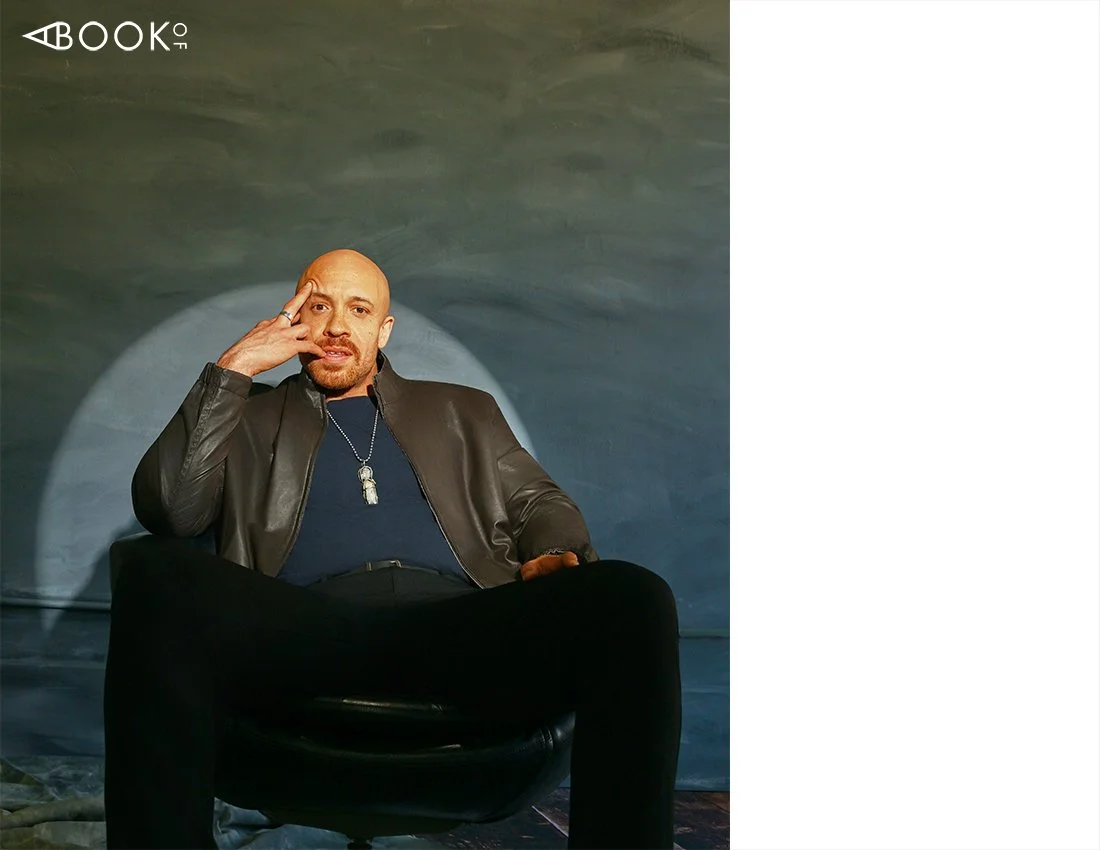
You have built a career across theater, short films, television, and now a major studio biopic, which means you know what it feels like to keep showing up before.
I have to keep showing up. It’s not in me not to, and I’ve put a lot into this. Literal blood, sweat, and tears. I’m a hard worker with an artist’s soul. I love acting, I love stories, and I love movies. I love everything about the movies. I love going to the movies. I love making movies. I love acting in movies. I love directing movies. And I love being on set. Even when it’s uncomfortable (which it often can be), it’s not glamorous. But boy, do I love it. It’s all I’ve ever wanted to do, and I’m doing it. I’m very blessed to say that. So, while waiting, I stay ready by studying. I study people, I study the movies I watch (and rewatch), I study myself and my habits, I read, I work out, I meditate, and all the while I’m thinking about movies, making them, and watching them. And all the things, people, and places that I study, it’s all information that helps me feel prepared to do my best work when opportunities present themselves. Ready to build the next character, tell the next story, to highlight, recreate, and display many aspects of humanity as truthfully as I can. If you’re always ready, you never have to get ready. I just do everything in my power, day to day, to stay encouraged and stay ready.
A lot of your work lives in the space between toughness and tenderness. How do you think about masculinity now, especially when you are playing men who can be funny, protective, wounded, loyal, complicated, and still deeply human?
Masculinity… real masculinity, is all of those things. Sure, masculinity is protective and strong, but it is also humorous, graceful, and can be wounded and complicated. It’s the full experience of humanity, and it is, certainly, not the absence of tenderness. So I really don’t think about being masculine, or putting it on like a cloak or a mantle, I don’t approach it in that way. I show up for my character in the fullness of myself and as the sum of my experiences and then tweak the dials of different parts of myself to calibrate to the parts of the character that they might employ scene to scene, moment to moment, whether it be humor, logic, bravado, physical strength, emotionality, or whatever. But ALWAYS in service of the story/ production. If it doesn’t lift the story and/ or the production as a whole, it’s self-serving and useless.
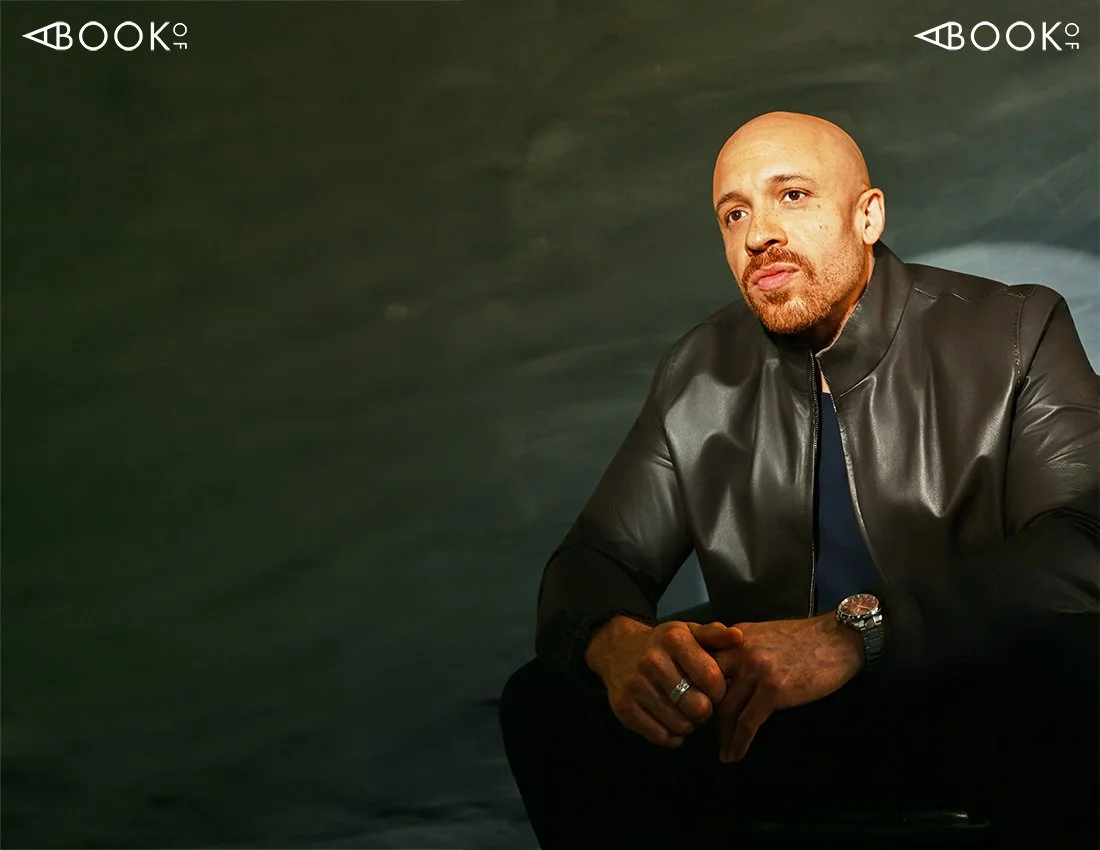
If you were a book, what book would you be and why? This can be a real title, a made-up book title, a book type, a genre, or even a book that has not yet been written.
If I were a book, I’d be a self-help book disguised as an adventurous narrative fiction. There’d be lots of humor and wit and charm…and passion! But, also … you can’t have a good story without overcoming some tumult and darkness. Notwithstanding, there’d be dreams followed, there’d be lessons learned, lives lived, and love had and lost… and made.