JESSICA BLAIR HERMAN ON HEATHER’S WATCHFUL EYE IN EUPHORIA
Interview by IRVIN RIVERA

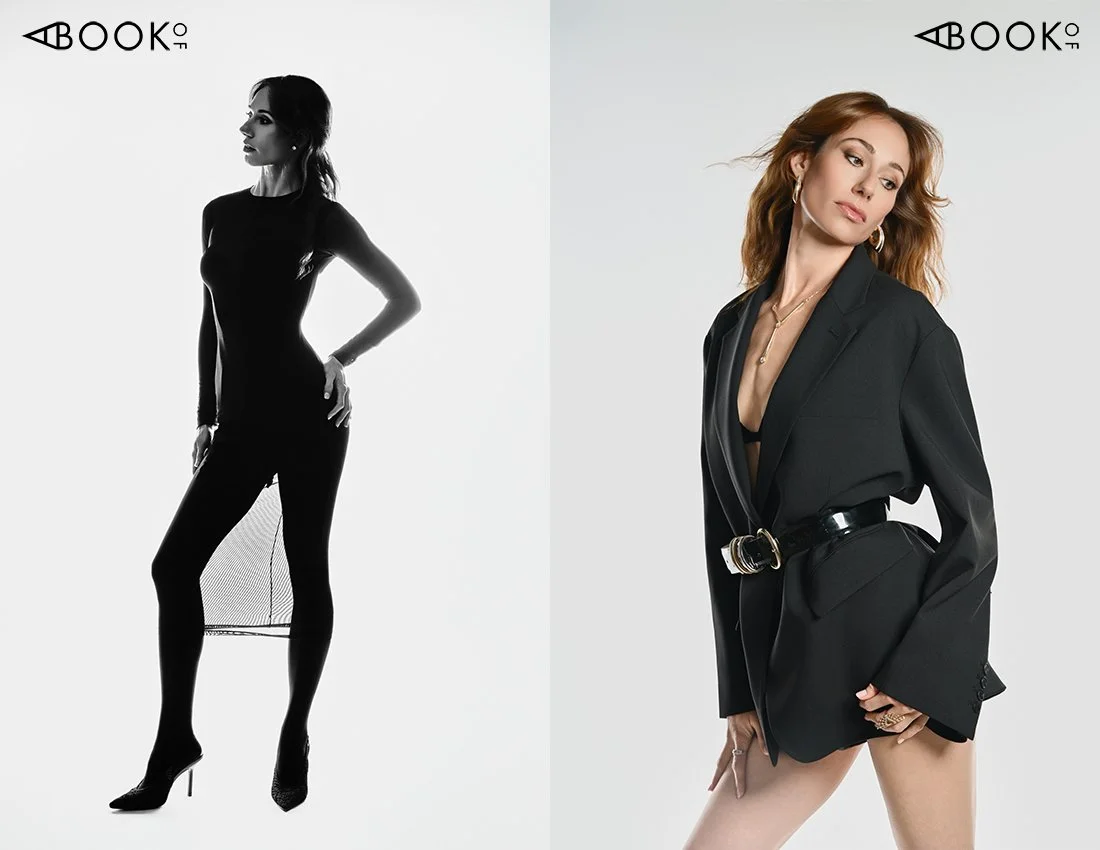
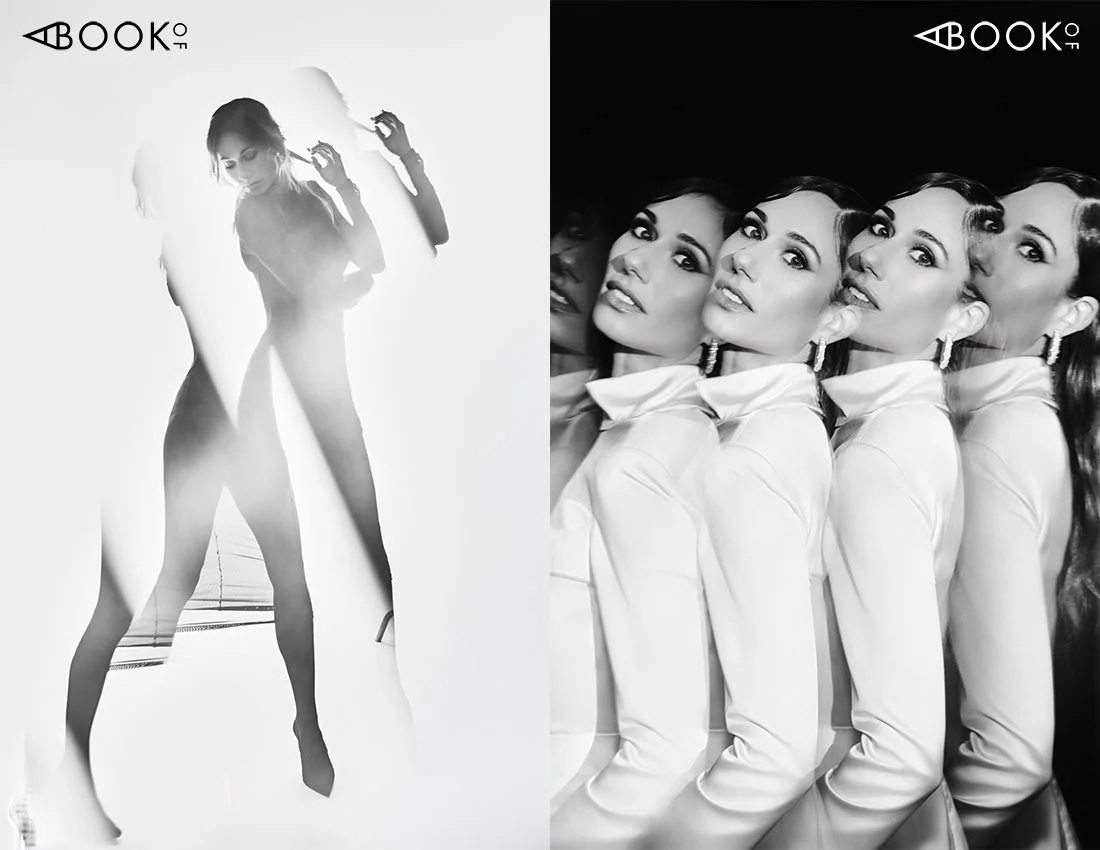
PHOTOGRPAHER: IRVIN RIVERA, FASHION STYLING: BRANDEN RUIZ, MAKEUP: ADAM BREUCHARD, HAIR: EMMA CROFT, LIGHT TECT: ANDREW LOPEZ, PHOTO ASST: DANIEL RARELA, LOCATION: STUDIO METROPOLIS LA
JESSICA BLAIR HERMAN approaches her story like a hummingbird in a kitchen full of secrets, light on her feet, sharply observant, and never quite landing where you expect. In HBO’s EUPHORIA, created by Sam Levinson and led by an ensemble that includes Zendaya, Sydney Sweeney, Jacob Elordi, Hunter Schafer, Alexa Demie, and Maude Apatow, Herman enters the show’s emotionally loaded universe as Heather, Cassie’s friend and neighbor, someone standing close enough to the glittering surface of Cassie and Nate’s life to notice the cracks forming underneath. It is a fitting doorway for an actress whose career has been built on listening closely, from the musical timing of sitcoms like How I Met Your Mother, New Girl, Modern Family, and How I Met Your Father, to the quieter dramatic instincts she sharpened through theater, training, motherhood, marriage, and the strange, beautiful endurance test of being an actor in Los Angeles.
What makes Herman so compelling is not just that she knows how to land a laugh or hold a silence, but that she understands the human weather behind both. In conversation, she talks about comedy like music, drama like muscle memory, and success not as a finish line, but as something softer, harder, and more honest: the ability to keep returning to yourself. There is wit here, but also wisdom. There is ambition, but also ease. There is the soundstage as a happy place, the ocean wave before the laugh, the flower that grows without forcing the sun to move. And as Herman reflects on stepping into one of television’s most dissected worlds, raising daughters with joy and courage, and learning to trust the timing of her own life, she offers a line that quietly reframes the whole interview: “the definition of success has become synonymous with trusting myself.”
Jessica, thank you for your time.
Thank you so much for having me! I’m so grateful to be a part of A BOOK OF.
You trained at Beverly Hills High School, studied Dramatic Arts at UC Davis, then came back to Los Angeles and sharpened very different muscles through The Groundlings, Lesly Kahn, and Nancy Banks. How did each place teach you a different kind of truth about performance?
Beverly Hills High School has a great theatre department. One of the first plays I auditioned for was The Laramie Project. Let me caveat by saying, I did not get the part I wanted; however, that was the first opportunity I had being on a stage and creating a truthful portrayal of a harrowing story.
Since the subject matter was so resonant, it was a brilliant lesson about how to deliver an honest performance. While I was at UC Davis, I took classes in political science, psychology, and even nutrition. My parents instilled in me that even though I wanted to be an actor, I had to take classes in other subjects. I wasn’t necessarily good at any of these subjects, but I got to meet all kinds of people and learn about human behavior, which ultimately helps with an actor's craft. In the actual theater department, at UC Davis, I studied plays, text analysis, and Strasberg’s animal exercises. I distinctly remember being able to draw emotion from different parts of my body and how that could help me create an organic response in the moment. There was one play I did there, an original called The Nest, and it was a very vulnerable and challenging role. I listened to classical music before every single performance to put me
in the right headspace. And as I reflect on that, it was definitely a blend of method acting and techniques from Stella Adler and Meisner. Nancy Banks is an extraordinary acting coach, and the book we worked with was called The Intent to Live by Larry Moss. This helped me develop tools to connect deeply with characters and to achieve authentic performances.
Lesly Kahn and The Groundlings were more comedy-based. Obviously, Groundlings is like comedy heaven. And Lesly was one of the first coaches I had in LA, and she really helped me get out of my head and understand the beats of comedy and timing. For me, multi-camera comedy is like music; there are beats that you have to hit to get the laugh and to play the scene. Physically as well, if you are going to do something funny, it has to come at the right place, and of course, say the line as if you’ve never said it before. It’s a blend of all these teachings that have helped me find different ways to make my performance sincere, truthful, and grounded.
Jessica, stepping into Euphoria as Heather places you inside one of television’s most emotionally charged worlds, but your entry point feels intimate rather than loud: a friend, a neighbor, someone close enough to Cassie to notice what others might miss. How did you begin to understand Heather’s place in Cassie’s life, and what did you want her presence to quietly reveal about the world around her?
What I love about Sam Levinson’s creativity is how he uses characters like Heather to immerse the audience in a new world. He has already established Heather as a close friend of Cassie, signaling to the audience how much time has passed. For Euphoria fans, it automatically informs the space between high school and adult life, where Cassie and Nate find themselves when the show picks back up. Cassie and Heather’s relationship propels the audience into what seems like an idyllic world, but by the time they reach the wedding, it is fully unraveling. I love how intimate my scenes with Cassie are because they're the light in the dark. Heather and Fred are the collateral damage of Cassie and Nate’s ambition. Heather's character feels like the audience's eyes because she is trying to figure out what Cassie is up to. It gave me an avenue to explore, which is the best part about being an actor, because you get to investigate what drives a person.
A lot of audiences may now be discovering you through Euphoria, but your résumé has this beautiful comedy spine, from How I Met Your Mother and New Girl to Don’t Trust the B in Apartment 23, Modern Family, and How I Met Your Father. How has comedy trained you to listen, react, and survive a scene without trying too hard?
Comedy has trained me to listen, react, and survive in a scene by staying present. Timing is essential in comedy, and I hear it in my head, so I really work on executing it as authentically as possible. I like to improv the scenes on my own, so by the time I get to set, I know my character's intentions while honoring the dialogue. And one of the things I love about Sam is how authentically intentional he is and how he develops complex characters. There’s no overthinking when you are given the privilege to act in the sort of space he delivers. Obviously, that comes with trust and with doing the character's work to keep reacting in the moment and letting it flow.
Your first major screen roles put you in rooms with very specific rhythms, from network sitcoms to Will Gluck’s Friends With Benefits world. How did those early jobs teach you the difference between getting the laugh, serving the scene, and actually building a career?
Oh wow. Will Gluck’s Friends With Benefits audition was with Lisa Miller Katz (a brilliant casting director), and I made up a song. Let me say this: I am NOT a singer. But it was a comedic song, a rendition of Ferris Bueller’s Day Off. Will Gluck had Justin Timberlake’s character walking past a theatre where they were putting on a musical or play of Ferris Bueller’s Day Off. And I just remember thinking, I’m going to go for it! I walked into the audition and was totally committed. I got the job, but I think the scene was cut from the film. However, I got my SAG card from that job and I loved every minute of it! That was the start of building my career.
For network sitcoms, there is a formula. Sometimes it works because it’s like lightning in a bottle, and other times, the chemistry doesn’t hit the mark. But, in many of the smaller roles I have taken, I know that my job is to serve the other character and their storyline. In other shows, I know my job is to get the laugh - or maybe that wasn’t my job, but somehow I get a laugh anyway. I try to live by the motto “work begets work.” Maybe I just like any reason to say the word “begets”… In How I Met Your Father, I actually didn’t have any lines, but I got to do some physical comedy with Kyle MacLachlan…In bed. Truthfully, I feel very lucky for any opportunity to be on a sound stage; it is my happy place. It’s an opportunity to not only do what I love to do but also meet people who love to create art - and that’s the only way to build a career in business that is not linear.
You have moved between comedy and drama in a way that feels deceptively seamless, but those muscles ask for different kinds of courage. How do you protect your instincts when one role asks for levity and another asks you to hold pain very quietly?
That’s very kind of you, thank you. I never actually thought of it as courage, although I like that! I really just trust my muscles to embody a character when I am given the opportunity. When I worked on American Crime Story: The People v. O.J. it was a masterclass of dramatic acting.
Every day, I got to learn from some of the greats. I watched Sarah Paulson transform into Marcia Clarke. I watched Sterling K. Brown access his emotions with such depth and grace. However, I think that now, having been away from this role for almost 10 years, I would access those emotions differently. I held onto that emotional journey for a while because I had to access such sadness in my body, so back then I would have liked to have more courage to let go, breathe, and trust.
I think for every role, it goes hand in hand with where you are in your life. For Euphoria, I feel like the part came into my life just when I needed it the most. On Euphoria, I was encouraged to have faith in my instincts from moment one. The point of the actor isn’t to do the same thing every time, but to live truthfully in the moment. The more character-driven I can play, the more specific I can get, which helps me access that levity you are referring to or freedom to play.
To transition into comedy, I don’t take myself too seriously, and I certainly don’t try to plan anything. It’s like an ocean; it’s really fun to be a part of the wave, the arc before it comes crashing into the sand. That crash is sometimes a loud roar of laughter and other times it’s subtle and quiet. My instinct is to ride the wave and not worry about how it will land.
Euphoria is not just a show people watch. It is a show people dissect, project onto, argue about, dress like, and live inside emotionally. How did you find your own space inside a world that already carried so much visual identity, fan expectation, and cultural noise before you arrived?
Stepping into Euphoria has been one of the greatest gifts of my acting life. The show already has such a wide-reaching fan base, and people feel so connected to these characters. In a beautiful way, I was naive to the expanse of the show. The cultural noise or fan expectations are their own beast. It trails behind the visual masterpiece that is Euphoria. It is something that just comes with the show and the social media world we are now a part of. I remember hearing Scarlett Johansson say something about how she can’t be on social media because her brain and ego are too fragile, like a flower. I relate to that. I’m very sensitive, and I know it is a part of our industry, but I really love just doing the work and creating a character. I don’t know if I am equipped to hear the noise because I have enough noise going on in my head that I need to silence.
I would say Euphoria is a great mirror of society. It’s encouraging us to see what morals and values our society upholds, and Sam uses mythic imagery in regard to faith and religion. This show perfectly captures the zeitgeist of our time. I think Sam has done exactly what a great filmmaker does: he reflects the time by creating a captivating story filled with dynamic characters, while inciting a broader conversation infused with deep, passionate feelings and opinions.
Heather comes into Cassie and Nate’s orbit as a friend and neighbor, which is an intimate place to stand because neighbors often see the version of a relationship that people try to hide from the rest of the world. How did you think about what Heather notices, what she says, and what she chooses not to say?
Personally, I’m fascinated with how you never really know what happens behind closed doors. We drive by homes in Los Angeles, and I’m always curious about the relationships, decor, and history that the house holds. And for Cassie and Nate, they have this stunning home; they exude wealth, beauty, and ambition, but we will soon witness the breakdown.
There is a balance of being Cassie’s friend, judging Cassie, and staying quiet… whilst judging. Heather is a voice of reason in a society where priorities have turned upside down. It’s a fun character to play and then, of course, getting to say everything Fred is too much of a pussy to say at their wedding.
You have said the set had a beautiful working relationship and that everyone came in wanting to do the work, which is a refreshing contrast to the noise around the show. How did that professionalism affect your performance, especially when the scenes are orbiting characters as emotionally volatile as Cassie and Nate?
Jacob (Elordi) and Sydney (Sweeney) are both incredibly professional, talented, and gracious, and, beyond that, they are genuinely very kind. I loved filming the scene where we are all in Nate and Cassie’s kitchen. For the four of us, there was an underlying mutual respect, a sense of ease, and play. I believe that it always starts with the director and the actors at the top of the call sheet. This particular scene was like filming a play. Sam has this brilliant ability to let a scene breathe and see where the characters will go. There are secrets in the silence and subtleties within the dialogue. I love that it takes place in a kitchen, where everyone always gravitates toward and feels safe, yet something is brewing beneath the surface. I felt like Heather orbits around like a hummingbird, not quite sure where to land because of the tension bubbling up.
After years of guest spots, recurring roles, comedy rooms, drama sets, motherhood, marriage, and now stepping into one of HBO’s biggest shows, how has your definition of success changed from when you first moved back to Los Angeles to become an actor?
I think being a successful actor is hard to quantify. I think some actors feel the most successful being on any stage, no matter how big or small. I think some actors need the notoriety. But most of the actors I know and love define success as having challenged themselves. I think the beauty of being an actor is that the art never stops. There is always someone around the corner with an idea. We all want to create something, and with a community of artists striving, there isn’t a pinnacle of “success”. I feel like you can feel like you have “made it” multiple times over, if that makes sense. When I moved back to Los Angeles after graduating from college, I wanted it so badly (success, a job, a compliment). I'm sure in some audition rooms, you could feel my desire morph into desperation. I think because I knew I could do it, but I didn’t know how to trust myself. So, for me, the “definition of success” has become synonymous with trusting myself. Also, when it comes to motherhood and marriage, I love what my husband and I have created. The unconditional love from our children is remarkable. My husband and I talk about even when parenting is hard, how lucky we are that every morning we get to try again, and we all consistently learning from each other. That, to me, is success.
Outside of acting, when you think about the kind of person you want to be in the world, where do you feel most called to be useful right now?
A lot of the books we read to our two kids are about how there is only one of you in this world, and what that means. I want to be the kind of parent who raises good human beings. I want to empower both my girls to use their voices and stand up for what they believe in, and keep their joyful sense of humor and love for the little things… like a flower blooming in the sun. I read somewhere that if we were like a blade of grass or a flower and trusted the world around us, we wouldn’t strain to grow. We wouldn’t try to control the sun to help us grow; we would just grow and be present.
Right now, I feel very called to live in the space between hard work and ease… and to teach my kids to trust that we are always exactly where we are meant to be.
Lastly, if you were a book, what book would you be and why? (open question. Can be a title, a genre, a made-up book, etc.
My best friend Katie Tsang and her husband, Kevin, just wrote a book called The Neverland Thieves, and it celebrates the story of Peter Pan. The story features mermaids, pirates, the Lost Boys and Girls, and new friendships we haven’t seen before. Mysterious and exciting things start to happen in the magical world of Neverland. I love how they are able to take a story we all know and cherish - and create an even greater, everlasting fantasy.