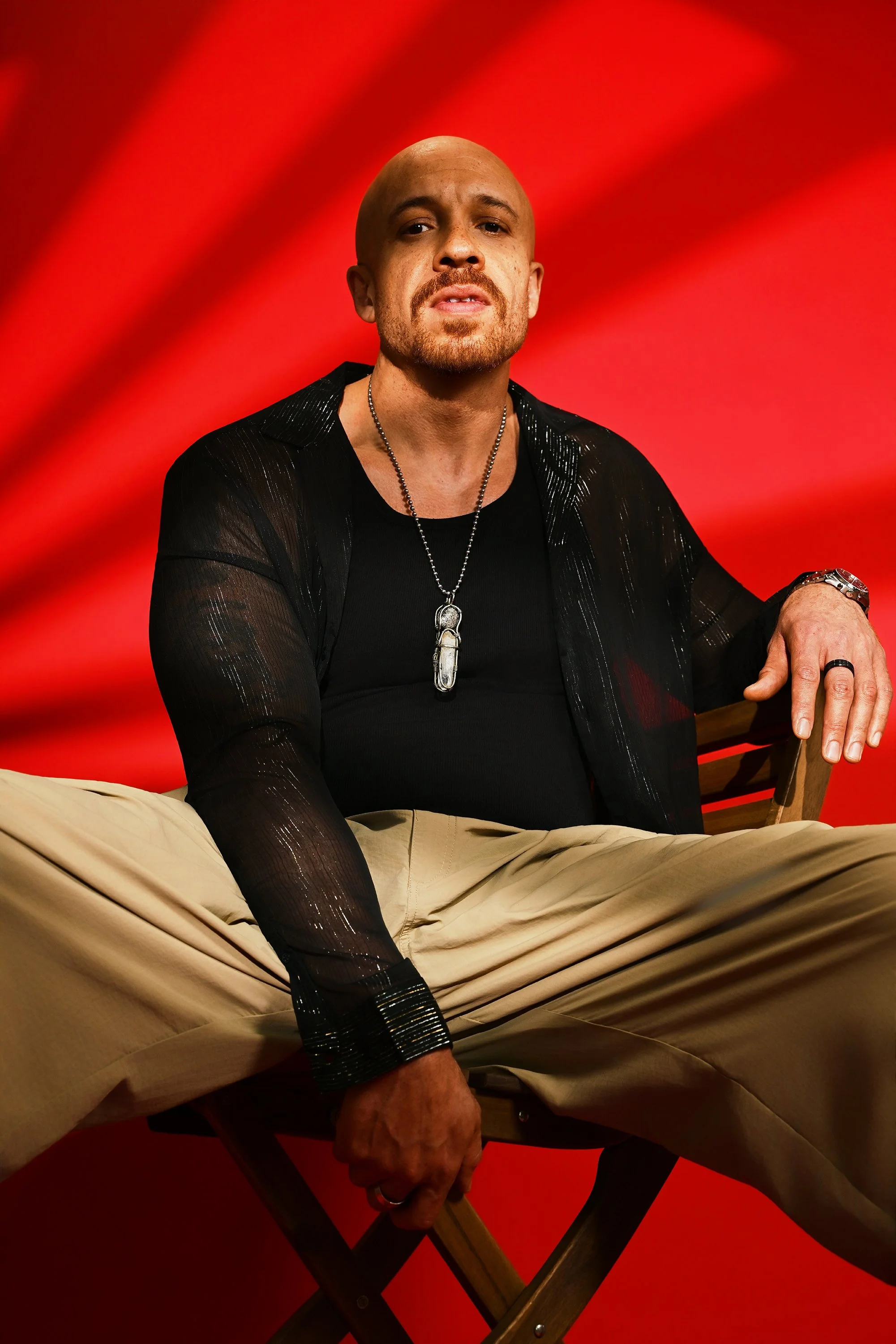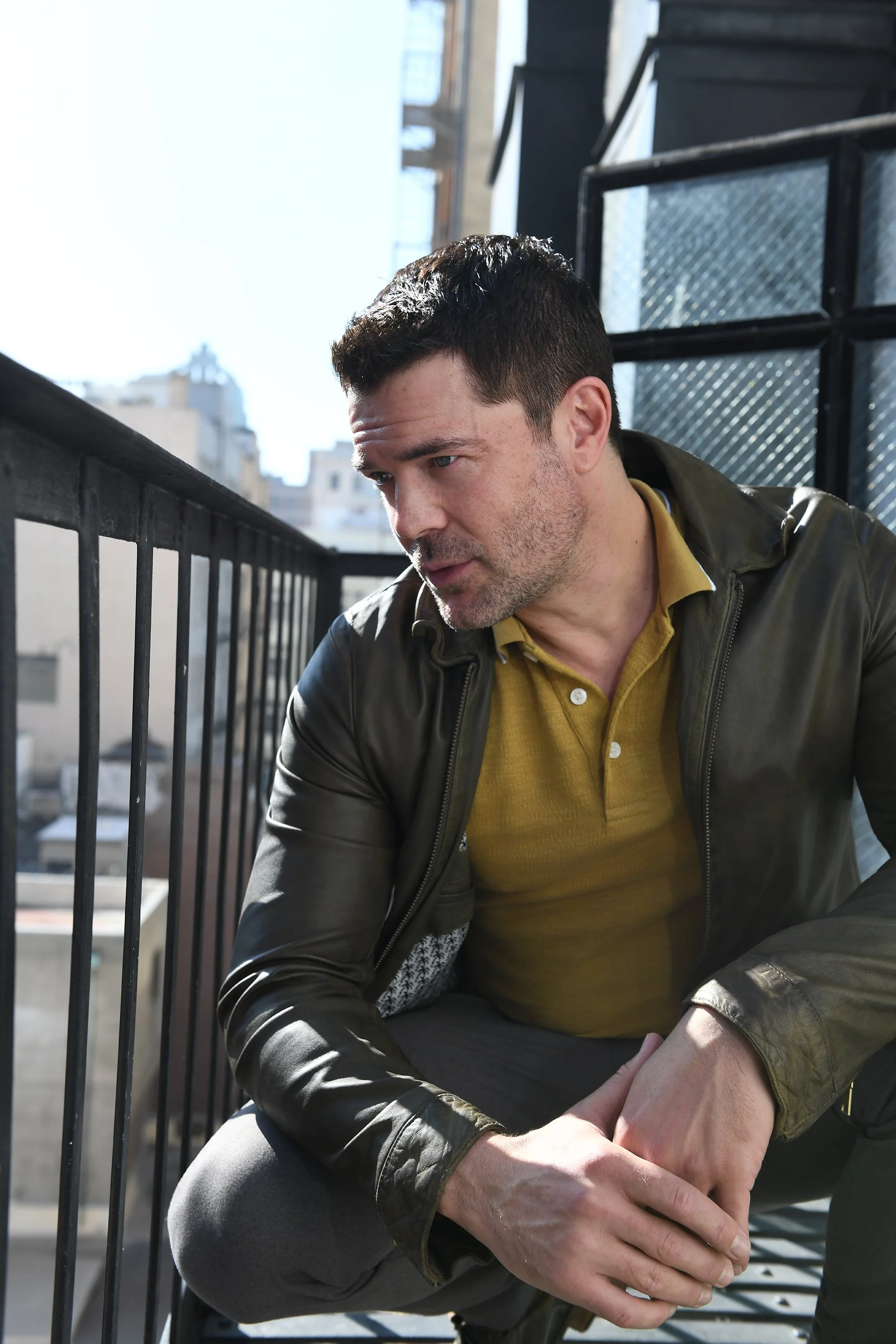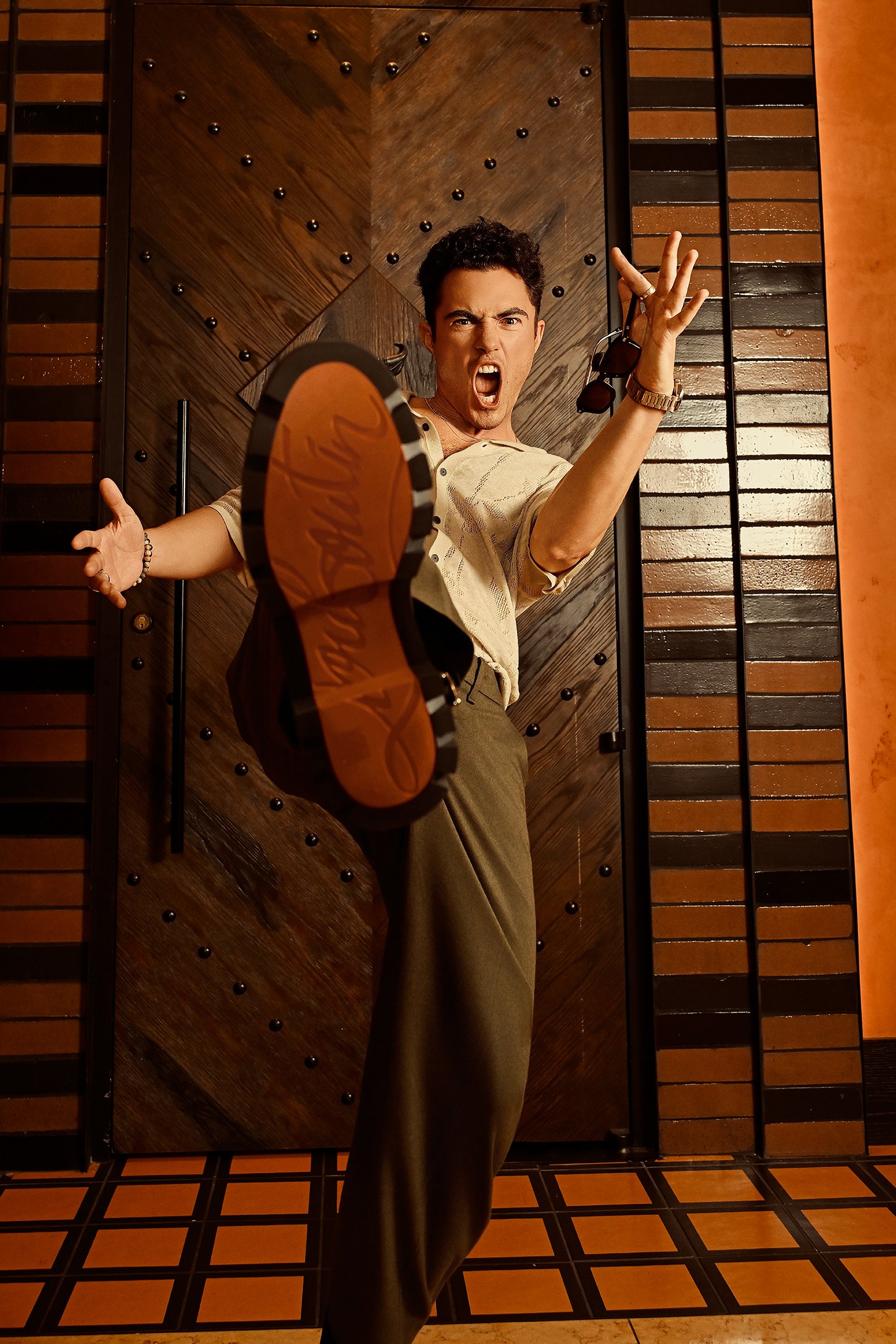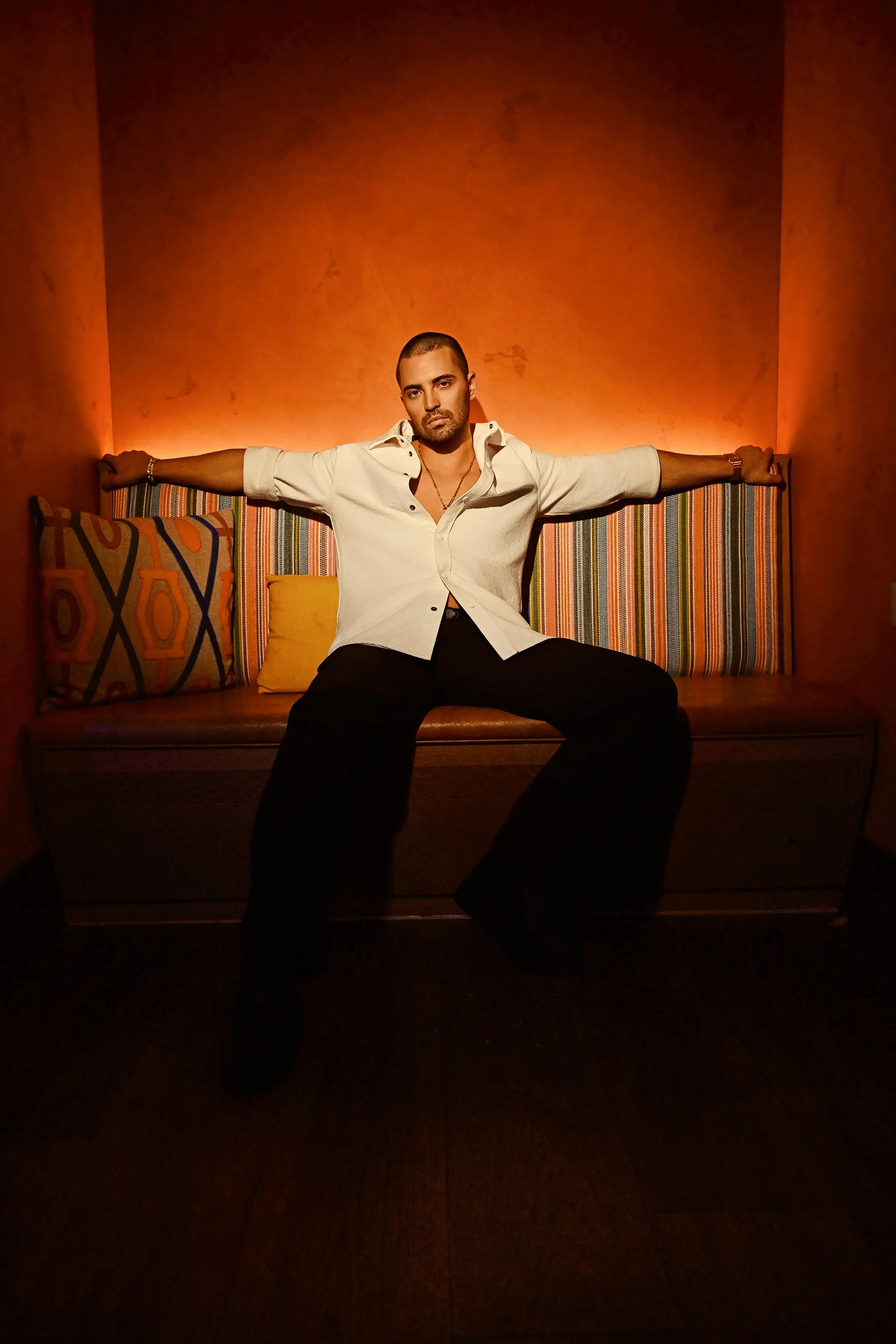
BRANDON LARRACUENTE ON THE FIREFIGHTER, THE FILMMAKER, AND THE FIGHTER WITHIN
BY IRVIN RIVERA
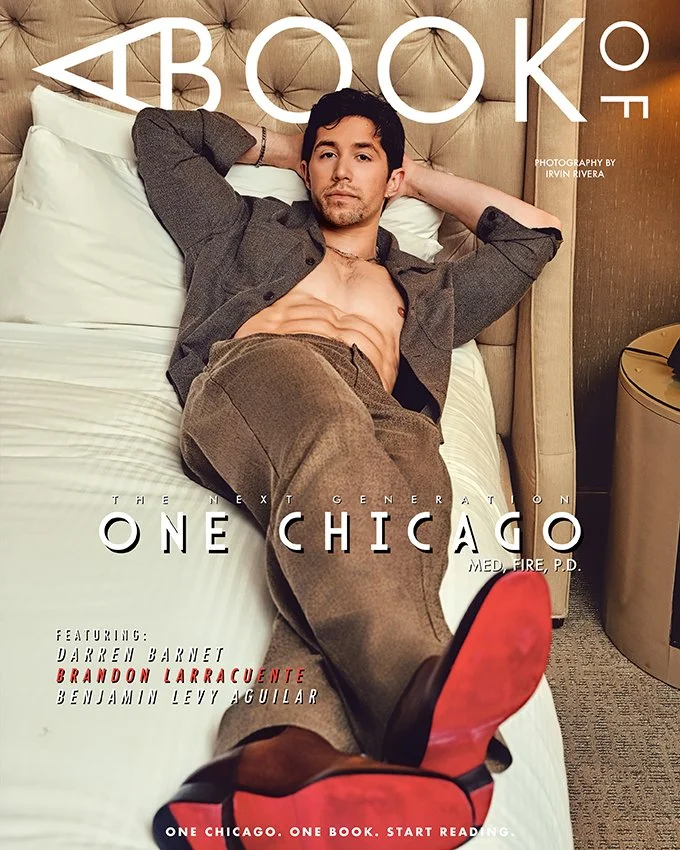
PHOTOGRAPHY & INTERVIEW: IRVIN RIVERA, ART & CREATIVE DIRECTOR/PRODUCER: PHIL LIMPRASERTWONG. FASHION STYLING: ELIZABETH KENNEDY, GROOMING & HAIR: BRENDA ARELLANO, CONTRIBUTING PRODUCER: AC DE QUINA, PHOTO ASST: DANE THOMAS, STYLING ASST: KATE ADLER, LOCATION: FAIRMONT CHICAGO, MILLENNIUM PARK
BRANDON LARRACUENTE knows what it means to run toward the hard thing. On NBC’s long-running first responder drama Chicago Fire, the Dick Wolf universe staple led by Taylor Kinney, David Eigenberg, Joe Miñoso, Christian Stolte, Miranda Rae Mayo, Hanako Greensmith, Jocelyn Hudon, and showrunner Andrea Newman, Larracuente enters Firehouse 51 as firefighter Sal Vasquez, a confident and complicated new force whose family history, police academy past, and private wounds make him more than just the new guy on Truck 81. For Larracuente, Sal is not built to be easy. He is headstrong, courageous, imperfect, and “unapologetically” himself, the kind of man who may not care about being liked but cares deeply about doing the job when someone’s life is on the line.
In conversation, Larracuente moves with the same quiet discipline he credits to baseball, the same humility he traces back to blue-collar parents, and the same creative hunger now fueling 94 Films, the company he co-founded with his wife to tell stories that do more than entertain. He talks about trust, vulnerability, public service, and the long road from being chosen to choosing, with the grounded clarity of someone who has learned that every missed door is not the end of the hallway. “Everything leads you to where you need to be,” he says, a line that feels less like a slogan and more like a scar that finally healed into wisdom. For Larracuente, the lesson is simple, but not easy: “We learn the most in our downfalls.”

You have lived through very different cities and energies - from New York, Florida, and now Chicago. What keeps the city inspiring for you as an artist, and how do those landscapes shape the way you build a character?
That is a great question. Yeah, to your point, I've been really fortunate to work in different cities. I've worked in Florida. One of the first jobs I ever booked, which really gave me some credibility in the industry, was Bloodline in the Florida Keys. So, in the Florida Keys, everything's about just sunshine and flip flops and stuff. So that really helped, honestly, all I really had to do there was just live in the world. We were filming in this area called Islamorada, and I think the landscape in itself plays a huge role in where you're working. Like, for instance, I worked in Vancouver for a while. In The Good Doctor, I think we're playing that show as if we’re in Toronto. But each landscape definitely plays a role. I mean, you're working around weather, like we're just talking about right now, like sometimes even on Chicago Fire, like we'll have a scene that's supposed to take place in the story in the springtime, but yet, we're filming in the middle of December, and it just snowed the day before, so there's snow in the background. But I think what it teaches you is resiliency. The show still must go on despite the unpredictable weather. So I think what it teaches you is just to roll with the punches. It doesn't matter where life is taking me. I've been super fortunate to work. God, even overseas, in Spain. But, I mean, we're there to do a project, to do a job, and unless, of course, there is something as extreme as, like a tornado warning, where we can't film, we're going to make it happen. Yeah, resiliency is one of the biggest things that it's taught me. And aside from that, like, aside from the work itself, just getting to live in different cities, different cultures, and what that entails has really just broadened my horizons as a person. So I've been super fortunate.
Before television, there was opera, Off-Broadway, and years of baseball. Which taught you more about becoming the man and artist you are now, the instinct to perform or the discipline to repeat something until it becomes second nature?
I've gotta say, honestly, just because when I was so young, when I did Off-Broadway, and when I was a part of an opera up in New Rochelle, New York, that I really didn't understand the craft itself. I didn't appreciate the craft or art for what it was until I grew much older. But I think for me, what helps me most now, as an artist, is my history in sports. I mean, it's given me the discipline to approach the material day in and day out, to keep working, improving, and getting better, and to approach it from different angles and whatnot. So, for me, I was actually talking to somebody a couple of days ago on my way to work about that. I played baseball growing up, and I'm so grateful to sports for teaching me to stick with what you start. If you start something, make sure that you finish it and give it your all. Sports are one of those things that require your all to achieve a level of success that few people ever get to. And although I never got to make it far in sports, I can now take what I've learned and apply it to what I'm doing right now as an actor.

Sports also teach you actual, real-life lessons that you can carry over in your day-to-day.
Definitely one of the ones is camaraderie and learning to lean on other people. I myself played a lot of team sports growing up, like baseball and football. So what we do, not just in Chicago Fire, but across the entire industry, is all about leaning on other people. We all bring different skills and talents, and we are all bringing that to the set, and it relies on each other and on trusting each other to show up and do their job. So that we can all create freely, and there's really a safety net in that creative process, because if I show up giving my 100% and that person also shows up and gives their 100%, then if one of us falls, for lack of a better term, I know that, that person is going to be there to pick me up to carry the load. If, let's say, that day I'm having an 80% day because the 20% of me is sleep deprived, or the 20% of me is dealing with some personal issues at home. I know that I can rely on that person to be there for me, and vice versa. So it's honestly no different than sports, what we do on a daily basis here. Teamwork, man.
So much of your work has lived inside stories with real social weight, whether that was 13 Reasons Why, Party of Five, On Call, or now Chicago Fire. How do you know when a role is worth carrying, especially when the subject matter already means something to people before you ever say a line?
I mean, one of the ones to your point, which you just said, like, 13 Reasons Why was a book that had a fan base before any of us, even before the characters were even fleshed out into a screenplay or onto text. That was something that already had such weight and responsibility behind it, already. So the fact that I was able to be a part of the project of something that magnitude, and looking back in hindsight, maybe to be honest, at the time, I didn't really, I said I did, but I didn't really understand the magnitude and the importance of what I was a part of. But looking back, man, like I was able to be a part of something that created a conversation, a conversation that needed to happen that was much longer, that had to do with bullying, and among other very, very important issues. So, bringing it back to your point, every project I approach always starts with the initial script. I've been very fortunate, and I can't even lie and say that I've planned it this way. It just worked out this way to be part of projects that not only carry weight and magnitude but also create conversation around social issues, around topics that a lot of people want to avoid. So honestly, man, it's just the stars aligning for me and the fact that I've been blessed to be a part of projects that are not only wildly respected, but they're timeless. Hopefully, people are gonna be talking about projects like these that have been a part of things for years to come, long after they're on and off the air.
You're also creating and building your own projects with 94 films, right? So with 94 Films built around unheard voices and harder truths, what kinds of stories are you most hungry to tell now, especially the parts of Latino life and American life that Hollywood still tends to simplify, sanitize, or flatten?
It's so funny you bring this up. I was on a couple of creative calls today with an author whose book my wife and I, our company, acquired the rights to, and we're trying to turn into a miniseries. But we were just telling the author today how hard it is nowadays to get things made because I feel like a lot of studios, and you're seeing a lot in the industry, they want to bank on the safe bet, they want to bank on the things that have been done before, and that they can bank on. For instance, we're seeing tons of reboots nowadays, but fewer and fewer original ideas. So the type of projects that we as a company, 94 films, want to create are projects that most people shy away from, projects that once again, inspire talk and inspire conversation to happen among parents to their children, among friends, among spouses. So that’s not very easy, and there's a long uphill battle that we, at 94 films, are going to have to endure. But I think, at the end of the day, if we're persistent, we can get these things made. A lot of the projects that we've had on our company slate so far have been self-funded with our own money. Because, as I said, a lot of people just prefer the safe bet. And I think we're seeing that, that doesn't always work. People want fresh ideas, and that's what we're trying to present to the audience. What we're hoping to do with our company is create projects that not only inspire people, because I feel like everybody nowadays just wants to be inspirational. It's not about that. We want to share our past traumas and experiences, and we hope that, in turn, people can relate to them through their own trauma. And we're hoping that creates a dialogue. Right now, we have a film making its way around the country, with a screening this Saturday in Chicago and a Q&A afterward. We don't just want to have screened our film; that's a wonderful accomplishment in itself, but we want to screen our film. And then talk to the audience about how the film made them feel, and open up a dialogue. I feel like we're seeing a lot less of that. I love to watch. I was actually a part of a panel with Eva Longoria back when she did Flamin’ Hot, my wife and I got an invite for that, and there was a discussion between not only the creator of the film, but the audience there, and there was an understanding that happened in that room, and that's what we're hoping to continuously instill, is just discussions, dialog, education and understanding. And I think that that's not possible unless the people who were part of the project and the people who are viewing the work are in the same room, having that discussion. So that's what we're hoping to do. We've got a long uphill battle, as I said, but little by little, step by step, we're making progress.

You guys are actually doing the work and actually encouraging the discourse beyond the screen, which is very rare unless you know where to go, unless there's like, a specific panel that invites you, you know?
I wasn't born into this industry with parents who were well-connected; my parents were two middle-class, blue-collar workers who worked hard to create and sacrificed so that I could get to this position to be able to tell stories. So if I can do that, my wife and I, as co-founders of our company, can help others and serve as a resource for them. It's one thing to want to be an actor, but it's like, where do I start? I want to be a director, but where do I begin? If we can bridge the gap between the information and knowledge we've learned and the people out there who are yet to be discovered, we can kind of bridge the gap. That's a win right there for us.
Now, let's talk about Sal Vasquez. He walks into Firehouse 51 with confidence, secrecy, family history in emergency service, and a police academy past. What about him felt emotionally risky for you to play, not in the stunt sense, but in the sense of recognizing something in him that you might not normally volunteer about yourself?
So I've been fortunate to play characters that most audience members consider fan favorites. Back when I did 13 Reasons Why, you can't account for these things, right? You play the character, and the project comes out, and audience members either like you or not, but I've been fortunate that a lot of the characters I’ve played seem to really resonate with the audience and become fan favorites. But Sal was different. Sal was somebody who, on the surface, doesn't try to please or cater to other people, but what I'm trying to say is, honestly, he is who he is, unapologetically, whether you like him or not. Honestly, I don't think it really matters to him because, at the end of the day, he's doing a job of public service that can result in life or death. It's life or death for him and the people he works with. So, for him, the idea of it being a popularity contest was never even on the table. So when Andrea (Newman), the showrunner of Chicago Fire, approached me with the idea of playing this character, I was super enticed, because it was different. He's so different from who I am; he's very headstrong and very, very confident, whereas at times I can be a bit trepidatious about my decisions. So the idea of getting to explore maybe even a side of me that might be dormant, that I might not have ever tapped into, was really, really enticing to me. So that's not to say Sal isn't a good person. Sal just wants to be the best at what he does, and he honestly cares for other people. But at the same time, it's like to what expense, like at the end of the day, if it's a life or death situation, he's going to put himself on the line to protect his, whether it's his lieutenant or his other firemen. So I find that really admirable. He's super courageous, probably a lot more courageous than I am as a real-life human being, so I admire him for that. And that was why I think I was really enticed to play the role of Sal; he was so different from who I am.
Isn't it refreshing to do something that's kind of different from the norm?
Of course, I mean, Andrea didn't write this role to be a fan favorite. She wrote this role to be as true to the character as possible. And if, in turn, fans tend to love him, great, but at the end of the day, we're all flawed individuals. But Sal's flaws and his past, from what we see now with his father, are resurfacing in his life in the firehouse, like, who you are at your worst moments. That's how people tend to judge you. And we're seeing Sal at some of his worst moments. Things that he wants to hide, but he can't, because it's all coming to the surface. So, I think for Sal, we're witnessing his private moments on a public scale.
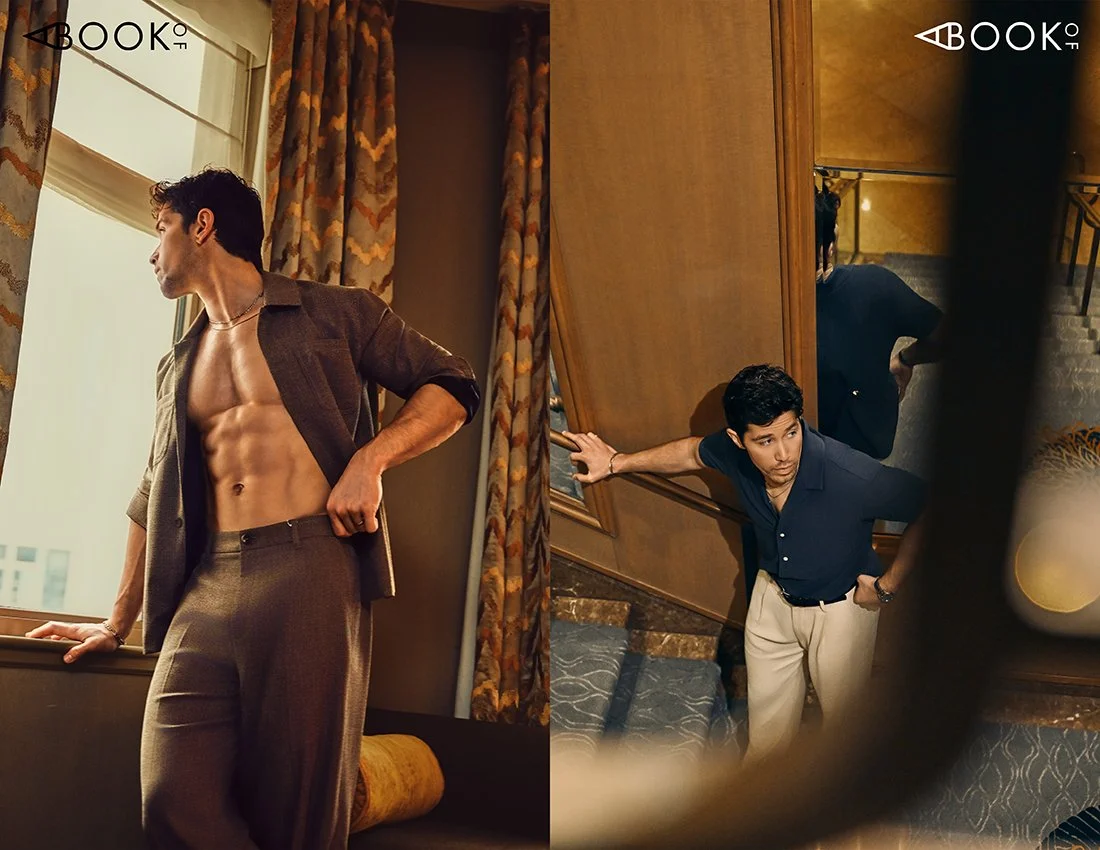
It requires a lot of vulnerability on your end as well, which is beautiful to witness.
For sure. And I think vulnerability comes with trust. Trust in your director, trust in your other cast members, trust in the writers for them to allow you to bring your ideas to the table, and if your idea might not be right for the scene, understand that a note or a change of direction doesn't necessarily mean that your ideas are invalid. It's a collaboration, I think, at the end of the day, keeping in mind the bigger picture here is what's important. I think vulnerability definitely comes with trust in the people that you work with. And I'm so lucky to trust, honestly, every single person who's a part of our crew.
And now, speaking of different roles and working with different people, you have now played a doctor, a rookie officer, and a firefighter, three jobs people romanticize until they look closer. What have those roles taught you about service, and what have they taught you about the quiet cost of being the person everyone expects to stay steady?
Two thoughts just came to mind. One, it's a thankless job. When the California wildfires were happening, my wife and I were living in California. Those firemen were running towards the danger while everybody else, including us, was running away from it. And I'm so happy that a lot of people were there during that time, and after it happened, after everything kind of died down, that people recognized the bravery of those people, but at the end of the day, public service is a thankless job. They do it because it's a part of their role description. They have to go in and do these things, but many people don't necessarily give them the appreciation they deserve. So, being able to do a couple of ride-alongs, not only with the Chicago Fire Department, but when I worked on my previous job in Long Beach, I was able to do one with the police department. I've been able to get a really insightful, different look under the microscope at what goes on in these firehouses and precincts, and they're tired. They're being overworked. Not many people really want to be police officers or firefighters nowadays, because it's tough to be a perfect person in public service. But they still show up. And when we need them, they're the ones we call when we're in trouble. So I have the utmost respect for these people, and now that I'm stepping into their shoes, the most I can hope for is to do the job justice and portray them as accurately as I can.
Between acting, directing, and building 94 Films with your wife, it feels like your career is shifting from being chosen to choosing. How has authorship changed your ambition, and what do you want your voice as a creator to say that acting alone cannot fully express?
I am extremely fortunate to be in a position right now to be a little more choosy about the roles I take on than when I was first trying to make my way into the industry. I mean, you're willing to take on anything just to get your foot in the door. And boy, I've been, I would officially say that I've been pursuing this as a career for the past 10 years. It was when I first moved to LA that I was like, "Okay, I am an actor, and this is what I'm going to be doing moving forward." But it's taken a long time to get here, and I haven't lost sight of the fact that it's been a long journey. And for me, honestly, both as an actor and as a director, now, I just want to do roles that speak to me. And of course, this sounds very artisty, because everybody wants to do that, but honestly, I want to do roles that bring out the vulnerability in people that create, as I said, the much-needed tough conversations. And you don't always get to choose, right? Because you go out for projects and you never really know if you'll get the role, or how the role will turn out, or how different it'll be from the script that you read when you audition to the way that it turned out when you see it on the big screen.
But I want to work with other collaborators to continue working with those who actually still care. I feel like a lot of the time, when you're in an industry for so long, you can kind of lose sight of the passion along the way, and the reason why you first got into filmmaking, which is to create art that just touches other people's souls. The last series that I watched just as a spectator, not a part of it, that did that for me was This Is Us. My wife and I would watch week after week and inspire conversation. Boy, I can't tell you how many times I cried watching that show. But at the end of each episode, we'd sit there for about an hour or so, and we'd talk about how that was applicable to our lives. So I want to be a part of art that does that for other people, that allows them to sit there and to ponder and reflect. So I hope that I continue to be a part of that. A lot of that, as I said, is out of our control. A lot of it has to be so many stars aligning. But, yeah, I just want to continue, hopefully paving the way for the next generation of artists who have no idea where to start, who just have a hope and a dream.
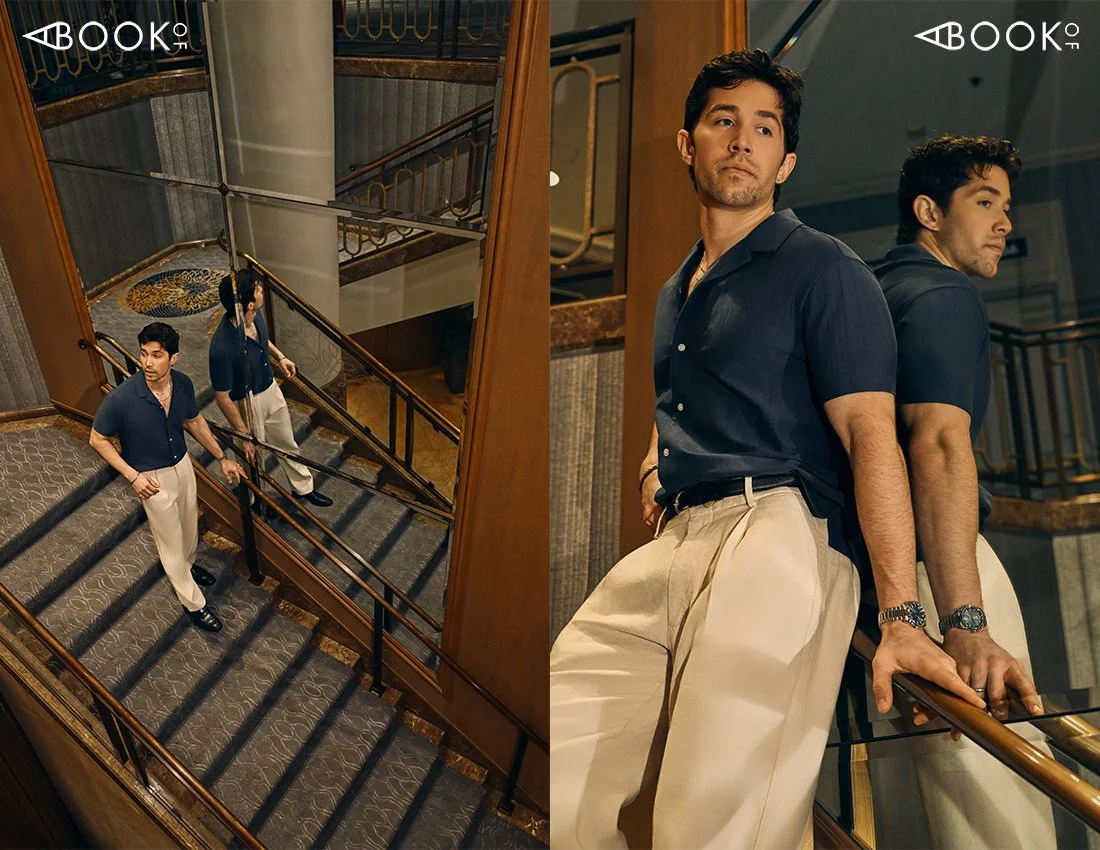
If you were a book, what book would you be?
I feel like I'd be a self-help book. Definitely. I love those. And I'd be, I think the title of my book would be either: Nothing Is A Mistake, or Everything Is A Lesson. And you might not realize that you're in the middle of a lesson while you're going through it, but looking back, you can always learn from a mistake. Everything leads you to where you need to be. Every peak in my life, every valley has led me to this moment. And there were opportunities and jobs that I thought I was right for, or I missed out on for whatever reason, and at the time, I thought it was the end of the world. I thought I couldn't see the door ahead. But I think wisdom comes with time, and I've learned a lot from my mistakes as a director and as an actor, looking back on my past work. But we learn the most in our downfalls. So I'm grateful for them, because everything has led me here.