CHARLIE WEBER ON CHARACTER, COMEDY, AND CREATIVE CONVICTION
INTERVIEW BY IRVIN RIVERA
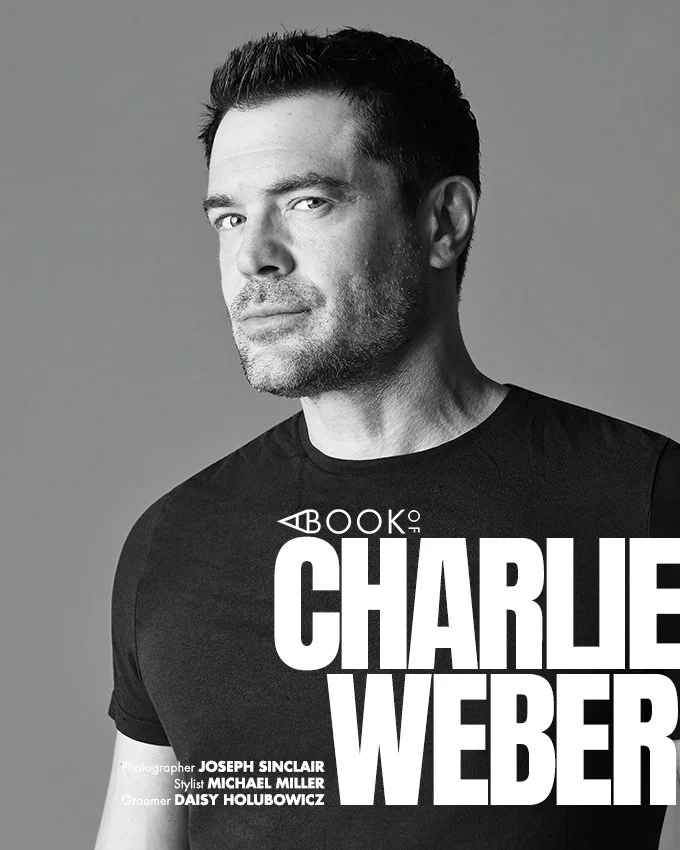
DIGITECH: PHIL LIMPRASERTWONG
CHARLIE WEBER knows that sometimes a whole character can begin with something as small, strange, and specific as a mustache.
In The Highest Stakes, director Tony Dean Smith gathers Seth Green, Kevin Dillon, Dylan Walsh, Dan Bucatinsky, and Weber for a sleek survival thriller about five strangers lured into a luxury hotel poker game where the gamble quickly becomes life or death, with Weber stepping into the role of Billy Gray, a man he built from the outside in until every gesture, rhythm, and facial hair choice revealed something deeper. For Weber, who has moved from the brooding intensity of Frank Delfino in How to Get Away with Murder to action leads and now more comedic terrain, the work has always been less about being recognized and more about disappearing completely.
In conversation, Weber is funny about the details, serious about the craft, and quietly moving when the subject shifts from character to legacy, fatherhood, and the simple grace of being exactly where you are. He talks about conviction, creative trust, producing, the thrill of genre jumping, and why “you have to believe yourself first; otherwise, the audience won’t,” a line that could double as both an acting lesson and a life philosophy. By the end, when he compares himself to Hemingway’s The Old Man and the Sea, the metaphor lands cleanly: the fight may feel impossible, the reward may change shape, but for Charlie Weber, “it was still worth the journey.”
Charlie, when you look at your path from growing up in Missouri to where you are now, with The Highest Stakes and the body of work you’ve built, what feels like the through line that has stayed constant in you as both a person and an actor?
It’s been a very long journey since then. I think the one thing that’s kept me going all this time is that initial decision to go for the thing I wanted – that dream – and then realizing that dream all these years later.
It’s my conviction in everything I do. I always try to learn, grow, and be better; I have a pretty competitive nature when it comes to that. For me, it’s always felt like a self-exploratory process that just kept going. I’ve learned a million lessons over the years.
That’s great. When you mentioned that you kept going and going, it reminded me of this metaphor of an onion that you keep peeling, the layers you go through as you evolve in life.
Yeah, and it’s endless. In entertainment, being an actor and now starting to produce after all these years, that onion – you never get to the center of it, and that’s a good thing. You keep trying.
Looking back, how does that earlier version of you still show up today, and how has that quietness shaped the way you approach characters who hold so much beneath the surface?
Again, that goes back to my conviction in anything I do. Speaking of characters, that’s where I play; that’s what I love. Character creation means everything to me. I care so deeply about every aspect of them, starting with the physical: what they’re like, what they choose to look like, and how they do their hair.
The things I’ve fought for with characters might seem odd or even crazy, but in The Highest Stakes - is a perfect example. It was the first time in a while that I was given the opportunity to be a complete character. Since How to Get Away with Murder, where Frank Delfino was a complete character from the ground up, we were hardly alike in any way, certainly not physically, or in the way he talked and moved.
I had to fight for him to have that full beard because it wasn’t the fashion at the time. Luckily, the producers at Shondaland and Betsy Beers had my back, and the network agreed. The irony is that two years later, I had to fight to shave the beard off as a character choice, which was funny to me.
In this latest project, I fought really hard for this character to have a mustache. That might seem trivial or meaningless, but to me it was the linchpin of who this guy was. I mean a full mustache, clean-shaven elsewhere, no irony. He’s completely rocking this mustache because it encapsulates who he believes himself to be. Luckily, they let me do it. I think it worked tremendously. It was a big deal to me, which is strange but very true.
That’s amazing. What’s crazy is that I have a question here specifically about how you build these characters from the ground up, especially from the physicality of it. I even have a specific question about your transformation in The Highest Stakes. In line with that, how do you begin shaping these characters from scratch, and how does that external transformation help you access the internal life?
Well, that’s exactly it. I start with the physical. That’s my way in. Then I figure out who this guy is, what makes him tick, and why.
Part of it is: why would he present himself this way? What is he trying to tell people without talking? Once I figure that out, it helps me see what’s making that person tick. Then you think about their motivations, what they believe, what they don’t believe, and you get into that work.
But it starts with the physical, which is why I look so different in every movie and TV show. I’m always looking different, which I think is important for me to have that chameleon aspect to my work. It’s an interesting, self‑reflective process that I truly enjoy.
Yeah. And it’s great to watch you transform on every show you’re in, on every project.
Yeah. It’s fascinating for me, too. This one was so special because it was a complete character. He’s an odd guy. He uses his hands in ways I don’t; he talks in a way I don’t; he carries himself completely differently.
It’s been a nice departure. After Murder, where I was given a lot of opportunity, and of which I’m really proud, I’ve been doing more leading-man work, especially in action movies. It’s still a character, someone you’re creating, but you walk a straighter line because everyone else is playing off you. So it’s a different approach. It’s similar, but different. This was the first time in a while I really got to delve into the specifics of why this guy would choose… I know I keep going back to the mustache, but it’s funny how that was the linchpin of this guy. That’s what I clung to; that was my way into him, and I got to create this fun character that I loved playing.
That’s incredible, because it also shows that when you enjoy the character you play, it translates really well on screen. You embody it, and the audience believes it 100%.
And that’s the most important thing. That’s how any actor does it. But for me, you have to believe yourself first; otherwise, the audience won’t. That’s the work, getting a character so complete that you believe you’re that person, you believe that character.
Going back to what you said earlier about being a chameleon: throughout your career, you’ve moved through different genres, grounded drama, action, and now something more comedic with The Highest Stakes. You have so much range. What has driven you to keep shifting rather than staying in what people already know you for?
It’s pushing the boundaries of what I think I may or may not be capable of, testing myself, and the fact that I love all genres of movies. To be given the opportunity to jump from genre to genre has been a true blessing, because it’s so much fun to test yourself in everything. This was definitely far more comedic than I’m typically allowed to do. My body of work is heavily rooted in drama, so the action stuff was amazing to be part of, and now some more comedic work. I fell in love with the process of what I did with this last character, Billy Gray, in The Highest Stakes. I’d truly love to explore more comedic work in time. But all genres appeal to me.
That’s great. It shows your talent as an actor, and you are a well‑rounded actor.
I hope so.
I remember the intensity of you playing Frank Delfino. It made me feel nervous and scared – that intensity you embodied. And then meeting you in person, you’re just a chill dude.
Yeah, very different. What’s so nice of you to say. It’s a huge compliment when people meet you, and you’re nothing like the person they know you to be. Frank is probably one of my bigger characters, certainly the longest I’ve ever played one.
Because I look so different in everything, whatever I look like on any given day is what someone might recognize me as. If I have a beard, I’ll get “Frank,” or sometimes I’ll get Frank without it. People are surprised that I’m nothing like him or like this new character. If someone recognizes me from that, they’ll think it’s odd that I’m nothing like that guy but that’s the biggest compliment in the world to me.
It’s like when people hate a character on screen so much, then they meet you on the street and say, “Why are you so nice? I hated you!”
A lot of times, the coolest guys play the baddest guys and do it well. I think it’s because it’s your chance to let yourself off your own leash and explore that side of you. It’s always fun to take on a new challenge in any genre.
Now that you’re delving into comedy, what’s a project you want to tap into that would excite and challenge you? Something that would tick all the boxes you haven’t done yet?
I’m not sure. Things present themselves to me; they always have. There isn’t one specific thing where I say, “I want to do this.”
This last script, The Highest Stakes, came my way, and they just wanted to see what I thought because it was a departure. The people at Paramount and the producers I was working with knew me from a couple of lead roles in action movies, so that’s how they saw me. I said, “I can do this. Let me play this guy. I totally get him; I know what he’s like.”
They were used to seeing me as a leading man, so they weren’t sure. Luckily, they let me do it and take a pretty big swing, and I dare say it worked.
Isn’t it great when your collaborators just trust you?
It means everything. I’ve been so fortunate over the years to have creative people have my back and trust me. I go into these things with a very specific point of view about a character. I like to be able to explain that character in any way, to answer any question. It’s always collaborative, but I’ve been very fortunate to have producers basically trust me.
Speaking of producers and producing, you stepped into a producing role on High Ground, which shifts you from interpreting a character to helping shape the entire project. How did that experience change the way you see storytelling and your place within it?
That was the first time I had developed a script. After so many years of being an actor, let’s say I get a script and they’re interested in me for a role: I read the script, take in the story, but I pay special attention to that character and who he is. That’s what I do.
When you’re developing something, despite starring in it, you’re asking: What is the overall scope of the story? Who’s this guy? Who’s this woman? Who’s that guy, and how do they impact the story? It becomes a complete vision of the story and of every character, rather than just your character.
You’re more involved with the world‑building.
Absolutely.
Would you say you’re going to do more producing, directing?
Yes, it’s funny. I hear other actors say they want to direct and are passionate about it. I get that, but I’ve never felt that. Producing, though, is something I’d wanted to get into for years, and I finally did.
There was something I understood about it. The job is in the title: produce. What am I producing? How can I benefit from this project? What can I bring outside of my performance?
So yes, I’m definitely going forward with producing. I’m putting a project together right now, and I’m always open to new ones. Once you start producing, you kind of can’t stop. I’ve always got something I’m trying to get made.
It’s great. It’s putting pieces of the puzzle together.
Exactly. From conception to execution, it can take quite a long time, so you have to be passionate about it because you spend a lot of time on each project.
I’m sure producing on film sets is very different from production on photos, editorials, and commercial shoots, but there are some similarities.
Honestly, it’s a similar process in a different space.
It’s how much you know people and how much of a chameleon you are with so many different people.
That’s the name of the game. You’re dealing with so many people in so many different aspects, which is why it’s so interesting to learn and grow. There are a million things you can “produce.” As a producer, what are you bringing to this? I’m trying to push my limits in what I can bring to a project.
What I love about you producing is that as an actor you already know how actors work and navigate the field, so that experience really helps when you’re producing.
It’s definitely helpful for character creation throughout a script, as well as for working with other actors on set. Being an actor and being able to talk to actors is a huge asset.
Charlie, now I’m going to go a little bit personal. Let’s say the world is going to end tomorrow. What are the three things you want to be remembered for?
That is a deep cut. I think being a great father is the most important thing to me. Then, in that vein, I hope the people in my inner circle, the people in my world, remember me as a kind person who was always there for them. As far as a third thing, I’m not huge on legacy. I just hope I was as good as I could be at everything I tried.

I once read the saying that you’re always at the right place at the right time, all the time. That phrase always comforts me whenever I feel lost. I think, “Okay, whatever I’m doing, I’m good.”
Yeah. It’s funny because I thought you might be going to a place where you’d ask where I’d want to be or who I’d want to be with. What’s strange is: I’m talking to you, my daughter is home for the weekend from college, and she’s asleep downstairs, my dog – who I love so much – is asleep on the couch next to me, and I’m in heaven. This is where I would want to be. So yes, we are truly where we’re supposed to be. I believe that.
What inspired me to ask that is that I’ve had a lot of close friends from college who have recently died. I have a friend I had dinner with two weeks ago, and then I got a text with a photo of them in a hospital. It’s ridiculous. People I was just with, and then I think, “Oh my God, you could be gone tomorrow.”
It makes you feel more reflective about life itself and what really matters.
Final question for you, Charlie: if you were a book, which book would you be, and why? This is an open question; you can answer it however you want.
You know what’s funny? I don’t remember you asking me that. I feel like I’m going to say the same thing I said then. Did you ask me this before?
Old Man and the Sea. The truth is, that’s the book I would say: Ernest Hemingway’s The Old Man and the Sea – the existence and the fight that seems maybe futile, but never is. That would be the one. It’s funny because that really is what immediately popped into my head. I’m like, “You know what? I’m this guy who almost killed himself trying to catch a fish, and then it was all kind of for naught, but it was still worth the journey.”
It’s the journey, isn’t it?
It always is.