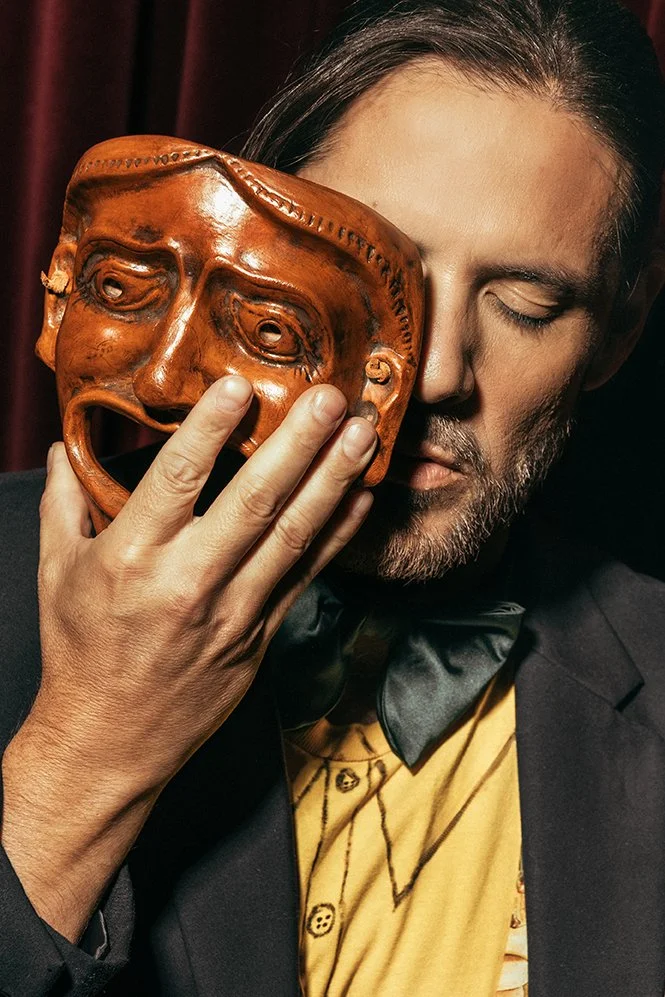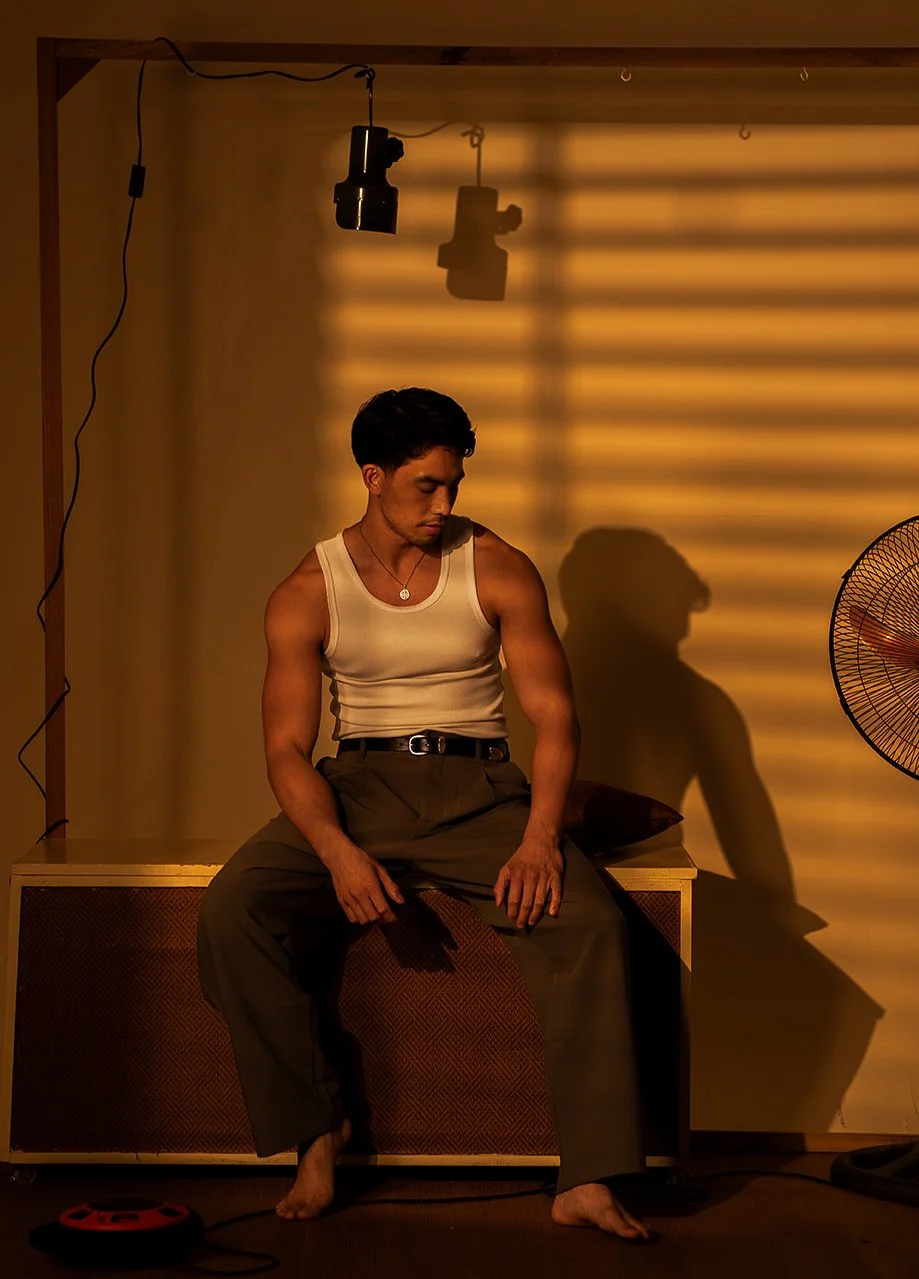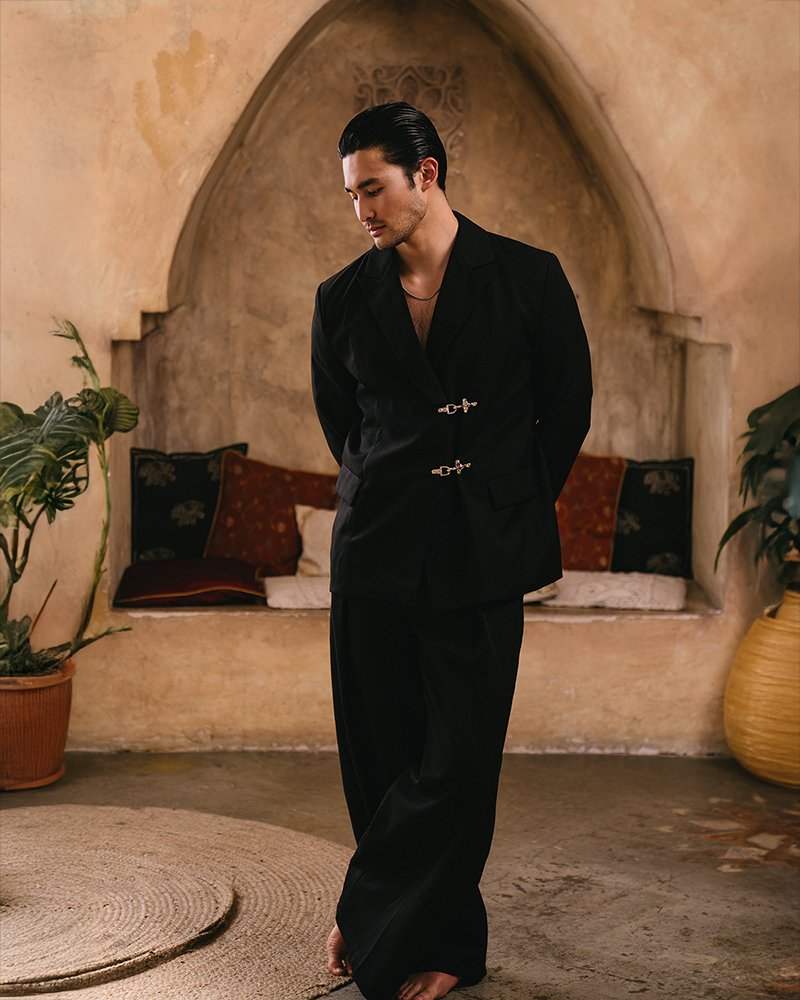
IN 56 DAYS, DORIAN MISSICK FINDS THE MAN BENEATH THE BADGE
BY IRVIN RIVERA
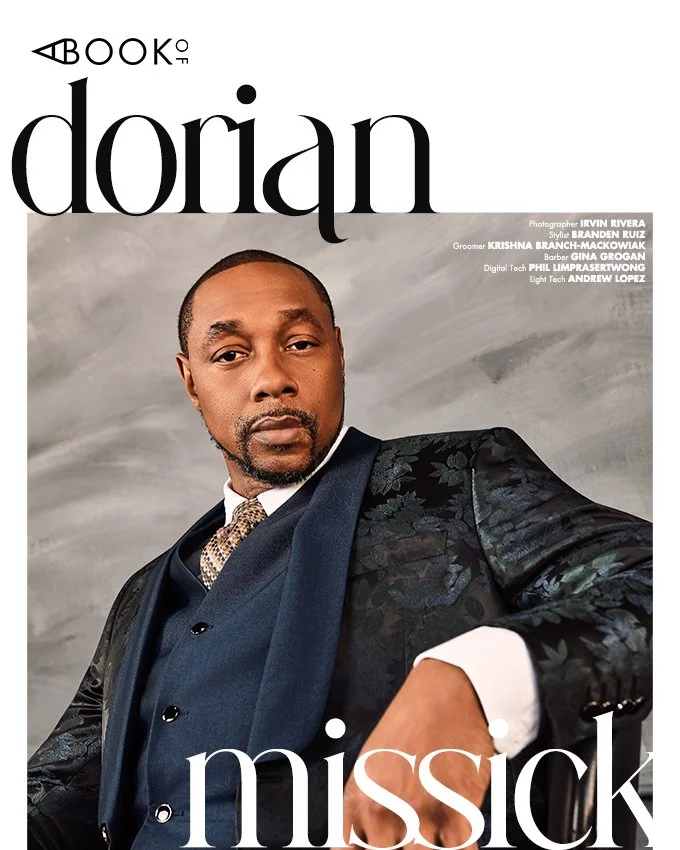
PHOTOGRAPHER: IRVIN RIVERA, FASHION STYLING: BRANDEN RUIZ, GROOMER: KRISHNA BRANCH-MACKOWIAK, BARBER: GINA GROGAN, DIGITECH: PHIL LIMPRASERTWONG, LIGHT TECH: ANDREW LOPEZ, LOCATION: METROPOLIS STUDIO
Dorian Missick speaks the way some actors perform, with rhythm, muscle, and a lived-in kind of precision that makes even a casual answer feel like a scene. You can hear Jersey in the grin, Brooklyn in the guard he keeps half up, and fatherhood in the softness that now sits beside the edge. In Prime Video’s 56 Days, the eight-episode thriller adapted from Catherine Ryan Howard’s novel and starring Dove Cameron, Avan Jogia, Karla Souza, and Missick, with Missick playing Detective Karl Connolly, the story moves through fractured timelines and buried motives under the direction of Shana Stein and Alethea Jones. But long before he gets to the badge, the casework, and the slow-burn unraveling, Missick arrives here as a man who knows exactly what pressure feels like, and exactly what it costs to keep showing up anyway. “The only thing I trust is the process,” he says, and in his world that does not land like a slogan. It lands like survival.
What makes Missick such a compelling subject is the way he holds contradiction without sanding any of it down. He can talk about ambition, marriage, music, masculinity, faith, lust, and the quiet heartbreak of an acting life with the same unforced candor, shifting from laughter to hard truth in a breath. One minute, he is cracking wise about living a “relatively normal life,” the next, he is tracing the private ache inside Karl Connolly, a man gripping his job like the last solid thing in the room. That emotional fluency gives this conversation its pulse. It is not just about credits or craft, but about the miles that made him, the instincts that still steer him, and the hard-earned clarity behind lines like “Sometimes you just wanna dance!” and “Bed Stuy Do or Die.” By the time he leaves us with one of the interview’s sharpest truths, “Artists have to be brave enough to attempt things that you can possibly fail at,” you are already leaning in for the rest.
Hi Dorian, how are you? Thank you for your time. What keeps you excited nowadays?
I'm blessed. Glad to speak to you. These days I'm most excited about being a dad. Kids keep you guessing, and they are exciting!
When you think about East Orange and North Plainfield, what are the small, hyper-specific details you still carry, the textures, the rhythms, the people, and how do they show up in the way you walk into a room now?
The biggest thing about being from Jersey is that we are treated like NY's little brother. It gives one a healthy chip on one's shoulder. I think our swag reflects that (laughs)
Your Instagram bio reads like a personal origin myth: “Jersey baby, Atl raised me, Brooklyn made me, Hollywood pays me.” How did each place teach you a different survival skill, and which one takes over when you are on set and the pressure spikes?
Jersey is my foundation, so that chip is always there. The time I spent in ATL really expanded my understanding of what kind of successful life is out there for Black folks to achieve. Moving to Brooklyn in my late teens and staying there until my mid-30s was really when I became a man. Pre-gentrification Brooklyn is a different monster from artsy Brooklyn. I love both, but 90's Brooklyn put some miles on my Gangsta. And then moving to Hollywood was a necessary business move that has proven to be quite fruitful. The skill of quickly reading people and their moves comes from Brooklyn. The sheer ambition that it takes to survive comes from Brooklyn. "Bed Stuy Do or Die" is always running through my mind when shit gets rough. I only know one way.
How did you learn to trust your own taste early, before there was any external validation, and what did you have to unlearn later once the industry started rewarding you for being “a type”?
I never trusted my taste. I am into some obscure stuff. From the music I prefer to the documentaries I watch, I know I am sometimes on an island when it comes to my taste. The only thing I trust is the process. I know how to approach the work, and I don't stray from that. External validation is shaky ground. It can be based on trends or specific cultural moments. The only thing that is consistent is the process. The great urban laureate Shawn "Jay-z" Carter put it best when he said "One day you're up. Next day you're down. As long as you stay the same, it'll come back around." Once you start to get caught up in external praise, your work becomes compromised. Artists have to be brave enough to attempt things that you can possibly fail at.
You have moved between projects that entertain and projects that feel like they are trying to metabolize the world. How do you clock the difference on the page, and how do you keep yourself honest about why you are saying yes?
The reality of the fact is that the projects come to me when I need them. Sometimes I feel like I need to be a part of something that is trying to say something on a larger scale. And sometimes I read something that sounds like a great time! Sometimes you just wanna dance! "The Burial" was a moment when both of those things came together. I also have a family to feed...so hunger is not an option! Let's just keep it entirely funky!
In 56 Days, Karl Connolly is working a gruesome case while wrestling with something that reads like a private reckoning. How did you build Karl’s inner life so we can feel his midlife crisis underneath the badge, even in scenes where he has to stay composed?
Karl's struggle was close to my heart for me. As artists, many of us (if not all) have questioned why we are doing something that can be quite joyless at times. I have definitely been on the brink of calling it quits when suddenly, a great role comes my way and makes me remember why I love this so much despite the heartbreak. We meet Karl at that exact moment in his journey. A moment of change and uncertainty. The ONLY thing he is sure of is his ability to do his job. I know that feeling all too well.
Because the show moves through time and truth in a nonlinear way, how did you track Karl’s suspicions, loyalties, and blind spots across the timelines without flattening him into “the guy who figures it out”?
The beauty of this piece is that the audience learns the facts as the detectives do. We get to be the audience in a way. So I allowed the script to be my guide. I also had my own whiteboard in my trailer, tracking the facts that Karl knew at different points in the script so as not to get ahead of the audience and spoil the story.
Karl and Lee are investigating people who are lying, performing, and protecting themselves. How did you and Karla Souza decide what Karl thinks he is seeing versus what he is actually sensing, and where did you want the audience to feel that gap?
I didn't discuss what Karl was thinking with Karla. We both just approached it organically. As friends who think the best of each other until they are proven wrong. This was a point in the story where the audience was ahead of Karl and knew more than he did. The trick was to communicate that he was blinded by trust and not simply a dummy for not seeing what was right in front of his nose when it came to his partner. The fact that he had a lot of his own guilt swimming around in his head to distract him from seeing her dirt was helpful for me, too.
Many romantic thrillers invite the audience to project meaning onto desire, then punish them for it. How did you want Karl to relate to the idea of obsession? Did you play it as something to judge, something to recognize, or something that scares him because it is familiar?
I believe all of those responses apply to Karl. He's human, so he's going to judge. His job requires him to recognize these things as facts and to use them to solve the crime. But he is definitely terrified ,as some of these hits close to home to his current dating issues. He is faced with the reality that he, too is capable of allowing lust and carnal desires to get you out of character.
In interviews around For Life, you spoke directly about masculinity and the culture of prison. How did that work reshape the way you think about what “strength” looks like in men, and how does that awareness follow you into everything you play now?
I believe I was referencing the "posturing" culture that can be dangerous both in and out of jail. I have reshaped my opinion of strength to include those who are brave enough to be their unapologetic full selves.

In Shirley, you played Ron Dellums, a real person inside a real political moment. How do you approach portraying someone whose legacy still matters, while resisting the temptation to make him a symbol instead of a human being with doubts, compromises, and private contradictions?
Ron Dellums was an honor and a joy to play. The thing I always loved most about Mr. Dellums, even before I got to play him, was that he would say something along the lines of being a respecter of ideas and not people (I'm butchering that a bit). That told me a lot about him. That is also somewhat of a law of the streets. Given what he had to do in the film, it was easy for me to see how he could make that turn. He was a fully fleshed-out human being whom the audience could decide whether to agree with or disagree with.
The Burial is inspired by true events and explores race, power, and the stories institutions tell to justify themselves. How do you calibrate a performance in a fact-based story so it lands as lived experience rather than a sermon, especially when the material is already emotionally charged?
I credit that balance to our director, Maggie Betts. She had a clear idea of how she wanted to approach the material, and we all got on board.
You have done voice work in a massive video game world and also work that is intensely intimate on camera. How has your definition of “presence” changed when the audience cannot see your face, only hear your choices?
Every medium brings with it a different set of challenges. I embrace them, as it only makes the work feel more alive when you have to overcome an obstacle.

You and Simone Missick have built a long marriage in the same industry, and you have even shared the screen. How do you protect your partnership from becoming content, and how do you keep career anxiety from sneaking into the quiet parts of your life together?
We are each other's biggest cheerleaders and attentive sounding boards. Our shared faith in God guides our marriage. He protects us and it. As far as preventing it from becoming content, that's easy. We are pretty boring...lol. We post what we like to share, but outside of the glamorous part of our jobs, we live a relatively normal life. Not the kind of stuff that makes great content. And we like it that way.
Your Instagram makes it clear that DJ Tailwind Turner is not a side hobby; it is part of the ecosystem of who you are. How does music keep you emotionally honest, and what has the dance floor taught you about timing, tension, and release that acting school never could?
Music has always been a release and an escape for me. You are lucky I only have a semi-decent singing voice or else I would be saturating the market with my singing. Music connects me to everything I do. From building characters to worship, to working out, it plays a role in all that I do. The dance floor is just another place for me to practice storytelling. That's what a good Dj does with the records.

Lastly, if you were a book, what book would you be and why? (open question. Can be a title, a genre, a made-up book, etc.
Ralph Ellison's "Invisible Man" or Paul Beatty's "White Boy Shuffle" both capture the experience of being a Black man who doesn't fit completely in the mold of what society expects from us, yet we are so very stereotypical in many ways. Like the guy at a poetry reading eating fried chicken, drinking a shot of Hennessy while heckling the poets like he's at a comedy show.I may or may not have been him before.