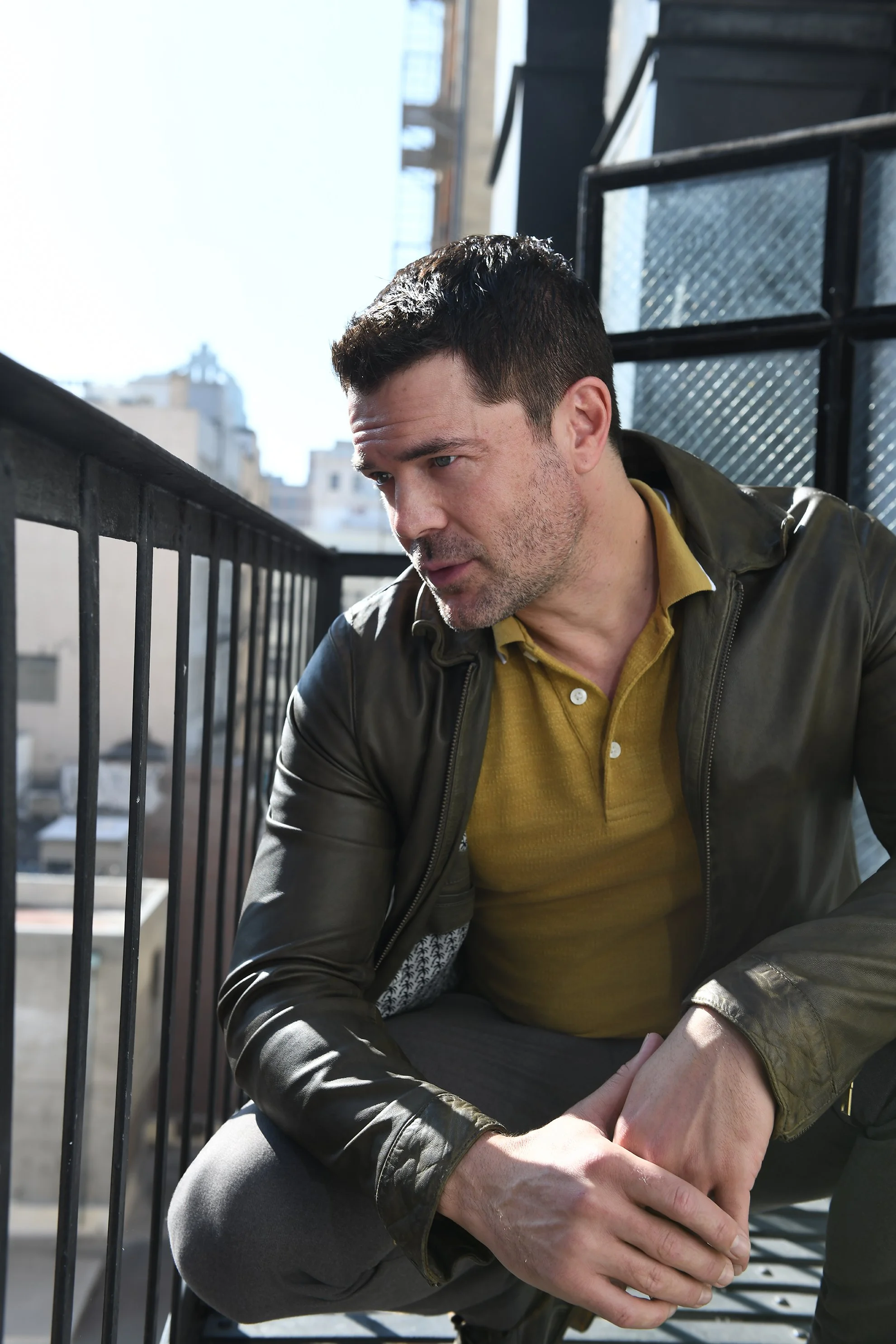
LINE OF FIRE'S TAYLOR BLOOM: THE ART OF BEING SEEN
INTERVIEW BY IRVIN RIVERA

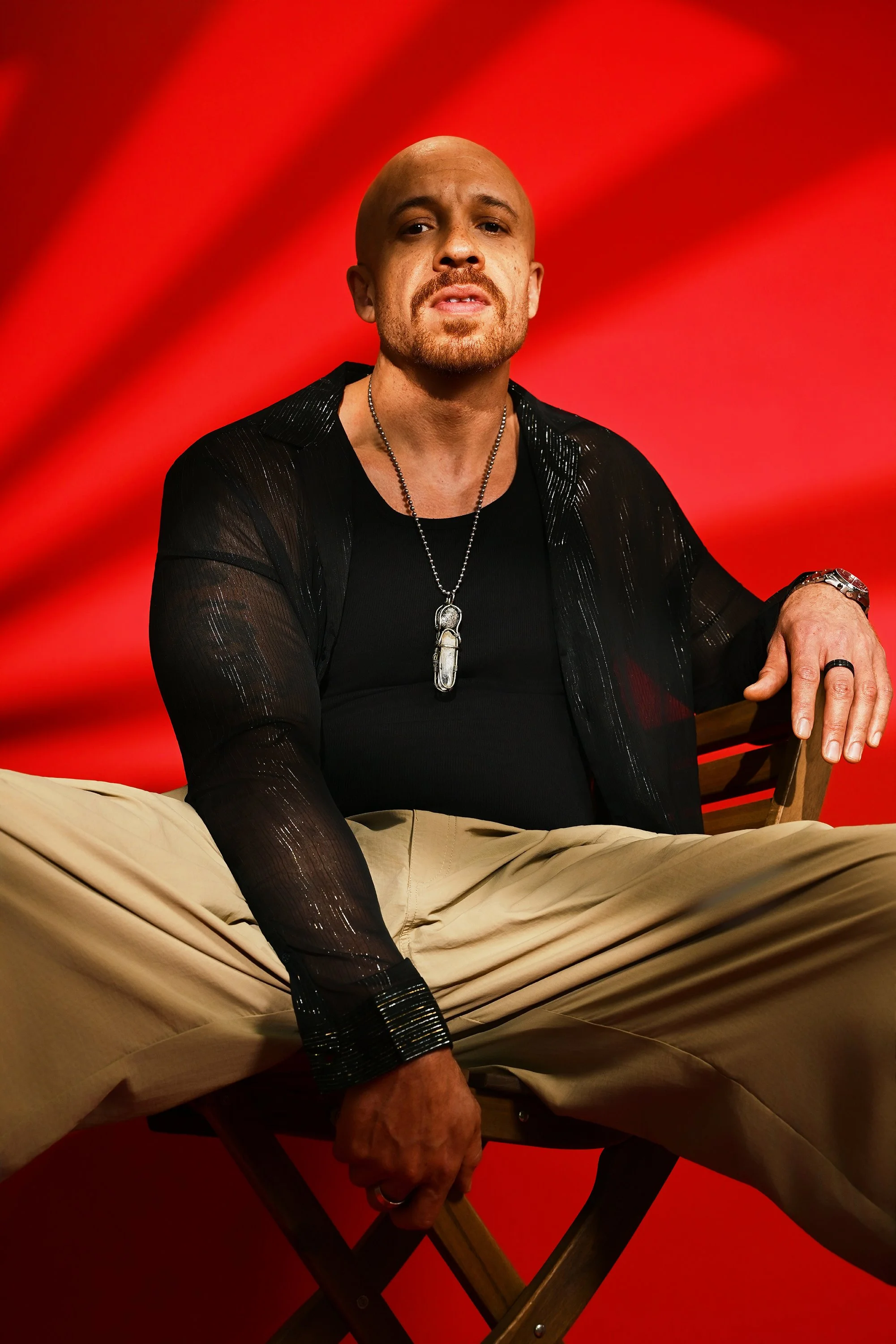
Photographer: HANNAH ROZELLE, Styling: ALLISON HERNON @ EXCLUSIVE ARTISTS, Grooming: CHELSEA GEHR for EXCLUSIVE ARTISTS Photo Asst: CHLOE COPPS, Art Director, Producer: PHIL LIMPRASERTWONG
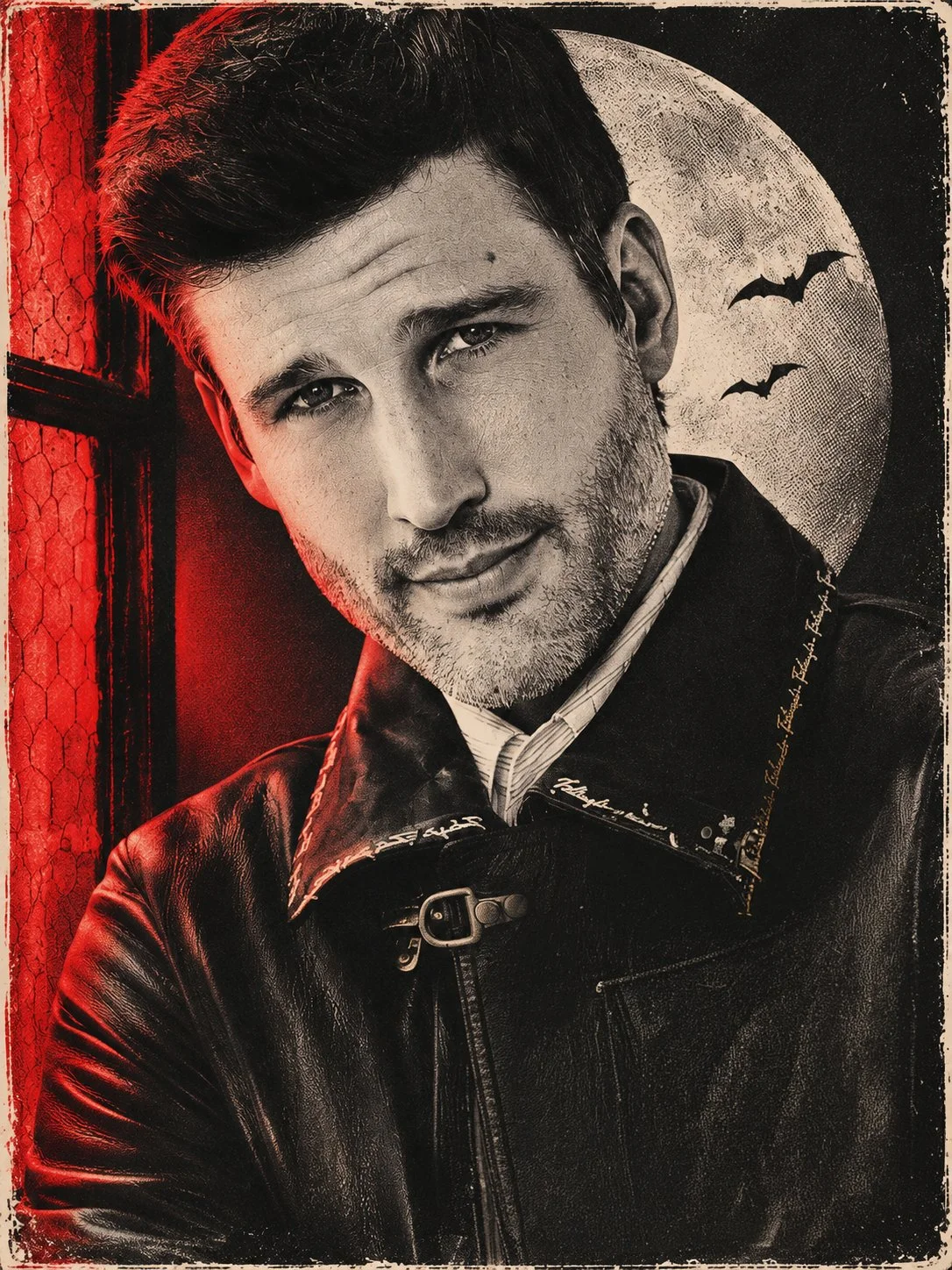
TAYLOR BLOOM knows something about being overlooked. Growing up among five brothers, including a twin, he learned to read a room before asking it to notice him. Years later, he walked past actors on New York billboards with a conviction he couldn't quite prove, writing music and making his own work while waiting for a chance to do the thing he loved most. In NBC's Line of Fire, he plays Russ, the dependable son who has made a habit of being fine, even when that means nobody notices he isn't. There is a quiet symmetry between the actor and the character: both are learning that being seen takes more than standing in the right place. Sometimes, it means letting someone close enough to see the uncertainty.
Now in his first series-regular role, Bloom is discovering the pleasures and pressures of following one character across a season, trusting his castmates, and allowing the story to surprise him. In conversation with A BOOK OF, he talks about the precarious line between conviction and delusion, the loneliness of trying to be good enough for everyone, and the gift of realizing that the dream job is not the end of the story. He speaks of the camera almost as something to make peace with: ‘You have to let that scared little kid in you learn that the camera won’t hurt you.’ And when preparation and confidence falter, he returns to a simpler idea, one that might just be the heartbeat of Russ, too: ‘Hope and courage. It’s all about hope and courage.’

You have said that growing up as one of five brothers, including a twin, you first learned how to disappear. Then acting became the place where the energy you were trying to contain was suddenly useful. Do you think learning to watch a room before taking up space in it actually helped create the actor you became?
There are so many different parts to my answer to this question, I’m not sure where to begin. Understanding how I take up space in a room has been a huge learning experience for me as a person and will continue to be a lifelong journey. It comes down to being able to read people and that is where the influence on my work as an actor comes in. Learning to quickly understand a scene partner in order to support their work, learning to quickly listen to your instincts when you pick up a new character and scene. It’s all about reading people. And of course, paramount to the entire equation is learning to listen. Really listen.
Having a twin gives you another person your own age who can function almost like a mirror, while being one of five brothers means you're constantly negotiating identity inside a group. How did you learn what was specifically yours? And has becoming an actor been partly about answering that question?
I’ve only recently come into a state of life where I think I’m beginning to be truly honest with myself. But I’m not foolish enough to think this is the last time I’ll say that. I’m still learning what matters to me and what I can let go of. Acting is one of the only certainties.

You've described years in New York when you could walk past an actor on a billboard and feel, almost irrationally, that you were supposed to be up there. How did you learn the difference between conviction and delusion when there was very little external evidence telling you to keep going?
From my view, the difference is the job. It’s not a very polite answer, but the fact is, if you live and die having believed you should have been a great actor and never getting to do it, as far as anyone else knows, you were delusional. But if you become that actor and get to work, all of a sudden, your delusion becomes conviction. What you have to make peace with is the idea that you may never get there. And if you can face down that ugly truth and still feel you have no choice but to try, then try you must. I never felt I had any other choice.
Back in 2018, you gave young actors some striking advice: find something creative you control so that your ability to make art doesn't depend entirely on somebody else saying yes. You wrote music, performed, and built things yourself. Now that the industry is saying yes more often, how do you protect the part of yourself that learned not to wait for permission?
Creative people will always have to create. For me, writing and producing music was a key ingredient to being able to keep going because it gave me some small degree of agency over my self-expression and allowed me to work the muscle. At the moment, though, I’m so filled with gratitude that I get to direct my creativity at my dream job in Line of Fire that my desire to express myself and feel recognized in my work is being more than met. Of course I still write music. That will never change.
Your screen work has moved through very different worlds, from American Horror Story: NYC to The Vince Staples Show and now a network drama where you're building one character over an entire season. How has having more time with Russ changed the way you act? Have you had to learn that sometimes the most interesting thing is what you don't reveal yet?
It’s been such a pleasure to step into a role that goes on for an entire season (hopefully many more). It’s unlike most other roles in that you discover the character’s feelings along with them. It’s a terrific lesson in learning to trust and let go, a reminder from which anyone could benefit.
You've said something fascinating about the camera: that it can see beyond technique and into your soul if you let it. For someone who learned very young how to disappear, what did you have to unlearn in order to let a camera actually see you?
I’m still learning it, truthfully. But the key is to trust the camera to see you, that’s all. You have to let that scared little kid in you learn that the camera won’t hurt you. And to rely, when you can, on your castmates.
Russ is described within his family as the easy one. He's responsible. He's controlled. He's the child everyone assumes will be fine. How do you play the loneliness that can come with being the person nobody thinks they need to worry about?
Everyone feels lonely sometimes. Apart from love, it’s maybe the most universal human experience. I love getting to play a character who struggles with feeling isolated because he wants to be good enough that no one has to worry about him. What a heroic, if flawed, ideal to strive for.

How do you protect someone's belief in goodness without making him innocent about what people and institutions are capable of?
Hope and courage. It’s all about hope and courage.
On Russ's first day at DOJ, his father is already asking him to bend professional boundaries for the family. That puts love and ethics into conflict almost immediately. How does Russ figure out where being a good son ends and becoming his own man begins?
Oh, it’s what makes the arc so interesting! Russ has no clue and he’s trying to learn the balance as he goes. We get to watch that messiness unfold and hopefully feel ourselves reflected in his uncertainty.
In “There Are Two Wolves,” Russ and Clare have to work together under real professional pressure. Clare has also been established as an older sibling who tends to underestimate him. How does their relationship change when she has to encounter him not as her little brother, but as someone whose judgment may actually matter to the outcome?
The great thing about being underestimated is that you get the chance to prove to somebody that you’re more capable than they thought. Russ gets a chance to do that and Clare sees him more clearly. It’s lovely. Clare doesn’t underestimate him because of disrespect or anything like that. She just doesn’t know him that well because their lives have been so capsized by the tragedy of Jack’s death.

This is your first series-regular role after years of trying to get to exactly this kind of opportunity. Was there a day on Line of Fire when the scale of the job genuinely challenged you, when preparation wasn't enough, and you had to find another way through? What did that experience teach you that you know you'll carry onto the next set?
I’ve had some moments like that. I remind myself to surrender to the story and to the set. We have such an incredible support on our set. Our crew is amazing, professional and compassionate and down to find the little moments of fun in the long working days. When I feel like I’m not enough, I remind myself that I’m a small piece of a grand, beautiful puzzle.
For years, you had this internal certainty that acting was where you belonged even when your life wasn't giving you much proof. Now you've said that you finally feel at home in your own life. If this moment is the beginning of a new chapter rather than the ending you've been working toward, what do you want that chapter to be about?
That’s just how I feel. Now things can get started! I’m excited to enjoy the work of being an actor; Of reading scripts and auditioning for parts, and getting to be a part of the conversation.