Red Bull Chapters: Rauw Alejandro
STORY: OSVALDO ESPINO
If there’s a face synonymous with reggaetón right now, Rauw Alejandro is one of the first two or three names that comes to mind. It’s not hard to understand why. Over the last decade, the Puerto Rican superstar has amassed some of the genre’s biggest records while constantly stretching its boundaries, pulling from R&B, house, salsa, pop and just about anything else that catches his ear.
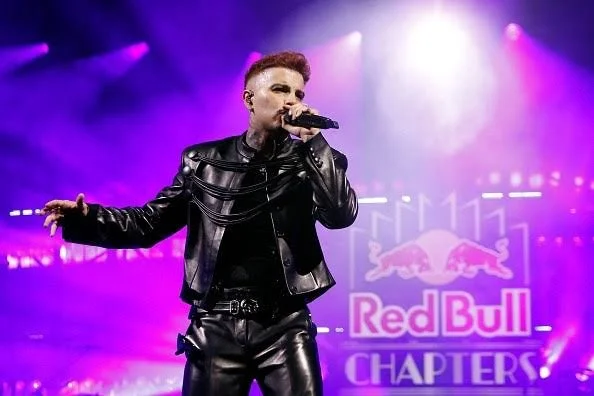
photo credit: redbull
So when Rauw announced his return to the stage with Red Bull Chapters, the expectations felt particularly high. The pair of shows at Forest Hills Stadium in Queens on Sept. 5 and 6 marked the global debut of Red Bull’s new concert series, designed around telling an artist’s story through an immersive live performance. The second night was added after overwhelming demand for the first. More importantly, the performances arrived at an interesting moment for Rauw. With the Cosa Nuestra era behind him and fans waiting to see where he goes next, Chapters felt less like another stop on a tour and more like a bridge between eras.
Forest Hills was transformed for the occasion, complete with a second stage toward the rear of the stadium that brought the performance closer to fans throughout the venue. The entire production unfolded in three acts, “Inspiration,” “Momentum” and “Legacy”. Using Rauw’s catalog to trace where he came from, how he got here and, eventually, where he might be headed next, the night began with Puerto Rico.
As visuals evoking the island filled the screens, Rauw got on stage to “Santa” with newly red hair and a leather heavy look that immediately suggested something different. There was a rockstar quality to him that would become increasingly important as the night went on. But before looking forward, the first chapter was about the sounds that built Rauw in the first place. Songs like “2/Catorce” and “Committed” represented the smoother R&B and pop sensibilities that have always lived beneath his reggaetón records. Then came his rendition of Frankie Ruiz’s “Tú con él” and “Carita Linda,” bringing Puerto Rican musical tradition directly into the story.
Rather than arranging the set chronologically, Rauw used these songs almost like pieces of a mood board. Reggaetón, salsa, R&B and pop existed next to one another because, for Rauw, they always have. That became the point of “Inspiration”: before Rauw Alejandro became one of Latin music’s biggest stars, he was a kid absorbing everything around him. Then somebody turned the guitars up.
The second chapter, “Momentum,” was easily the night’s most aggressive shift. Songs including “Baby Hello,” “DIME QUIÉN????,” “Todo de Ti,” “Tiroteo (Remix)” and “Desenfocao’” were pushed through heavier live instrumentation, giving familiar tracks a grimier, more muscular edge. Distorted guitars roared through Forest Hills, but what made them feel even bigger was the crowd.
There were moments when Rauw barely felt like the loudest person in the stadium. Thousands of fans screamed every lyric back at him, their voices bouncing around the venue until songs felt twice their actual size. Girls screamed. People cried. At one point, panties started flying toward the stage. It is a Rauw Alejandro show, after all.
This was also where Red Bull’s fingerprints became impossible to miss. Action sports elements were folded directly into the production, including skateboarding and a motorcycle stunt sequence that turned portions of the concert into something closer to a live-action Red Bull commercial, except that description undersells how naturally it worked. There was always something happening. Between pyro, guitars, bikes, dancers, and wardrobe changes, the show was constantly trying to outrun itself.
On paper, that combination could easily become sensory overload. Instead, Rauw and Red Bull had a strange but effective synergy. Both brands are obsessed with spectacle, movement and the idea of pushing things just a little further than necessary. For a concert teasing Rauw’s evolution into something resembling a full fledged rock star, there might not have been a better partner.
Then came Tainy. The producer appeared on the B-stage to open the final chapter, “Legacy,” with a DJ set built around records that have helped define modern reggaetón. “El Teléfono,” “Salgo Pa’ La Calle,” “Permítame,” “Safaera” and other classics turned Forest Hills into a giant perreo while Rauw disappeared momentarily from view. It was one of the smartest moments of the show.
If “Legacy” was supposed to examine Rauw’s place within reggaetón, then beginning it with Tainy acknowledged that the genre is bigger than any one artist. Before Rauw could look toward his own future, the show tipped its hat to the producers, songs and artists who helped build the world he now occupies.
Then Rauw returned. Dressed in white and now surrounded by the majority of the stadium from the B-stage, he launched into “Party,” and the energy somehow jumped another ten levels. Flashlights filled the stands. His band joined him. Rauw sang, danced and moved through “PANTIES Y BRASIERES” and “DILUVIO” before Chencho Corleone emerged for “El Efecto” and “Desesperados.”
That was the peak of the night. There are hit records, and then there are records that seem genetically engineered to be screamed by thousands of people at the same time. “El Efecto” and “Desesperados” belong in the latter category. Watching Rauw and Chencho perform them together while Forest Hills completely lost its mind was a reminder of how deeply these songs have worked their way into the modern reggaetón canon.
From there, there was really only one way to finish. “Qué Pasaría...,” “LOKERA” and “PUNTO 40” closed the night in pure perreo fashion, sending the stadium out dancing. But strangely enough, the lasting impression of Red Bull Chapters wasn’t nostalgia. It was anticipation.
Throughout the show, Rauw kept dropping hints about what might come next: the red hair, the leather, the distorted guitars, the flashes of Elvis-like showmanship, James Brown footwork and the swagger of old school rock bands. He has spent years proving that reggaetón doesn't have to live inside one sonic box. At Forest Hills, he seemed ready to blow that box up again.
That may ultimately be why Red Bull Chapters worked so well.
“Inspiration” showed us what made Rauw. “Momentum” showed us what made him a superstar. “Legacy” celebrated what he has already contributed to Latin music. But underneath all three was a fourth, unofficial chapter: