Tame Impala takes over Dallas
BY: OSVALDO ESPINO
film BY: Colt GricE
Tame Impala has always sounded less like a traditional band and more like a portal into Kevin Parker’s brain. At American Airlines Center in Dallas, that portal opened wide. Parker brought the ongoing Deadbeat tour to North Texas for a sprawling, nearly two-hour performance that transformed the arena into equal parts nightclub, psychedelic fever dream and rock show. For an artist whose music has always lived somewhere between progressive alternative rock, electronic experimentation and meticulous sound design, the massive setting somehow made the songs feel even more immersive.
That has always been the magic of Tame Impala. Despite the band name, the project is essentially Parker’s singular vision. Over the past decade-plus, he has helped reshape the language of modern alternative music, blending guitars, synthesizers, dance rhythms and studio experimentation into music that feels almost hallucinatory. Listening to a Tame Impala album can feel like being on a trip. Whether it turns out to be a good one or a bad one usually depends on your mood. In Dallas, it was hard not to enjoy the ride.
Before Parker took the stage, Dominic Fike opened the night with a performance that was as much personality showcase as concert. Fike has experienced another surge in popularity thanks to songs such as “Babydoll” and “White Keys,” and his charisma makes it easy to understand why audiences continue gravitating toward him. He is unapologetically himself onstage, bouncing between musician and comedian so naturally that parts of his set almost felt like a stand up routine with guitar breaks.
Fike has described what he does simply as “guitar music,” but his ability to command a room goes beyond genre. Even with a relatively early 7:15 p.m. start, while thousands of people were still entering the arena, buying merchandise and locating their seats, his sound quickly pulled attention toward the stage. There was one major interruption when technical issues brought the performance to a halt for roughly 10 minutes. Once the sound returned, however, Fike immediately found his stride again, moving through crowd favorites including “Why” and “How Much Is Weed?” as the building steadily filled around him.
Then came Tame Impala. Parker arrived around 8:45 p.m. and wasted little time easing into the spectacle, opening with “Apocalypse Dreams.” From there, the next two hours became a reminder of just how deep the Tame Impala catalog has become.
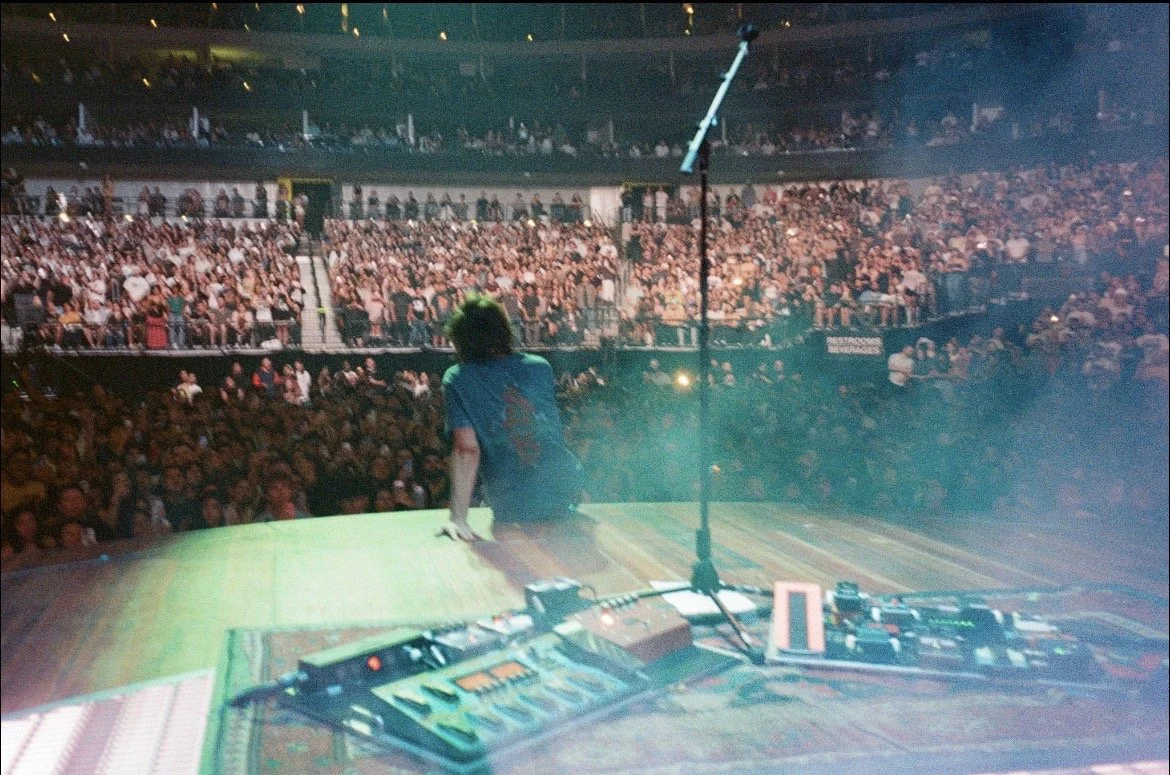
The production was stunning both sonically and visually. The main stage sat in the middle of the arena in a circular configuration, surrounding Parker and the band with instruments, lighting and visuals from seemingly every direction. Elsewhere in the arena was a smaller B-stage built for more intimate moments, complete with additional instrumentation and pillows. At one point, Parker simply laid down there while performing two songs, temporarily shrinking an arena sized production into something closer to a bedroom listening session. Those contrasts became one of the most impressive parts of the night.
The show constantly shifted between massive spectacle and smaller moments of experimentation. Instrumental pieces such as “Nangs” and “Gossip” became opportunities for lighting and visuals to take over the arena, while transitions between songs felt carefully designed rather than simply placed next to one another on a setlist. Even familiar songs seemed to gain new dimensions live.
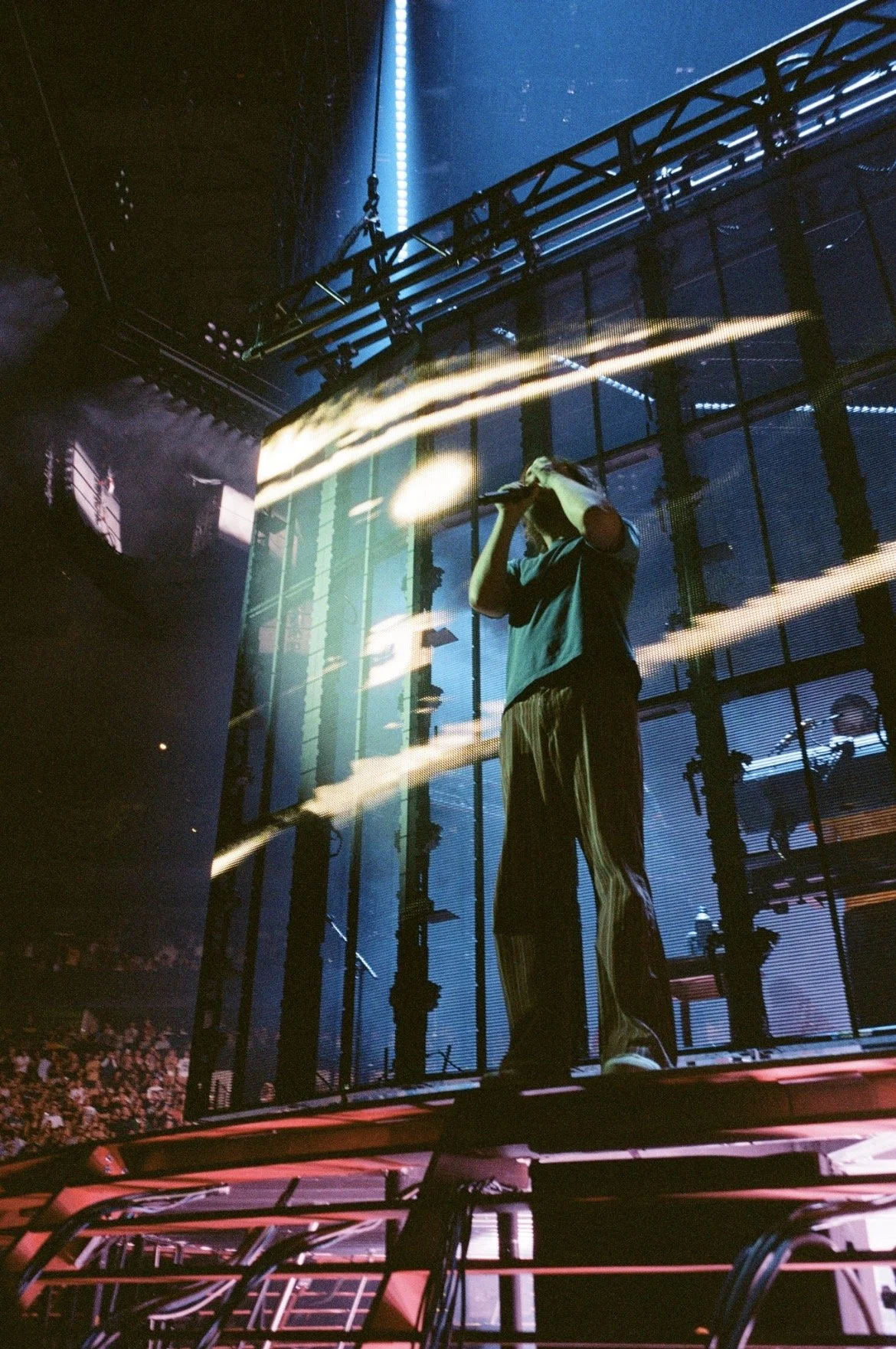
When the drums crashed into “Eventually,” the impact felt physical. The song instantly jolted the building awake, creating one of those concert moments where thousands of people suddenly appear to lock into the exact same rhythm. It was also a reminder of something that can occasionally get lost when talking about Parker’s production skills: Tame Impala has an absurd number of great songs.
Material from Deadbeat fit naturally into the set, including “Afterthought,” the viral “Dracula” and “Loser.” The new album’s heavier disco and house influences translated particularly well inside an arena, where basslines and electronic textures could completely surround the crowd. Still, the biggest reactions belonged to Currents.
A decade after its release, songs from the album already feel timeless. During “Let It Happen” and “Eventually,” the crowd shouted lyrics word for word while lights, screens and sound engulfed the room. It felt less like watching an artist revisit older hits and more like witnessing songs that have permanently entered the language of a generation.
That may ultimately be the most striking thing about seeing Tame Impala in 2026. Parker’s music no longer belongs to one particular wave of indie rock, psychedelic pop or electronic experimentation. The audience included people who discovered Tame Impala years ago alongside younger fans encountering those songs through completely different cultural moments. There are few contemporary artists whose music feels capable of crossing generations that way.
By the end of the night, it was difficult not to think about the legacy Parker is building. In some ways, Tame Impala feels like a modern parallel to groups such as the Grateful Dead and not necessarily because the music sounds alike, but because the experience surrounding it feels capable of evolving beyond any single album cycle. The production can change. The audience can change. The musical influences can change. But the songs continue to pull people into Parker’s strange, colorful universe.
And if the Dallas stop of the Deadbeat tour proved anything, it is that Kevin Parker is no longer simply one of alternative music’s most influential producers. He is building the kind of catalog people may be gathering in arenas to hear for decades.