Audien in Real Time
BY: JESSE ZAPATERO
it helps to understand where Audien stands right now—an artist balancing scale, emotion, and intention in a way that continues to evolve. Grammy-nominated and more than a decade into his career, Audien has built a reputation for creating music that prioritizes feeling as much as impact. From early chart success to a catalog that continues to connect with listeners, his work has consistently centered on emotion—tracks that start from something personal and expand into something shared. That throughline has only sharpened with his recent output.
At the same time, Audien’s presence off the record continues to grow. His self-created platform, Progressive House Never Died (PHND), has expanded into a full-scale movement, selling out major venues while reinforcing the staying power of the genre he’s long supported. Onstage, that vision translates into sets that balance introspection with energy—whether in packed crowds or more intimate rooms.
Now, with HAVING supported Illenium at the Sphere in Las Vegas—one of the most technologically ambitious venues in the world—Audien steps into another pivotal moment. It’s not just about reaching bigger stages, but about expanding how his music is experienced altogether.
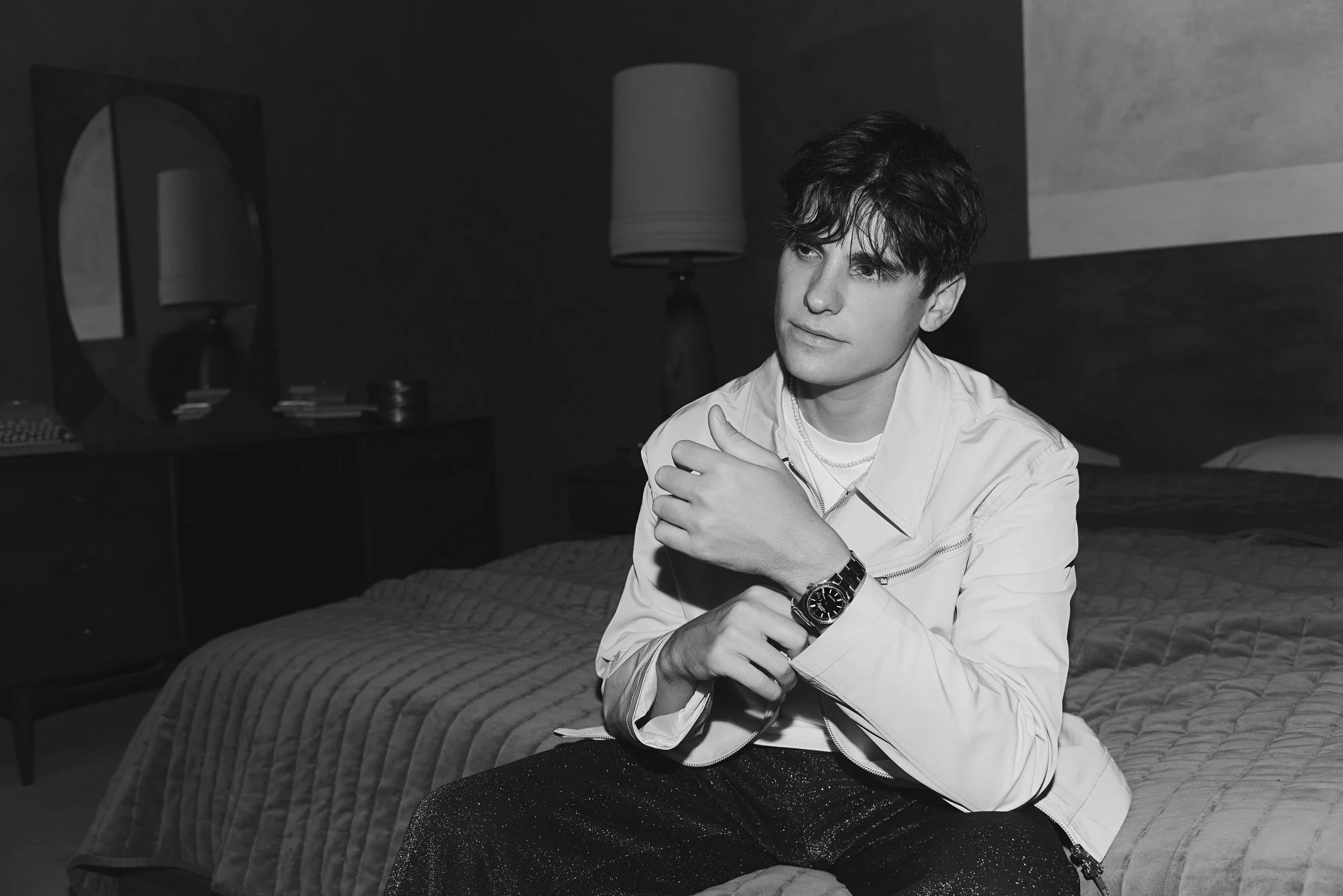
Photo by: David Higgs
“First Love” and “In Every Life” both carry deeply personal themes. How do your own life experiences shape the emotional core of your music?
I pull from real moments. The music usually starts from a feeling I’ve lived through, and everything builds around that.
When producing deeply emotional tracks, how do you balance vulnerability with the energy and rhythm needed for dance music?
It’s about contrast. The emotion pulls you in, and the energy gives it impact. One doesn’t work without the other.
Touring globally exposes you to diverse crowds. Has there been a moment on the road that fundamentally shifted how you view your music’s purpose?
Seeing crowds sing back records that came from really personal places always hits me. It reminds me the music is bigger than just me.
Collaborating with artists like Skylar Grey and Julia Church requires translating emotion into electronic production. How do you ensure authenticity in these collaborations?
It always starts with the vocal and the story. If that feels real, my job is just to build a world around it that supports that emotion.
When you hit a creative block, what rituals or processes help you reconnect with Inspiration?
Stepping away helps a lot. Going outside, walking, resetting. It usually comes back when I’m not forcing it.
PHND (Progressive House Never Died) has become a movement celebrating progressive house. How does curating these events influence your own music and production style?
It pushes me to stay true to the sound but also elevate it. Seeing what connects live definitely influences what I make in the studio.
Performing at the Sphere in Las Vegas is a milestone. How does the venue’s immersive technology shape your approach to the live set?
It changes everything. We created all new visuals for it so we could really build a fully immersive world for the fans. You’re not just playing music, you’re shaping an entire experience, and every moment needs to feel intentional.
You’ve played both intimate venues and massive festival stages. How do you adapt your set design or song selection to different crowd sizes?
Smaller rooms let me go deeper and more emotional. Bigger stages call for more energy and bigger moments, but I still try to keep the feeling there.
When planning a live set, how do you translate abstract emotions into energy that moves the crowd?
It’s all in the pacing. You build tension, release it, and let people feel that journey together.
During high-profile shows, how do you mentally prepare to deliver a performance that’s both precise and emotionally engaging?
I try to stay present. Once I’m on stage, it’s about feeling the crowd and letting that guide me.
·PHND events sell out major venues and attract multiple generations of fans. What do you think it is about progressive house that continues to resonate so widely?
It’s emotional and timeless. It connects with people in a way that goes beyond trends.
When releasing deeply personal music, how do you reconcile your private emotions with the public interpretations by fans?
Once it’s out, it belongs to them too. I think it’s special when people find their own meaning in it.
What’s the most memorable reaction or moment you’ve seen from a crowd that affirmed the emotional power of your music?
Hearing a full crowd sing back a record that started as a really personal idea. That never gets old.
Looking at your upcoming Sphere set and mini-festivals, what specific feeling or experience do you hope the audience takes away?
I want people to feel something real. Whether it’s joy, nostalgia, or connection, just something that stays with them.
·At the end of a set, when the lights dim and the crowd is fully immersed, what internal experience do you hope to leave with, both as an artist and a human?
Gratitude. Just being present in that moment and appreciating it.
Music often acts as a diary. Which track from your catalog best reflects who you are right now, and why?
“In Every Life.” It feels the most honest to where I am right now emotionally.
· If you were a book, what book would you be and why?
Something unfinished. Still evolving, still being written.