MAGGIE NICOLE ROBINSON
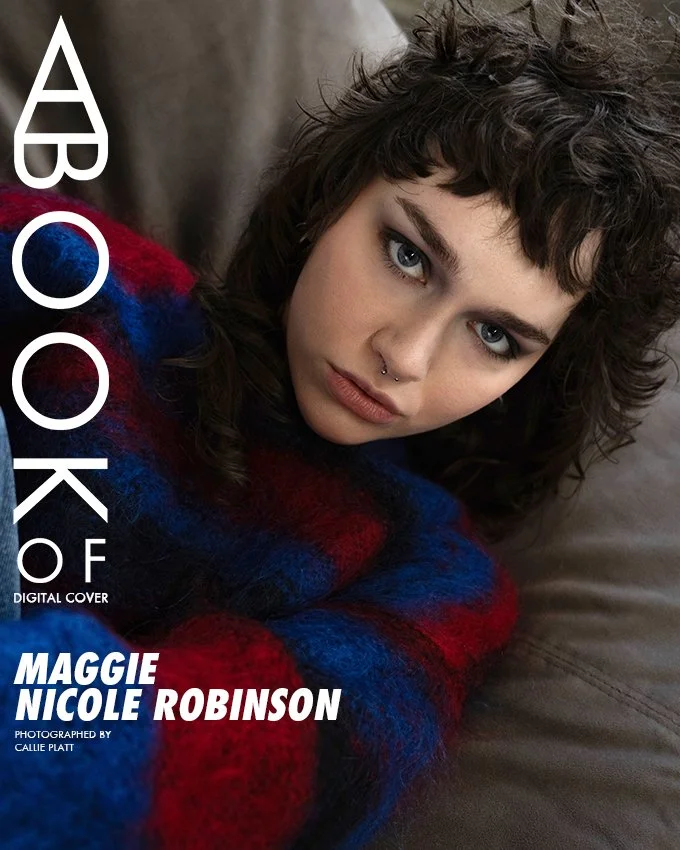
Photographer: CALLIE PLATT
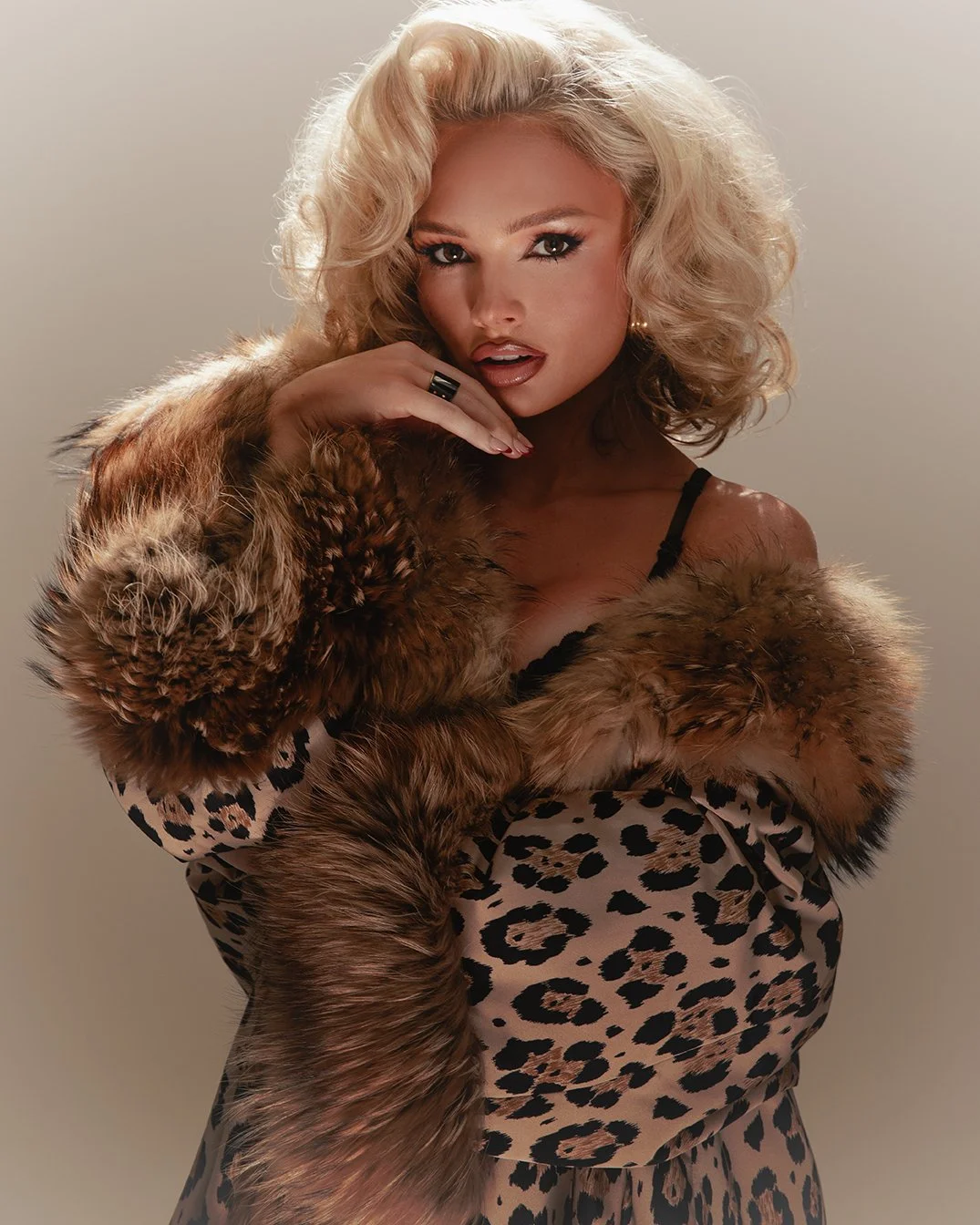
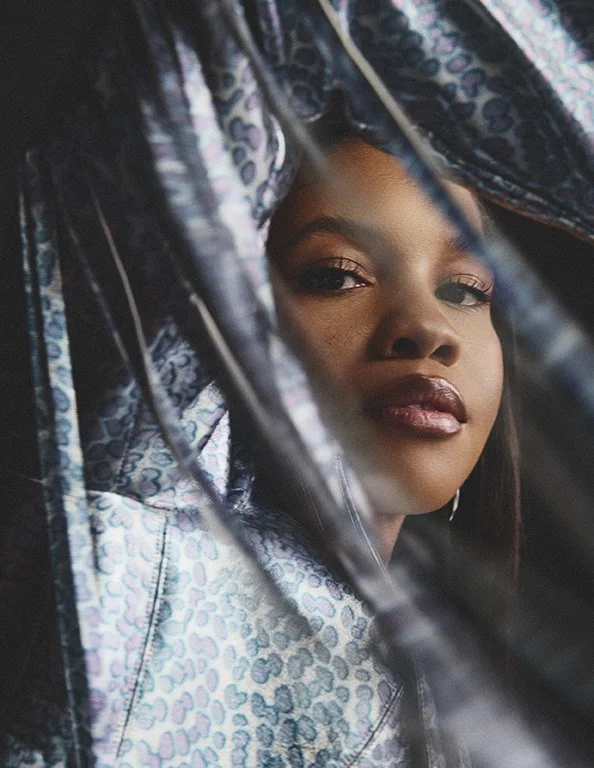
MAGGIE NICOLE ROBERTSON was directing stuffed animals long before anyone handed her a script. Growing up in Saskatchewan, she made music videos with her sister, turned backyard afternoons into productions, and discovered that imagination could make a stage out of almost anything. That instinct carried her through theater, photography, sound, design, and independent films, where freezing weather and borrowed wardrobe were less obstacles than part of the adventure. Now she steps into a bigger, bloodier playground as the quick-witted Duff in Tommy Wirkola’s Violent Night 2, alongside David Harbour and Kristen Bell. But beneath the mayhem is the same artist who learned early that making something worthwhile means trusting the people beside you, staying curious, and never taking yourself too seriously. In this conversation with A BOOK OF, Robertson reflects on the freedom to reinvent herself, finding vulnerability underneath a joke, and why a larger stage should never mean leaving her creative community behind. Her guiding philosophy is refreshingly simple: “Be serious about the job, but don’t take yourself too seriously.”
You grew up across Saskatchewan and found theater very young. In smaller creative communities, artists often learn to make something with whatever is available rather than waiting for the perfect opportunity. How did growing up there shape your instinct to create before anyone was necessarily inviting you to?
I grew up making things pretty instinctively. Even before I was taking acting classes, I was acting. My preschool teacher told my parents that I would become an actor. Acting and directing seemed to happen naturally for me. I made music videos with my sister in the backyard, directed my friends in iMovie trailers, and created detailed storylines for my stuffed animals.
There wasn’t a lot to do in Saskatchewan, so I relied on my imagination and the technologies I had to make things and entertain myself. When I started taking drama classes, I got to do all the creative things I loved doing, but with other creative people and with an audience. Drama really set me up for success and taught me how to make things with other people. I realized that collaborating with other creatives is how I make my best work. If I want to make something good, I just have to surround myself with artistic people that I trust, and something will generate.
That’s why university was so creatively fruitful for me. I helped my friends with short films and acted in them for free. I did performance art around campus and created sound art and music. It was a fun time.
When the pandemic disrupted your original plan to study theater, you moved into Creative Technologies, and suddenly your education expanded into photography, design, sound, film, performance, and other forms. Looking back, how did something that initially felt like a detour change your understanding of what kind of artist you were allowed to become?
Before university, I had a very rigid idea of what I needed to do with my life. I put so much pressure on myself at eighteen to pick one thing and stick with it forever. It was an impossible expectation. I thought about being an art teacher or a graphic designer, but it was so hard for me to pick just one thing and commit my life to it.
Creative Technologies was great because it was a bit of everything. I had the opportunity to experiment with so many different artistic approaches and methods. It taught me that I don’t have to be one thing. I can be an artist who dabbles in multiple different forms. I can reinvent myself as many times as I want. I can also learn something new and feel free enough to fail and try again. It’s important to have this mindset as an actor because you are always experimenting and trying new things and FAILING.
You have worked on both sides of the frame in ways many actors have not. You have designed sets, run lights and sound, made photographs, edited videos, and created visual art. When you walk onto a film set now, what do you notice that you might not have noticed if acting had been your only creative language?
As a theatre artist, I’ve dabbled in many aspects of the staging process, like arranging set pieces, putting together costumes, running lights and sound, directing, and writing. And through my Bachelor of Arts, I had the opportunity to play with many different art forms like photography, video, sound, graphic design, AR, etc.
I think these experiences inform every creative project that I am a part of, even acting in a film. I think it gives me an extra layer of awareness on set, as well as a deeper sense of wonder and curiosity. There are certain things I pay attention to on set. I am always especially mystified by set design and costumes. It’s something I appreciate a lot as an actor, as a detailed set and costume bring a deeper sense of immersion and help me feel closer to the character.
You have talked about the very hands-on experience of making A Storm Blows Over, where you were handling your own wardrobe and makeup, changing wherever you could, and physically throwing yourself into the work. When you arrived on something at the scale of Violent Night 2, what habits from those smaller productions did you realize you never wanted to lose?
I am grateful that indies have given me the chance to be more closely involved in every step of the film process. Through the often less-than-ideal conditions (like freezing weather, getting soaked with rain, or extremely long hours), I developed a pretty thick skin. So the overnight shoots on Violent Night 2 were light work for me.
While working on indies, I often got a say on costume choices. In fact, most of the time I brought clothes from my own closet for the character. I think the most important lesson I gained from working on indies is to be kind, patient, and remember you are there because you love it. Don’t lose sight of what’s really important: the people around you. It’s important to always work hard and be conscious of how hard other people are working (like the crew). Remember that everyone on set is a team and working toward the same goal. Keep it light, fun, and loving. Be serious about the job, but don’t take yourself too seriously.
Jeremy Ratzlaff has said that the quietness and subtlety of your performance as Kit in By Faith, Denis made him want to explore that character more deeply in Fear & Trembling. What did that experience teach you about trusting a small acting choice when the instinct might be to make sure the audience sees what you are doing?
I lean toward subtlety more often than not in my film acting career. It’s what feels the most natural to me. In By Faith, Denis, my character, Kit, was quiet and withdrawn. She didn’t want anyone to see what she was going through. She was trying to hide her emotions and her tears. So I had to generate all that feeling inside and keep it there, trying my best not to let it escape.
My drama teacher told me a long time ago that it is more powerful to hold back tears than push them out. This idea really helped me with Kit and her emotional scene because it wouldn’t be natural for her to break down in front of her peers and abuser. She wouldn’t want them to see her cry.
The public casting description for Duff calls her sharp-witted, loud, loyal, and deeply funny, but also someone with nowhere else to go. She is part of this overlooked group of young people who find purpose when their community is threatened. How did you find the vulnerability underneath someone who initially presents herself with that much attitude?
I had to realize that the attitude and humour are how she hides the vulnerability, and it is all still there inside, trying to get out. She pushes it down with jokes and confidence. She doesn’t want her friends to know what’s really going on with her because it’s a bummer. I think part of her thinks it’s uncool or weak to reveal your struggles.
There is a moment in the film where she lets it out for a second. She is vulnerable. That scene is very revealing of who she really is underneath all the jokes. It’s probably my favourite moment.
You had already entered horror comedy with Deathgasm 2: Goremageddon, but Violent Night 2 is operating on a very different scale, with action, violence, and comedy all happening at once. How did you learn where Duff could be genuinely funny without making the danger around her feel less real?
A lot of Duff’s humour is in her reactions to the horrifying ridiculousness of everything that is happening and the other characters. So being present in scenes was key. Also, two things can exist at once. At times, Duff was feeling the ridiculousness of the situation and acknowledging the comedy while still being afraid.
What challenged you most while making Violent Night 2? Was there a scene, physical demands, or a moment when the scale of the production pushed you beyond what had worked for you before? How did you get through it, and what did that experience teach you that you still carry into your work now?
This set was pretty cushy for me, to be honest. I had a green room, constant access to food and drinks, people to talk to, and a very comfortable costume. The one element that was especially challenging at first was the stunts, especially since I only had an hour or two to learn them.
But I was so glad that I got to do stunts at all. And the stunt team was so supportive, professional, kind, and patient. They made it easy and fun. I’m really excited for people to see the stunts, and I'm proud of my little action sequences.
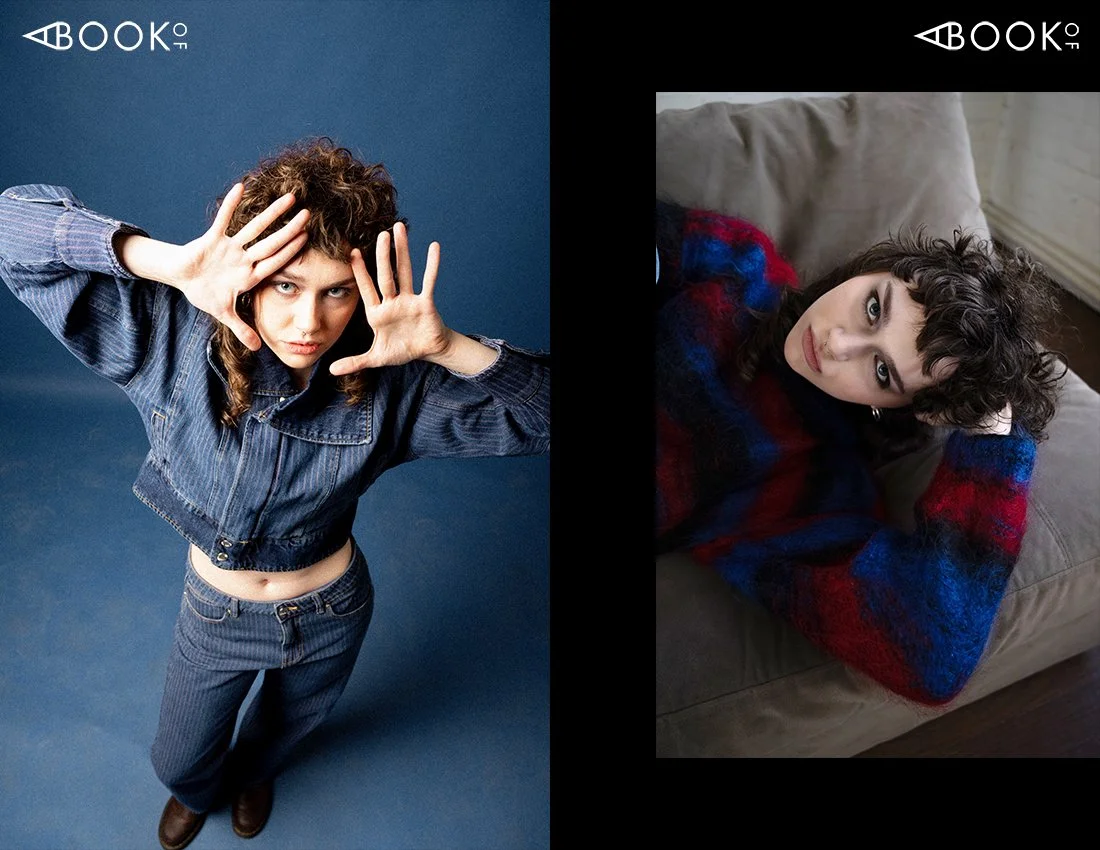
You still teach young artists, and you have spoken about how much the Prairie filmmaking community gave you through collaboration and people helping one another. Now that your own career is moving into much larger spaces, how do you think about giving something back? What do young artists growing up outside the major industry centers need besides talent in order to believe there is a place for them?
Giving back is so important. Teaching kids drama is one of the ways I help the next generation of artists. My ultimate goal in teaching is to give kids a voice. Aside from talent, every artist needs these things:
· Community
· Confidence
· Collaboration
· Curiosity
· Resilience
· Empathy
· Imagination
· Passion
· Love
You have spent your life refusing to be only one kind of artist: actor, photographer, designer, filmmaker, teacher, visual artist. As the industry begins to know your name for acting, what part of the larger Maggie do you most want to make sure never disappears from the story?
· My passion for doing the right thing
· My personal style
· My core beliefs
· My love for weird stuff and experimentation
· My love for genuine connections
· My dedication to art and the craft of acting
If you were a book, what book would you be and why? It can be an existing title, a book that does not exist yet, a type, a genre, or anything else that feels like you.
I read a book recently called Shantaram. It’s one that I can’t get out of my mind. It’s very different from my life or the life I see myself living, as it follows a man who escapes from an Australian prison and flees to India. While he lives in India, he completely immerses himself in the culture.
What resonates the most with me from Shantaram is the connections that the main character makes with other people, despite boundaries like culture, language, religion, and experience. He is able to make so many meaningful relationships that give his life so much colour. I’d love to be able to connect with people the way he does and stay curious about my environment. I want to maintain a sense of wonder about the world and be as fearless as he is about new experiences and travel. And I want to always be open to learning from others.