SEBASTIAN AMORUSO BRINGS A POET’S HEART TO A FIGHTER’S WORLD
INTERVIEW BY IRVIN RIVERA

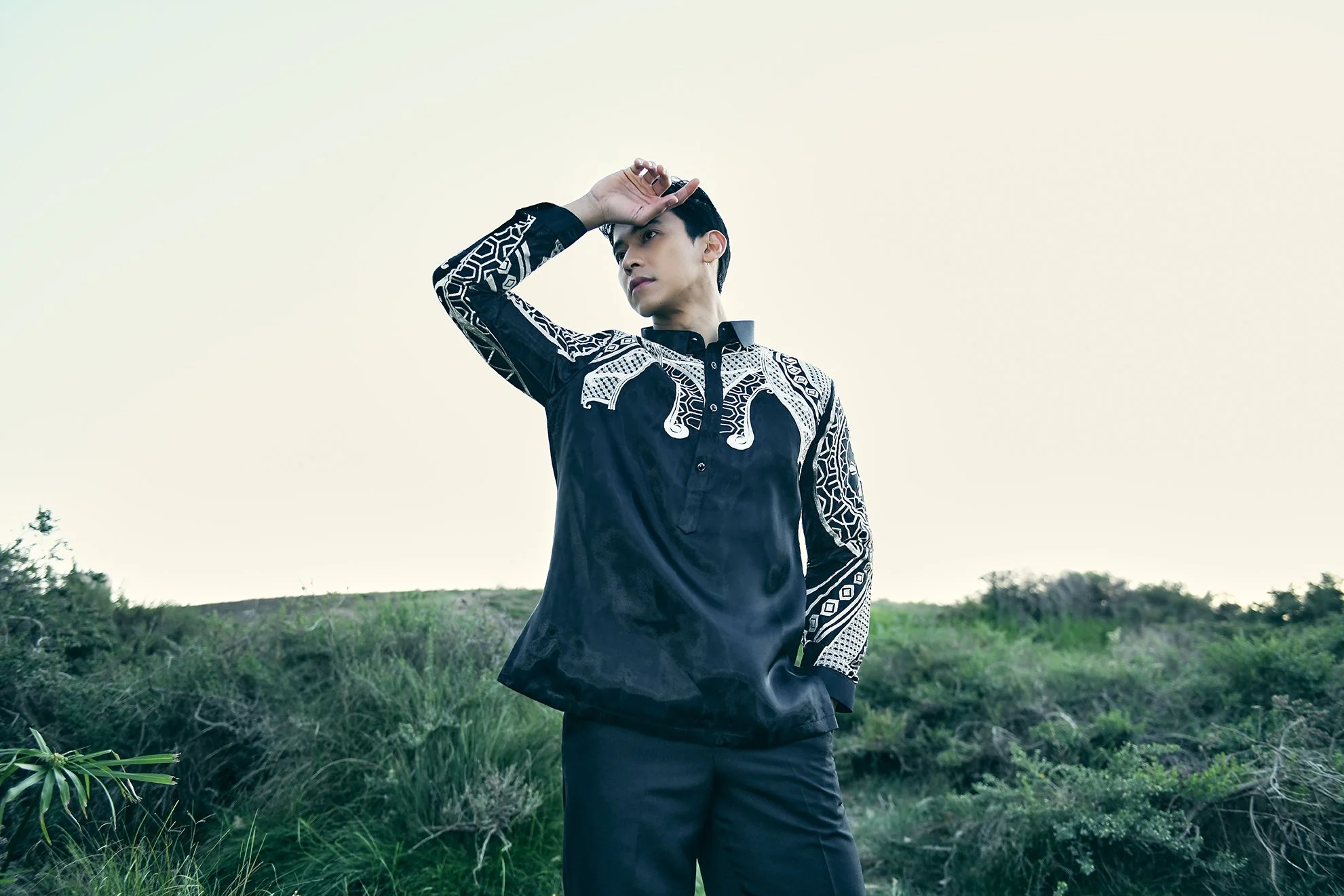
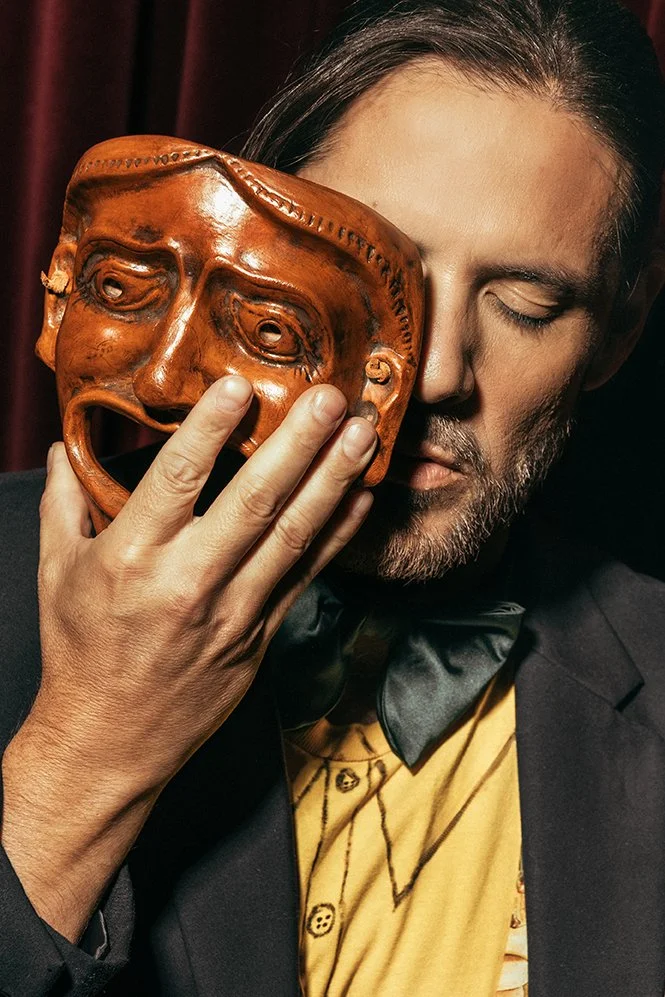
PHOTOGRAPHER: IRVIN RIVERA, STYLING: BRANDEN RUIZ, HAIR & MAKEUP: LISA HEITMAN, DIGITECH: PHIL LIMPRASERTWONG, PHOTO ASST: NATHAN GATDULA, LOCATION: STUDIO METROPOLIS
SEBASTIAN AMORUSO steps into a story where fire leaves more than ash, where grief learns to speak in strategy, and where a boy with a smile and two blades can become both shelter and storm. In Netflix’s Avatar: The Last Airbender Season 2, Amoruso brings Jet to life as the magnetic leader of the Freedom Fighters, a young rebel whose charm is not decoration but ammunition. He does not soften Jet’s danger. He gives it a heartbeat.
In conversation, Amoruso moves with the same precision he brings to the role, part poet, part fighter, part student of consequence. He speaks of growing up near Washington, D.C., where history is alive, argued over, and rewritten in real time, and of how that shaped his understanding of justice, identity, and rebellion. He talks about theatre as emotional discipline, stunt work as truth in the body, and representation as something larger than visibility. “Charisma is the danger,” he says of Jet, naming the blade beneath the smile. Then, with the kind of clarity that turns an interview into a confession, he offers the line that lingers longest: “I’d rather have the conviction and lose than protect my ego and never risk anything real.”

You are often described as coming from Washington, D.C., a city where history is not just framed on walls but argued over in the streets. How did that hometown atmosphere shape your sense of justice, performance, or the way you read a character like Jet?
Growing up around D.C., you learn fast that history isn’t dead. It’s alive; it’s contested, and people are constantly fighting over which version of the truth gets remembered. Justice there isn’t a concept — it’s something people argue, legislate, protest, and distort in real time.
That’s how I read Jet. He doesn’t wake up wanting to be cruel. He lived through injustice and built a whole identity around answering it. That’s compelling, and it’s dangerous, because D.C. taught me ideals can be noble and still turn violent the second they stop making room for someone else’s humanity. Jet isn’t performing rebellion. He’s living inside a wound that became a philosophy. That’s always more interesting to me than playing good or bad — the moment someone’s pain becomes political, and then the real question is whether they’re still protecting people or just protecting the story they need to believe about themselves.

Before many viewers met you through streaming, you had stage rooms, rehearsal halls, music training, and Stagedoor Manor in your bones. How did theatre teach you to listen before it taught you to be watched?
Theatre is one of the most visceral things an actor can do, because you’re in the same room, the same breath, as the people you’re telling the story to. It can feed you, and it can destroy you. You learn quickly that performing isn’t waiting for your turn to be interesting — it’s listening so deeply that the next thing you do feels inevitable. There’s no editing on stage. The second you stop listening, the whole thing goes fake.
I had a run that taught me that the hard way — a play called 410[GONE], where I had to take my own life on stage, eight shows a week, for four months. That teaches you something about commitment and about protecting yourself. You have to build real emotional strength so you can live inside a character’s pain without sealing yourself off from your own life, and without leaning on the audience’s energy to carry you through it. It taught me artistic hygiene — that stepping into someone else's life will bleed into your own, and you have to consciously decide what you take from a character and what you leave behind.
A lot of my discipline came earlier, from the violin. Practicing the same four bars for four hours in what felt like a concrete cell, day after day, at places like Interlochen and the Suzuki institutes. That kind of repetition gives you a specific intensity, and, paired with my athletic training, it became the way I approach the physical and emotional life of a role. It carried straight from the stage into the stunt work and scene work. With Jet, all of that lives in his listening. He’s charismatic and forward-moving, but his power lies in his ability to study people. He feels the room — when to smile, when to go quiet, when to push, when to let someone come to him.
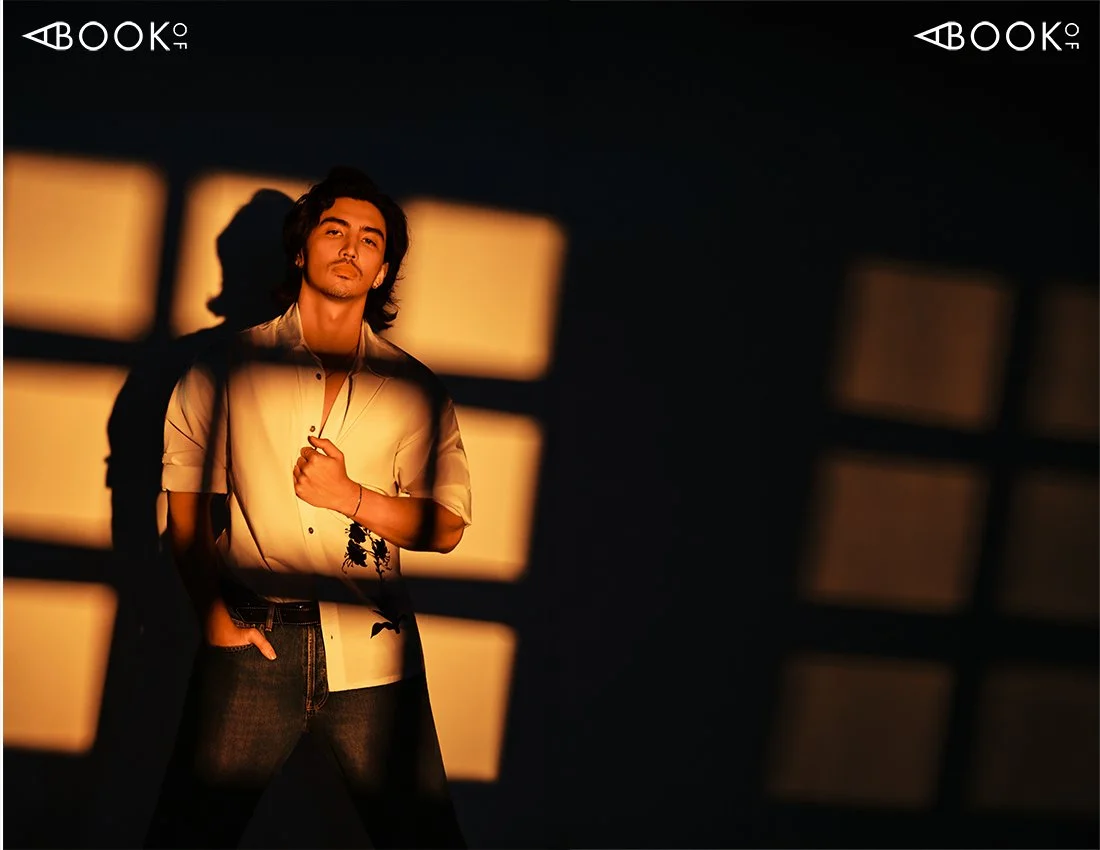
There is something almost musical about Jet, the straw, the swords, the smile, the rhythm of persuasion. How did you find his tempo without letting the charisma excuse the danger underneath?
People want me to say Jet pretends to be harmless and hides the danger underneath, but I don’t think that’s honest to how I played him. Jet doesn’t pretend to be anything he’s not. He just chooses what to reveal — and there’s something seductive in watching someone reveal themselves with that much control.
His charisma isn’t a mask over the danger. Charisma is the danger. It’s how he survives, how he leads, how he gets people to move with him. The straw, the smile, the swords — same language. He’s always conducting the room a little. But I never wanted the charm to become an apology for him. The key was never playing him as someone who thinks he’s dangerous. He thinks he’s right. That’s far more frightening.
And underneath it, his leadership actually comes from care — that’s the part people miss. He’s not manipulating people from a distance. He extends real care toward them, gives them family, shelter, and purpose, and his worldview flows from that care. That’s what makes him powerful, and that’s what makes him complicated. The care is genuine. It just narrows around his pain.
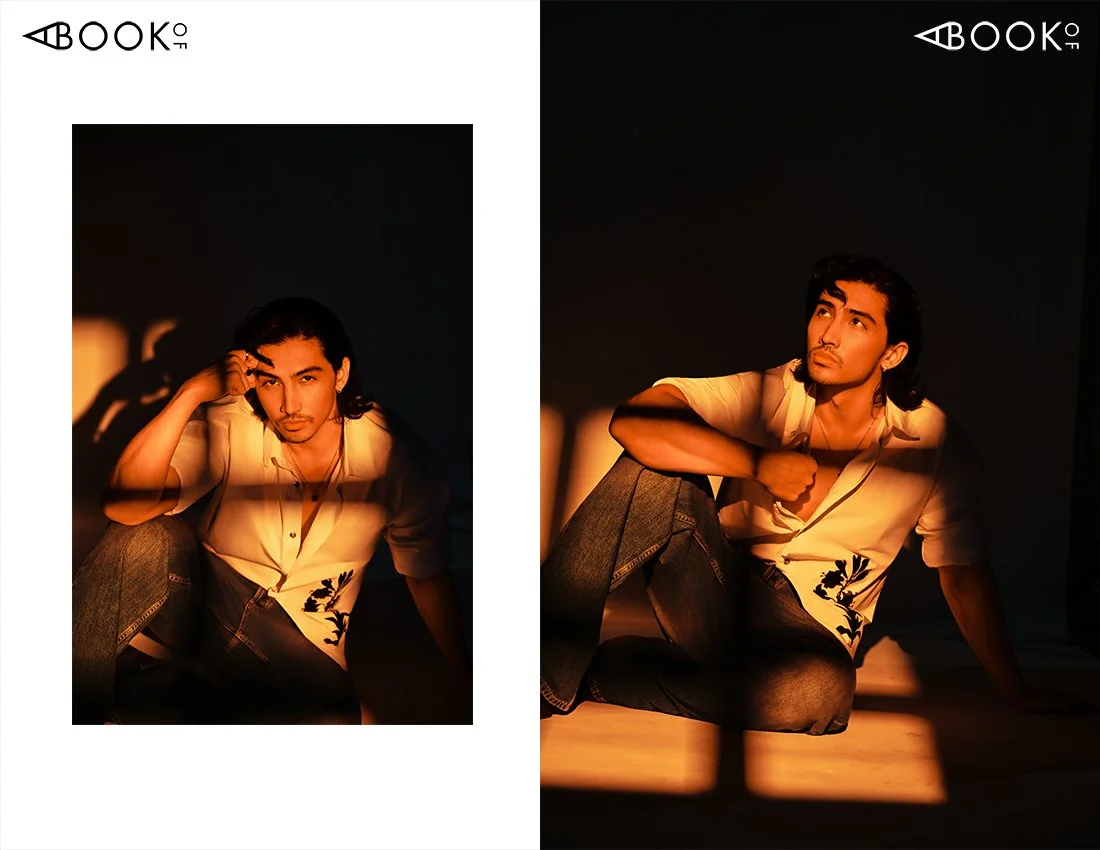
You have training that connects music, movement, martial arts, and sword work. How did your body become part of the storytelling, especially for a character whose beliefs often arrive through action before language?
Trauma lives in the body — I mean that literally. Jet’s body tells you who he is before he opens his mouth. Agile, reactive, alert. He doesn’t move like someone who’s known comfort.
I trained hard for boxing for two years before season two, and it gave me real data to build on. Conditioning your hands, taking hits, collecting cuts and gashes — it does something to your psyche. You start treating yourself the way you treat your body. It can harden you, but it also tells you what a body must become to survive, and you can’t fake that.
Agility and wit are always the core of him — but this season I had to let real power into the work, too. To actually stand against people with superpowers, Jet needs a brutality in him, and I stopped holding that back. He fights to survive against forces he has no business beating, so he has to be willing to be punished.
The dual-hook swords were their own way in. That’s a weapon engineered to kill — built for lethal precision — and Jet carries two of them. To learn a weapon like that is partly to learn the man. He didn’t have the luxury of a safer tool. The world made danger necessary, so he picked up something punishing and learned to wield it with precision. I wanted his movement to feel clever before it felt strong, but never soft. He’s not the biggest person in the war. He survives because he’s fast, adaptive, persuasive, and willing to use exactly what the world handed him — all the way to the edge.
Public bios describe your background as Chinese and Italian, and your career now sits within a global story with a deeply passionate Asian and Asian diaspora audience. How has representation become less of a headline for you and more of a lived responsibility?
My background gets simplified, but my heritage is Japanese, Chinese, and Italian — and the specificity matters, because identity isn’t a category. It’s family, memory, food, language, silence, expectation, the way you learn to move through a room. (And according to 23andMe, I’m apparently part Korean too — not culturally, though I’ll never turn down good KBBQ.)
Being Asian was always part of my life, but the industry made me aware of it in a way I never had been. I grew up in Washington, D.C. I’m as American as it gets, and I still hit moments where that gets treated as conditional because of how I look — that old narrative that the real American is white. That’s why representation can’t just be an announcement. It has to be a responsibility. Asian people aren’t a monolith. Asian Americans aren’t. Mixed people least of all — we get talked about like one block instead of a dozen dense, different cultures.
And I’ll be honest about the hard part: the industry still tends to reward the least threatening, most assimilable version of us and call it progress. That does more harm than good. We won’t be truly represented until our people are celebrated for our differences and understood as part of the whole — not assimilated at the cost of our self-respect, and not held up as some token of superiority either. Neither serves us.
For Asian and mixed men especially, the boxes were always narrow — sidekick, villain, martial artist, comic relief, someone whose inner life is a footnote. I want the roles where we’re allowed to be romantic, dangerous, flawed, desirable, wounded, funny, fully human.
Avatar mattered to me as a kid because it trusted children with real themes — found family, trauma, morality — when almost nothing else on TV did. It was one of the few places outsiders could feel less alone, and I was one of those kids. So stepping into it carried weight. I felt responsible to everyone who felt what I felt watching it — to work my ass off and treat my small piece of it as a kind of mission. I broke my leg on set during a stunt in season two, a 90-degree fracture, and kept filming through the next week. I’d heard stories like that before. But representing the people and the show that healed us — that was more than enough gas in the engine. Representation, to me, isn’t perfection. It’s dimension. If kids who look like me get treated with more imagination and more kindness because someone in my position did the work honestly, I’ll do everything I can to keep earning that.
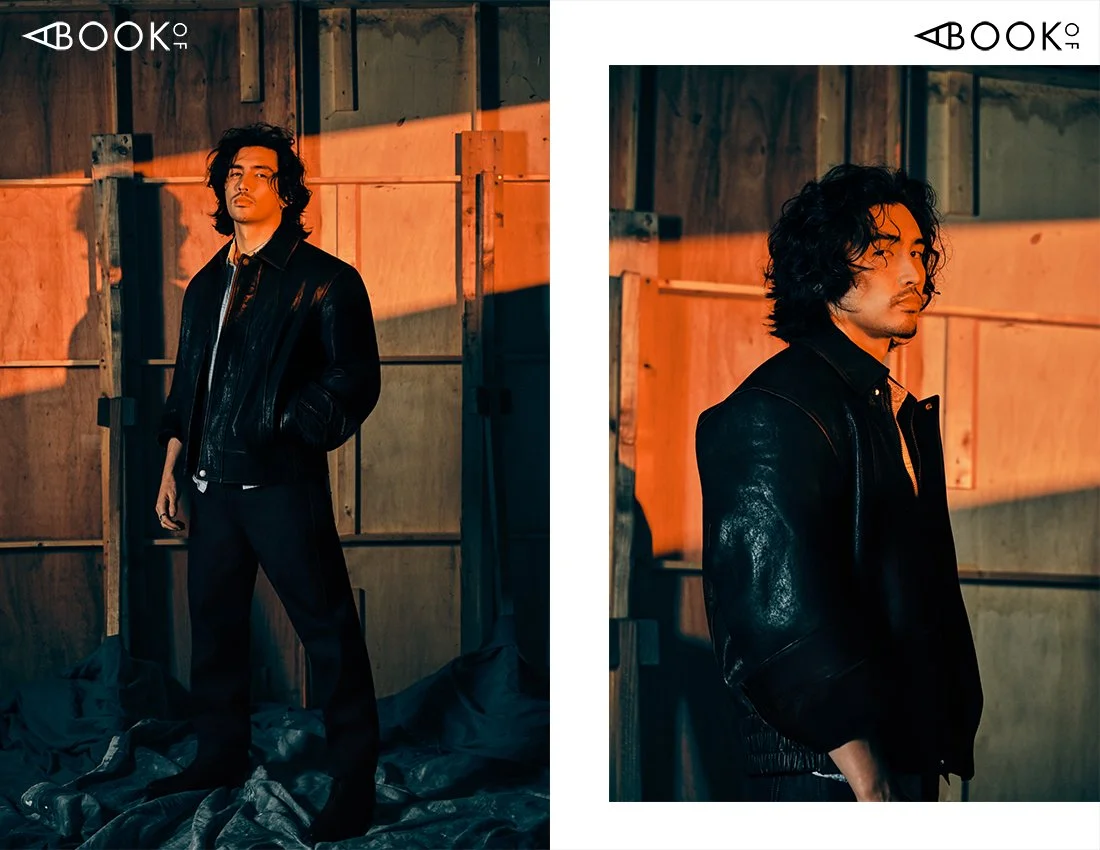
Jet believes he is saving people, even when his methods threaten the very innocence he claims to protect. At this point in your own life, how do you tell the difference between conviction and ego?
Conviction can survive being questioned. Ego usually can’t. Conviction is rooted in something bigger than your self-image — it can listen, adjust, and admit that the method was wrong, even when the mission still matters. Ego needs to be right because being wrong feels like dying.
But I won’t pretend Jet’s an easy case, because he isn’t. There’s a real argument for what he does. The Fire Nation burned his parents alive while he listened to them scream, and faced no consequence for it. Then he gathers other children the war has wrecked, gives them a family, and tries to protect them. In our world, that’s a hero. The only thing that keeps him from being one is the structure of his universe — where the Avatar can sink whole legions of soldiers and never has to get his hands dirty the way Jet does, and thus never stands under the same moral gavel. Reducing Jet to "good" or "bad" is lazy, and it’s not something I’ll defend as an artist. A broken world takes people who could’ve been heroes and fractures them. Understanding that isn’t absolving him — it’s refusing to flatten him.
In my own life, conviction and ego are hard to reconcile because being an actor is humbling in a way that goes after your ego directly. You can prepare with everything you have, train, transform, sacrifice — and still sit there waiting to be chosen, and not get chosen, by a market that owes you no sympathy. I can do everything in my power to make the world move for me, but there’s always luck involved, and your ego can’t outrun it unless you start lying to yourself. I try not to live in that delusion. Even with my characters, where I have to work in some illusion, I’ve found as I get older that I can’t live in my imagination — I have to find the real through-line between my life and theirs, and if it isn’t there honestly, I have to build it.
So here’s where I’ll plant my flag: I’d rather have the conviction and lose than protect my ego and never risk anything real. The market can humble you, luck can ignore you, rooms can pass on you — none of that is in my control. What’s in my control is whether I keep showing up with everything I have and refuse to lie to myself about the work. That’s the one thing no one can take, and it’s the only foundation I’d want to build a career on anyway.
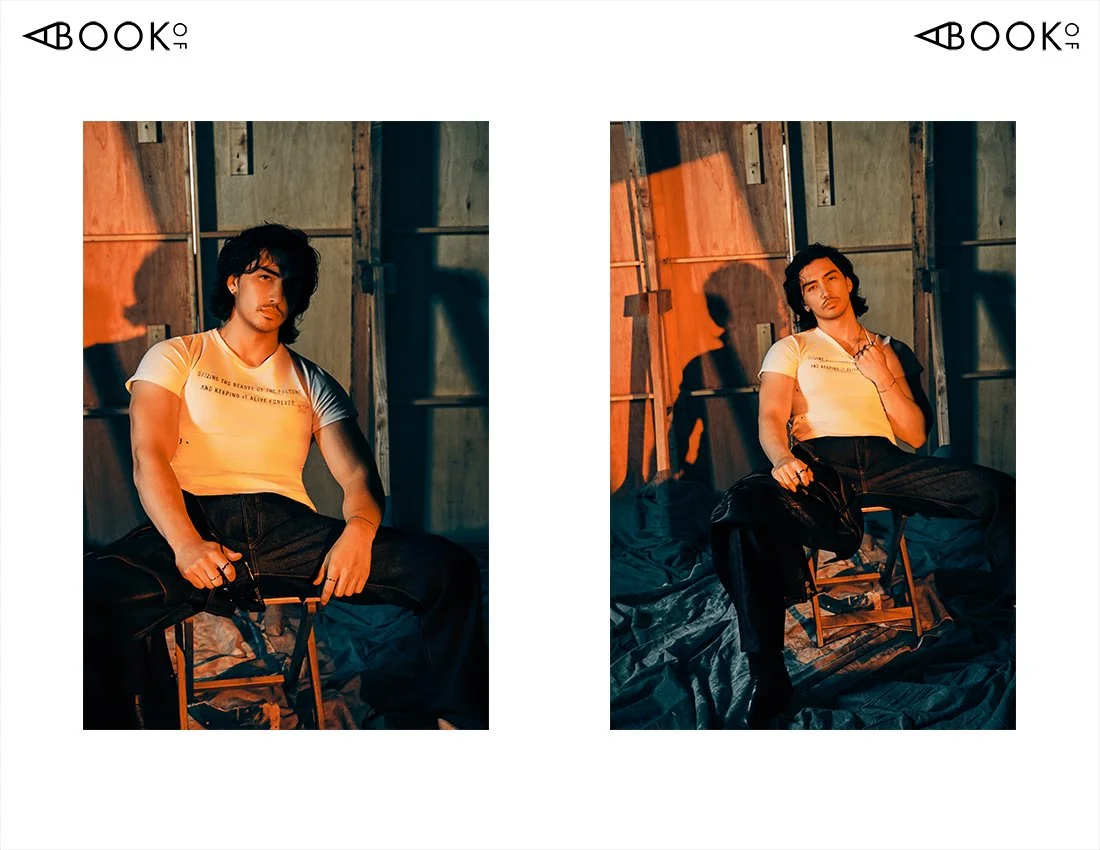
If you were a book, what book would you be and why?
A book of literary poetry. Varied in genre, but connected by feeling. Something that belonged to one culture once and eventually belongs to whoever’s holding it. Still a little damaged — leather-bound, found in the wrong section of the library, notes in the margins, a few pages underlined too hard. Part romance, part war story, part ghost story, part field manual. I like work that makes people want to fall in love, heal what hurt them, and go conquer the thing they were afraid of. If I’ve done that by the end — gotten people to chase what they care about and love their work and each other a little more courageously — that’s the book I’d want to be.