Skyline Festival’s Biggest Year at Ace*Mission Studios
BY: JESSE ZAPATERO
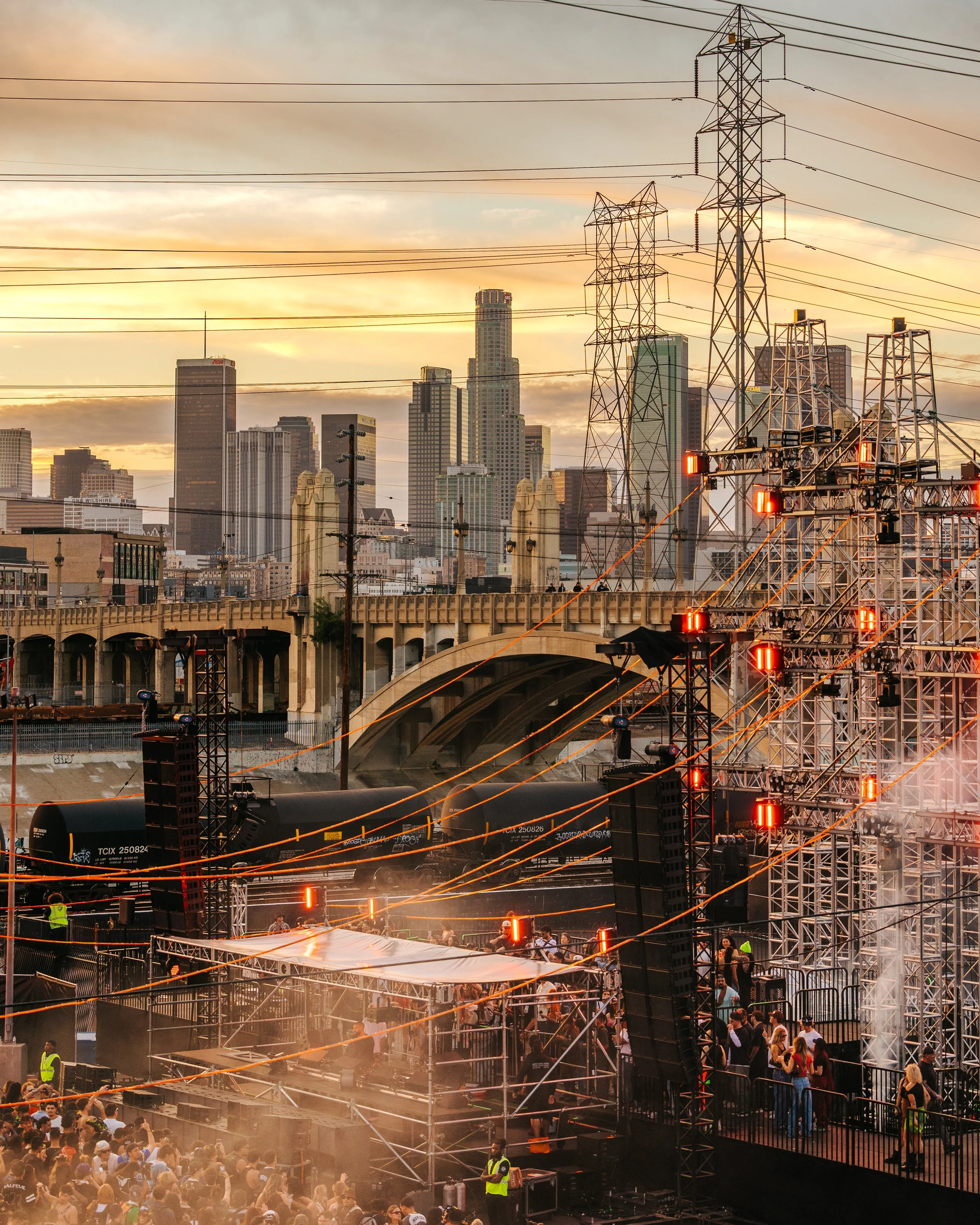
Los Angeles has long shared a complicated but enduring relationship with warehouse culture. Long before electronic music festivals began filling sprawling fairgrounds and stadium-sized venues, the city’s dance music community gathered in converted industrial spaces tucked between rail yards, concrete corridors, and forgotten buildings along the Los Angeles River. These spaces were not designed for spectacle; they were built for work, yet they became sanctuaries for sound, rhythm, and community. Skyline Festival’s fifth anniversary embraced that legacy wholeheartedly, relocating to Ace Mission Studios and transforming the industrial campus into a two-day celebration of house and techno culture. Held on February 28 and March 1, the event felt less like a festival searching for a home and more like one finally settling into a setting that reflects the spirit of the music itself.
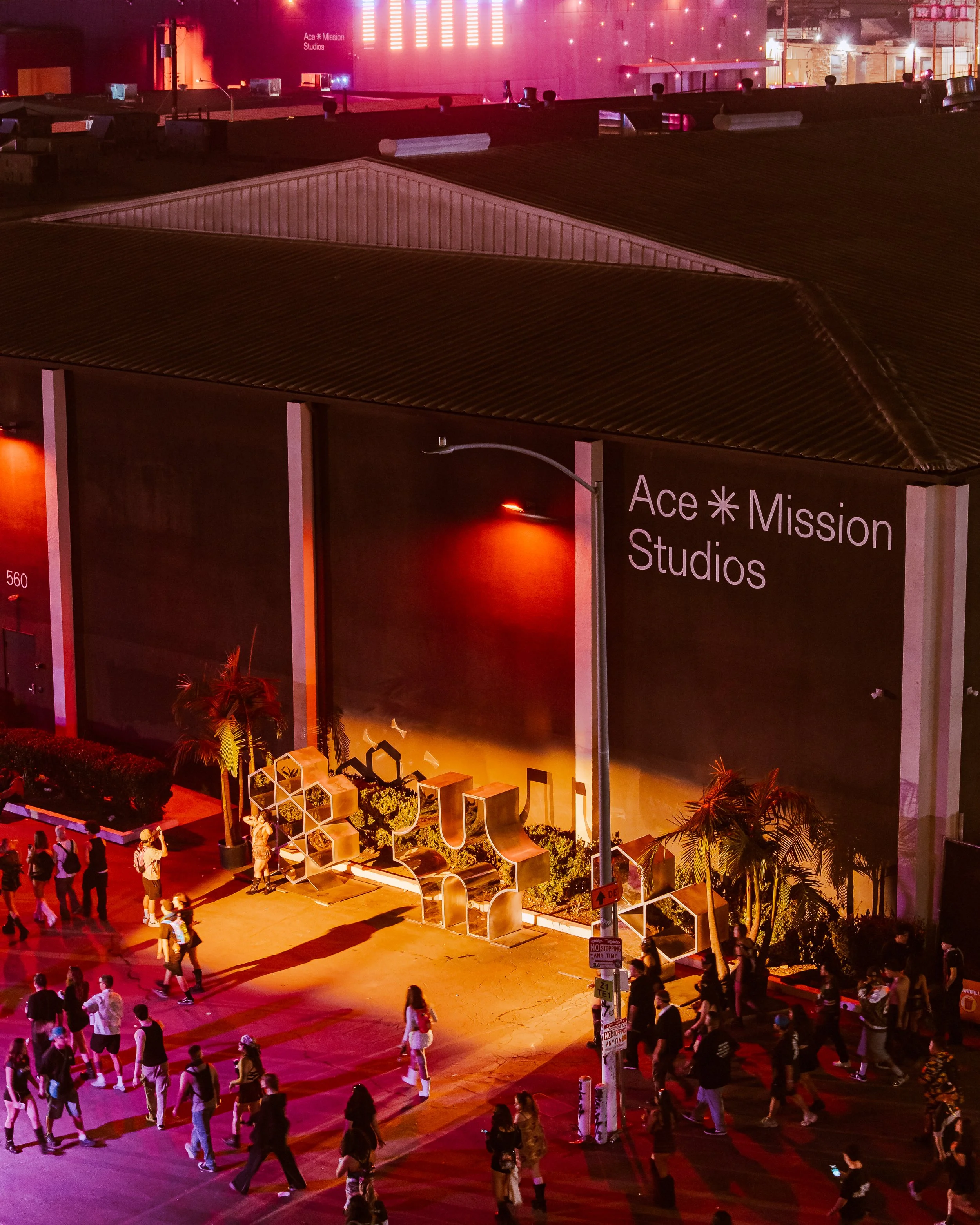
Photo by: Keiki-Lani Knudsen
Presented by Factory 93 and operating under the wider umbrella of Insomniac, Skyline has steadily developed into one of Los Angeles’ defining electronic music gatherings since its debut. Over the years, the festival experimented with different venues, often struggling to find a location that could properly accommodate the city’s deeply rooted techno and house scene. The move to Ace Mission Studios marked a turning point. The massive industrial property, originally constructed as a beverage distribution facility decades ago, has since been reimagined as a creative complex with sound stages, studios, and expansive outdoor lots. Spanning multiple acres along the Los Angeles River and situated near the city’s historic Arts District, the venue provided Skyline with something it had previously lacked: room to breathe. The open layout allowed thousands of attendees to move freely between stages while still preserving the intimate, warehouse-inspired atmosphere that defines underground dance culture.
The festival unfolded across four primary stages—East Side, West Side, Downtown, and Arts District—each offering a distinct environment while contributing to the overall narrative of the weekend. Music began early in the afternoon and stretched well into the night, allowing festivalgoers to settle into the rhythm of the event without the constant pressure of rushing between performances. Over the course of two days, more than sixty artists rotated through marathon sets that explored the full spectrum of modern house and techno. Skyline’s programming reflected the diversity of the global club scene, blending melodic house grooves, raw industrial techno, electro influences, and experimental club sounds. Rather than positioning itself purely as a spectacle-driven event, Skyline presented itself as a cultural gathering—one designed for those who approach dance music not simply as entertainment but as a shared language.
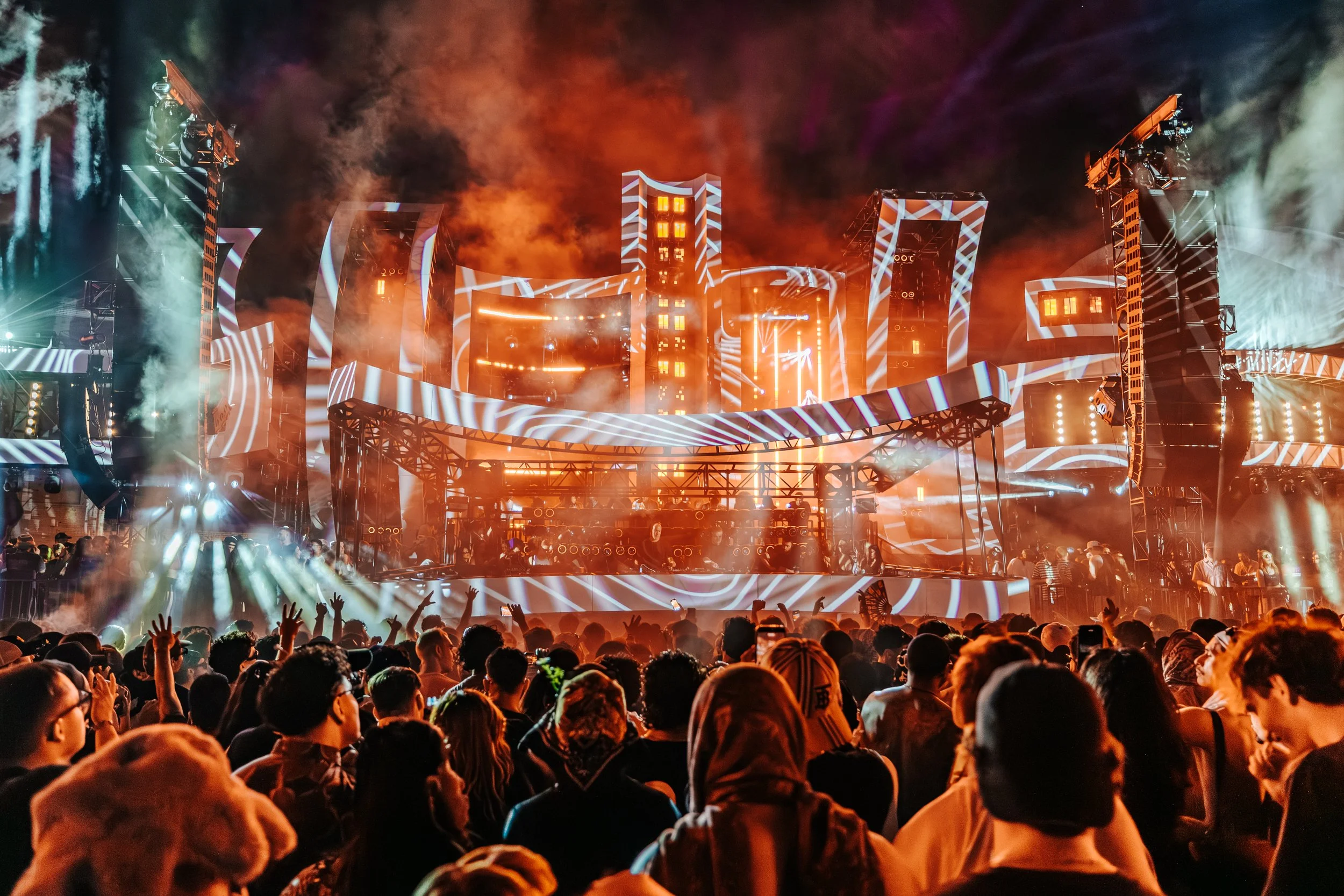
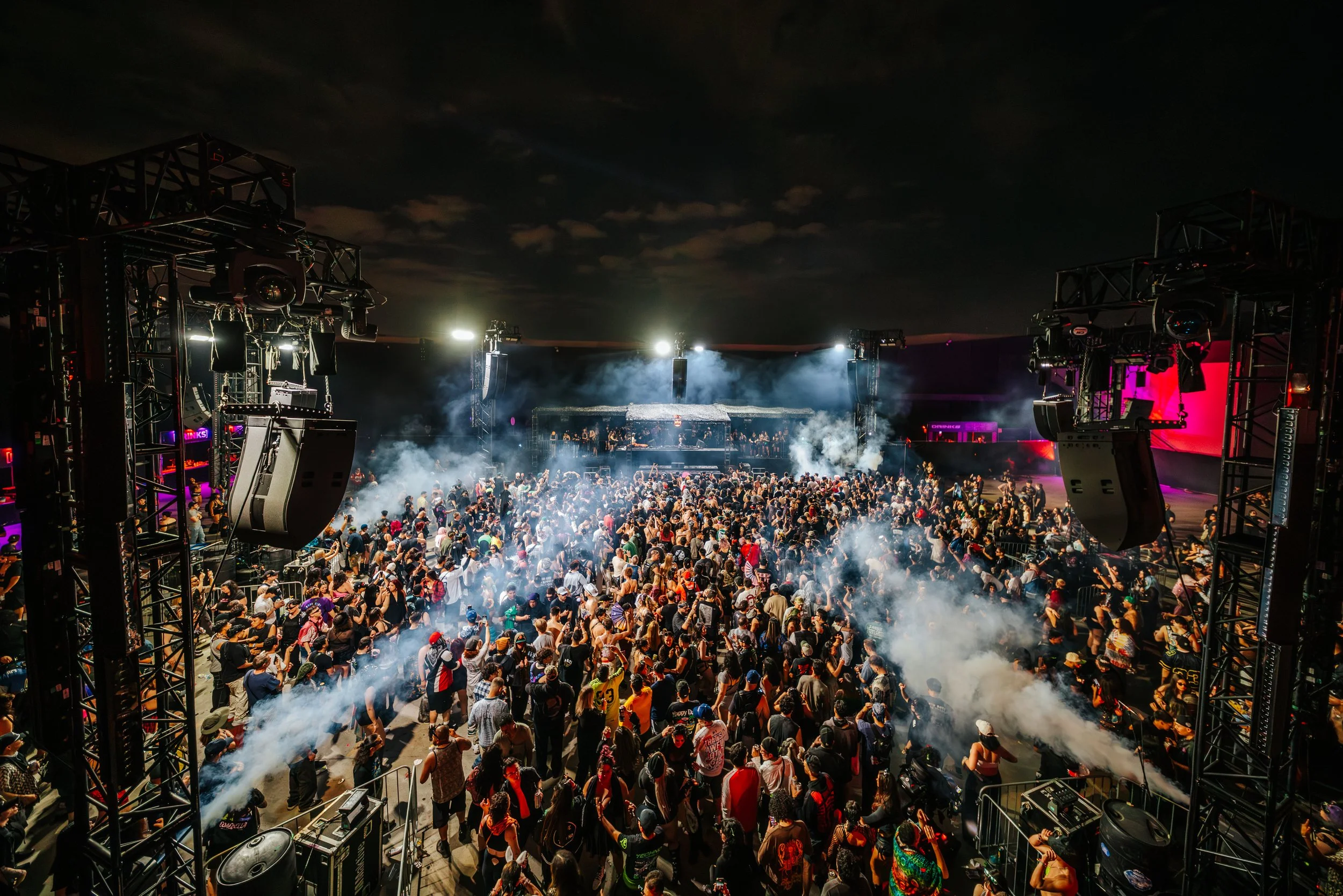
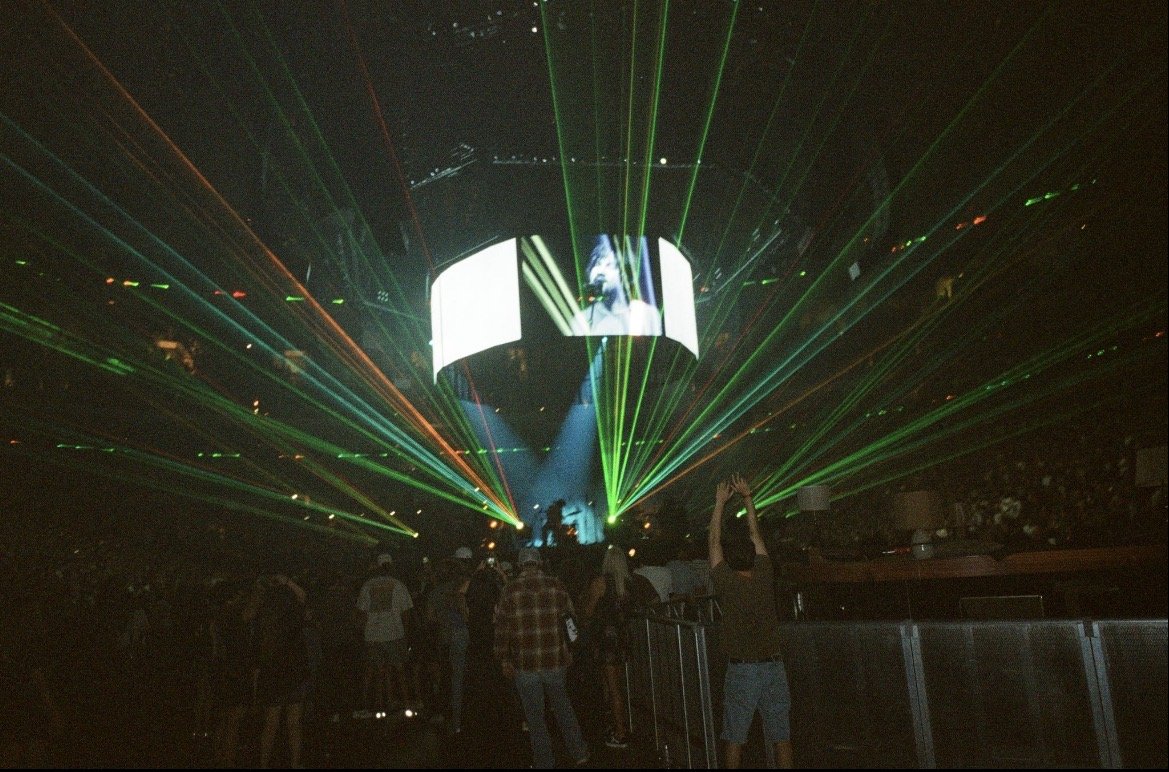
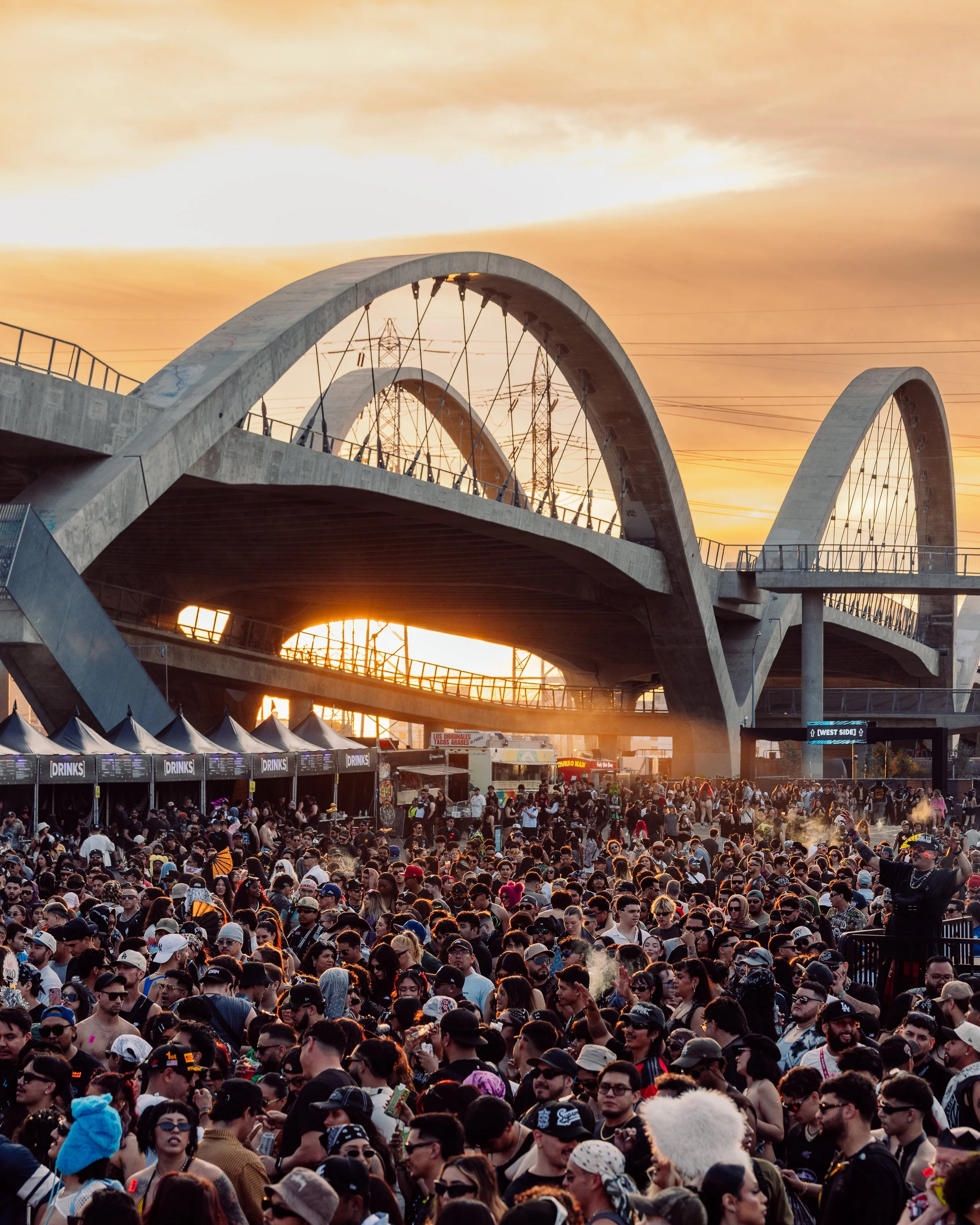
East Side stage, Skyline’s largest and most visually ambitious structure. Positioned near the iconic Sixth Street Bridge, the stage drew inspiration from the architecture surrounding it. Lighting rigs and projection mapping created the illusion of towering buildings, transforming the structure into a glowing skyline of its own as night fell over downtown Los Angeles. The production leaned heavily on lasers, strobes, and bursts of pyro rather than oversized LED screens, aligning with the minimalist aesthetic favored within techno culture. Throughout the weekend, the stage hosted some of the festival’s most anticipated performances, including a standout back-to-back set from Chris Stussy and Marco Carola, along with appearances from artists such as KI/KI, I Hate Models, Beltran, Dennis Cruz, and Eli Brown. The scale of the stage combined with the energy of the crowd created some of the festival’s most explosive moments, particularly during the late evening hours when the dance floor swelled to its peak capacity.
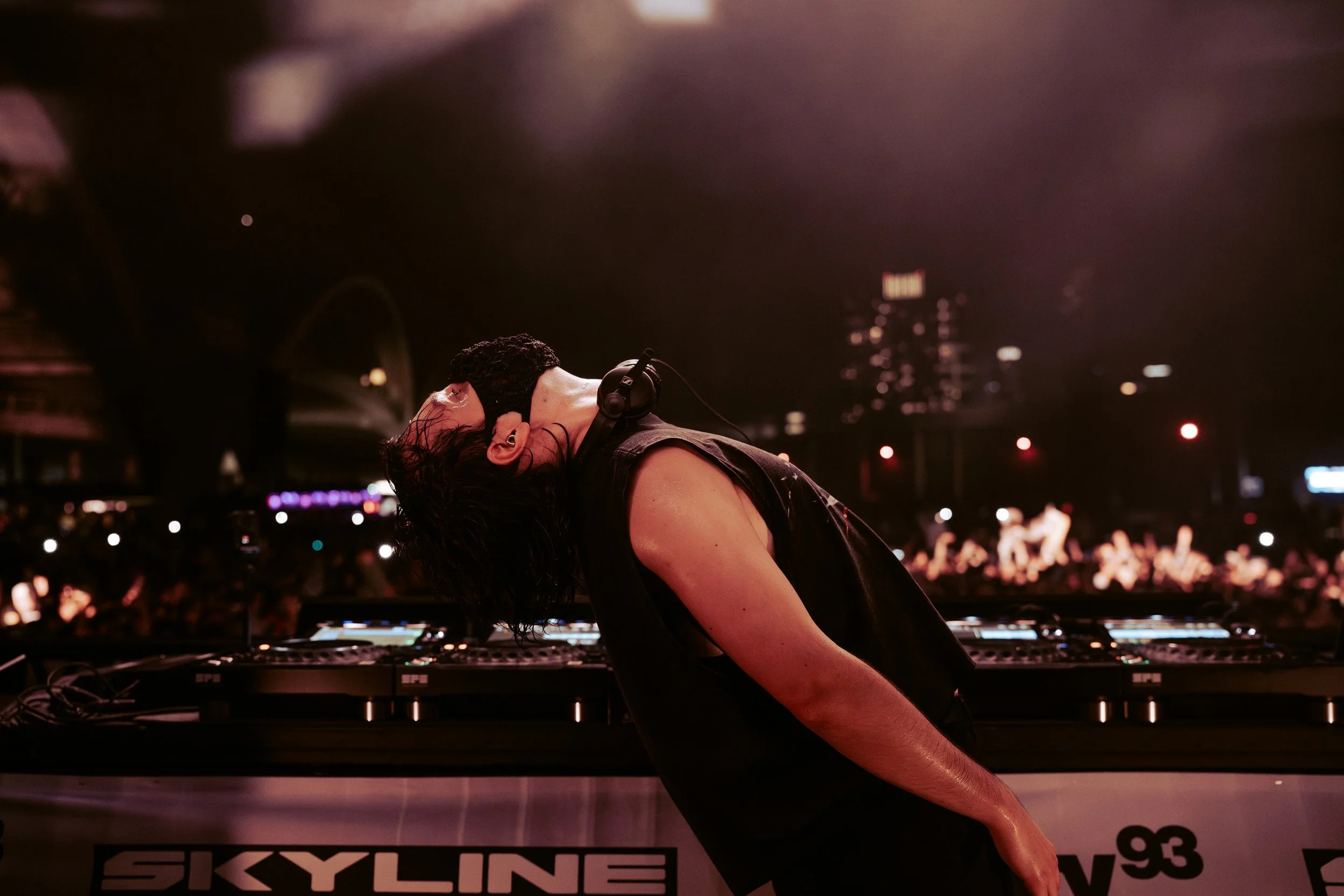
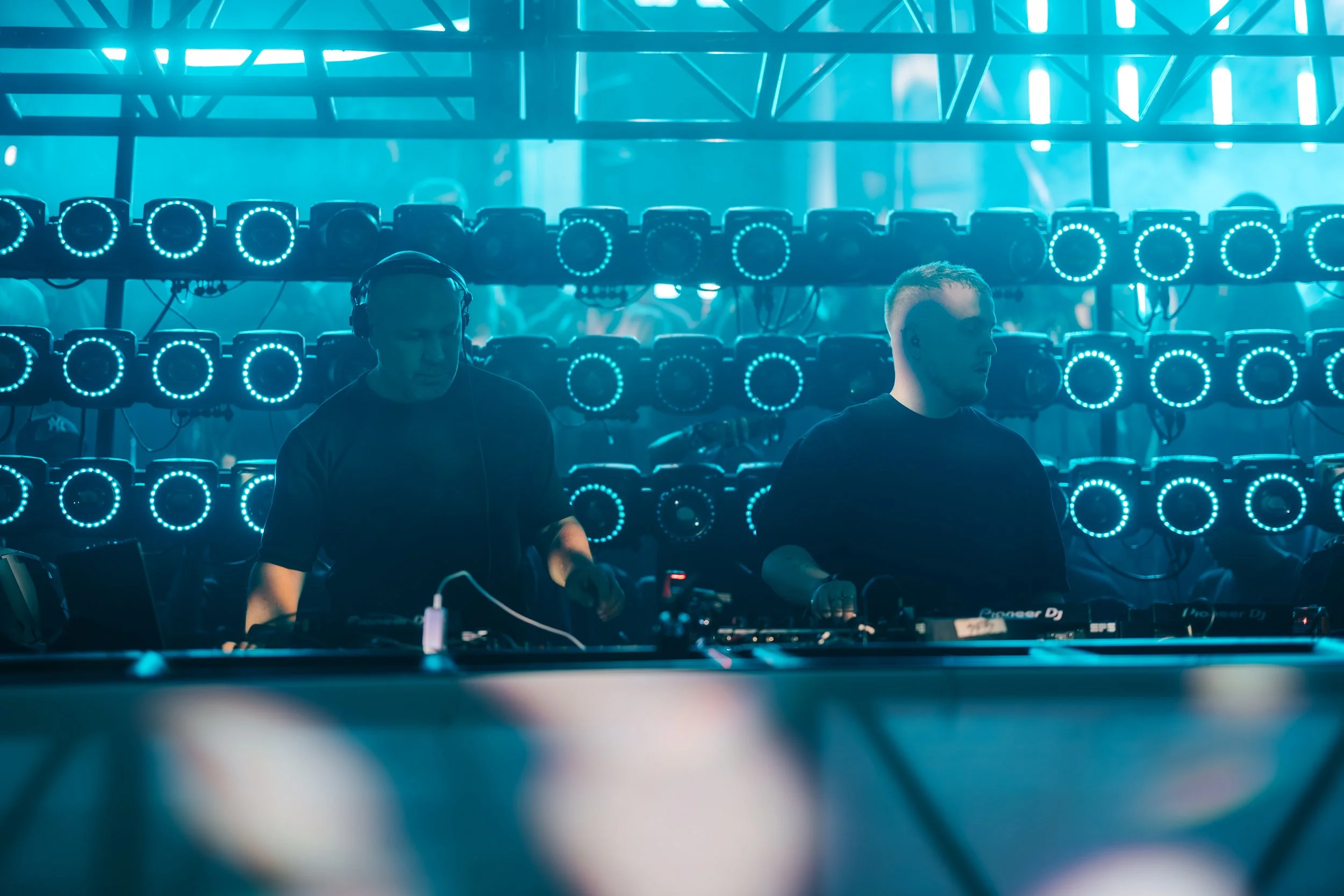
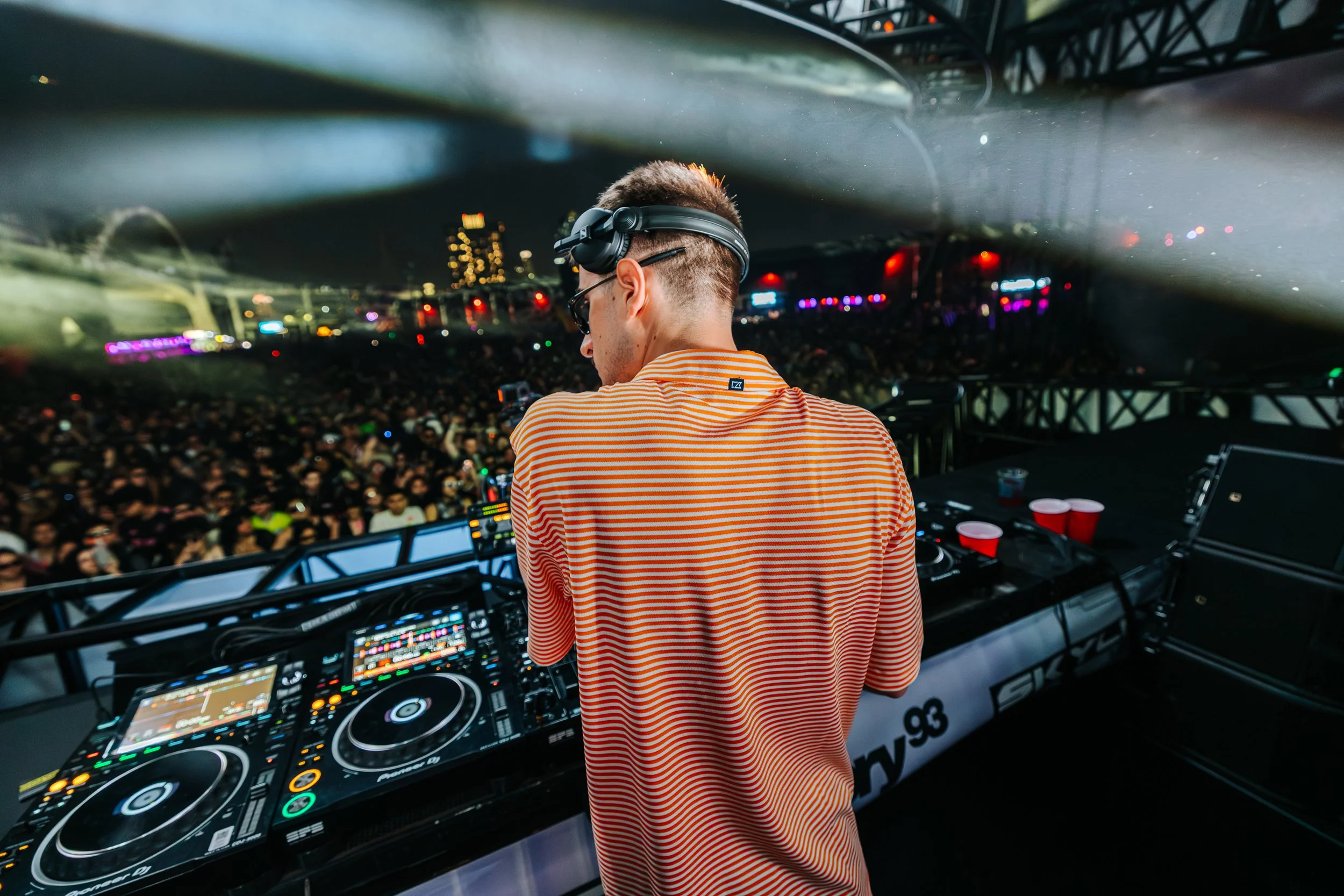
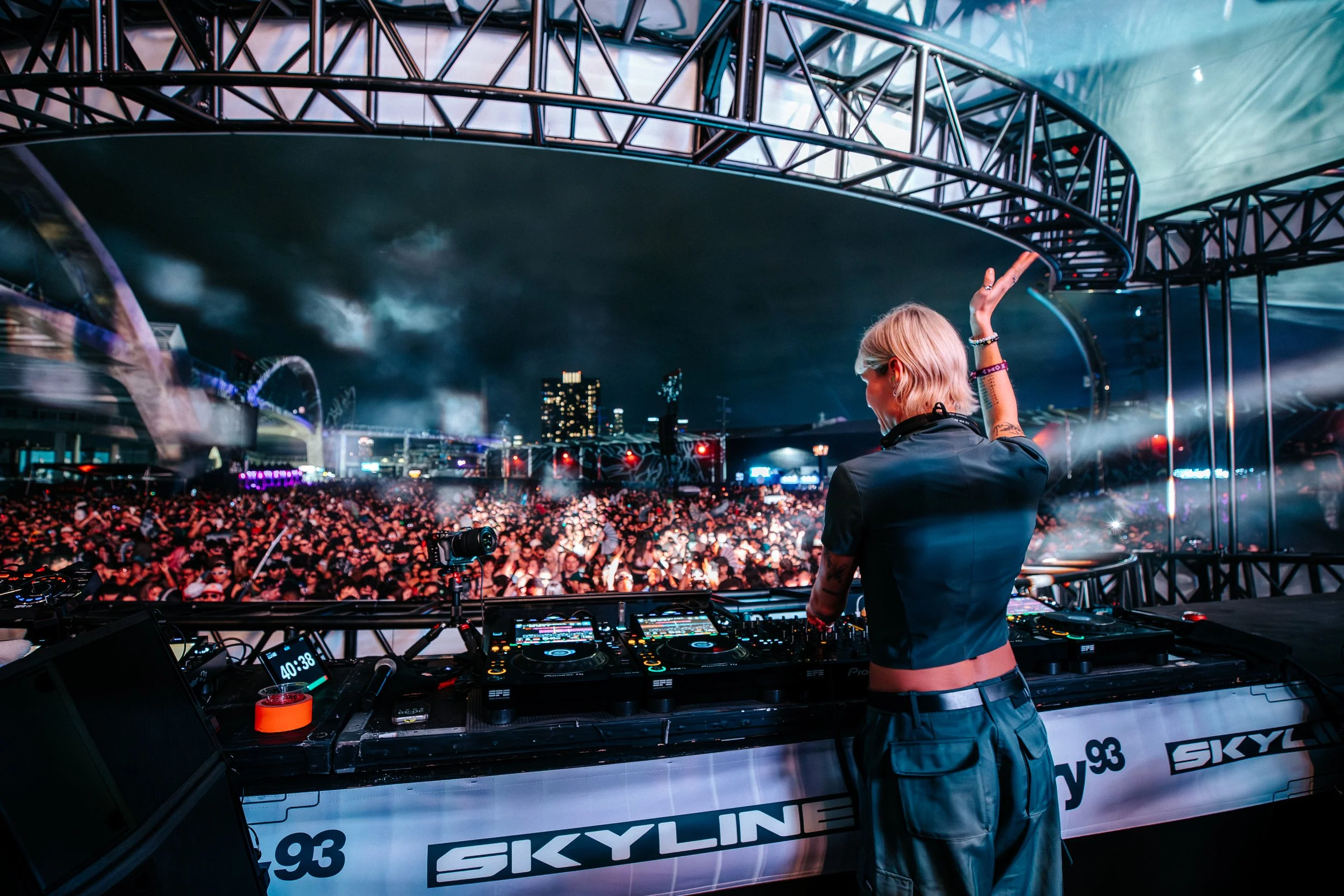
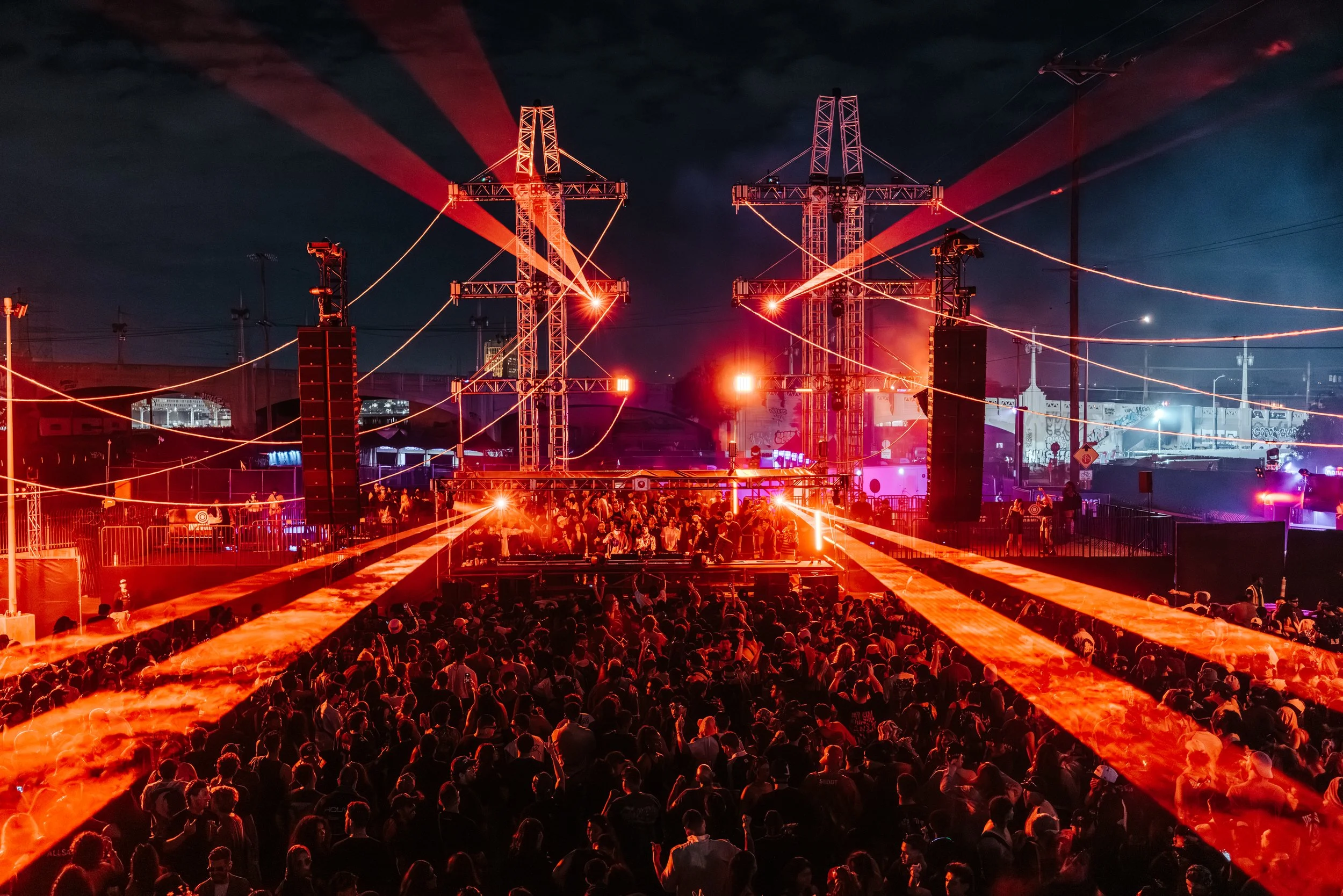
Just a short walk away, the West Side stage offered a completely different atmosphere. Located alongside a railway running parallel to the Los Angeles River, the stage integrated the surrounding infrastructure into its design. Inspired by the transmission towers that dominate the city’s skyline, towering lighting structures stretched upward while LED cables mimicked the look of electrical lines overhead. As trains occasionally rolled past during sets, their horns echoing through the venue, the experience felt uniquely tied to the city itself. The lineup here leaned toward harder and more energetic techno, featuring performances from artists such as Joseph Capriati, VTSS, 999999999, DJ Tennis B2B DJ Boring, and ChaseWest. The stage’s industrial surroundings and relentless sonic energy made it one of the most atmospheric corners of the festival.
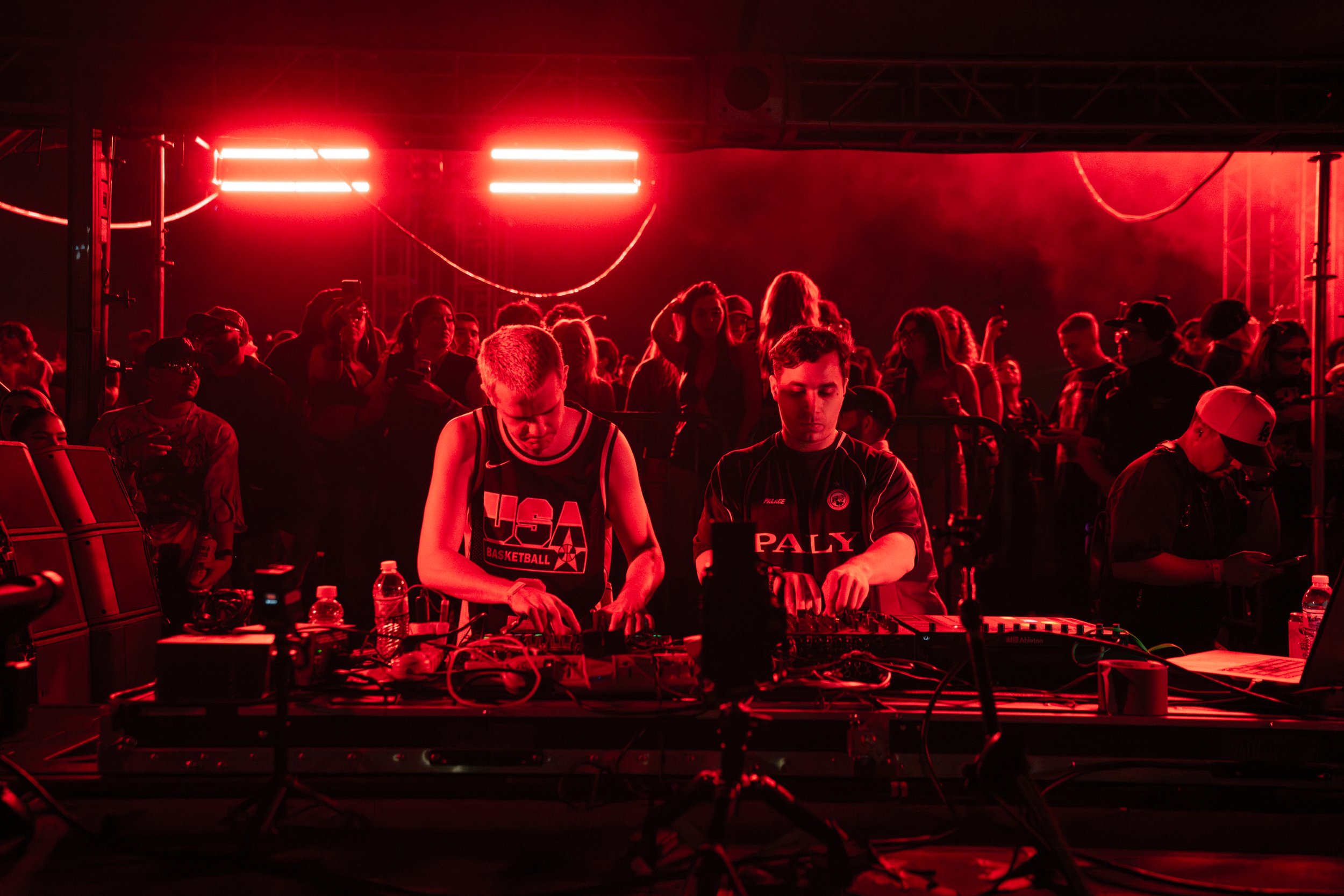
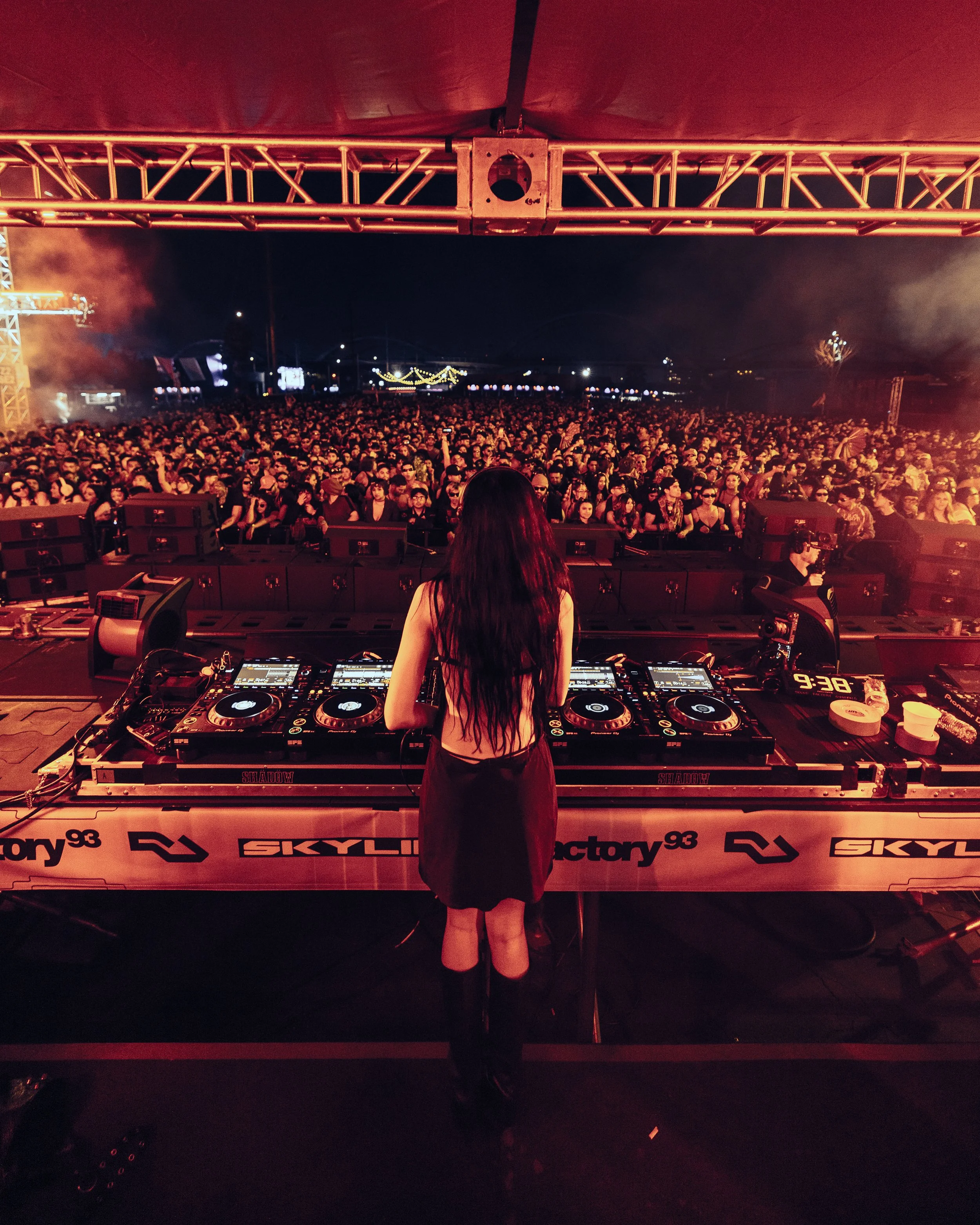
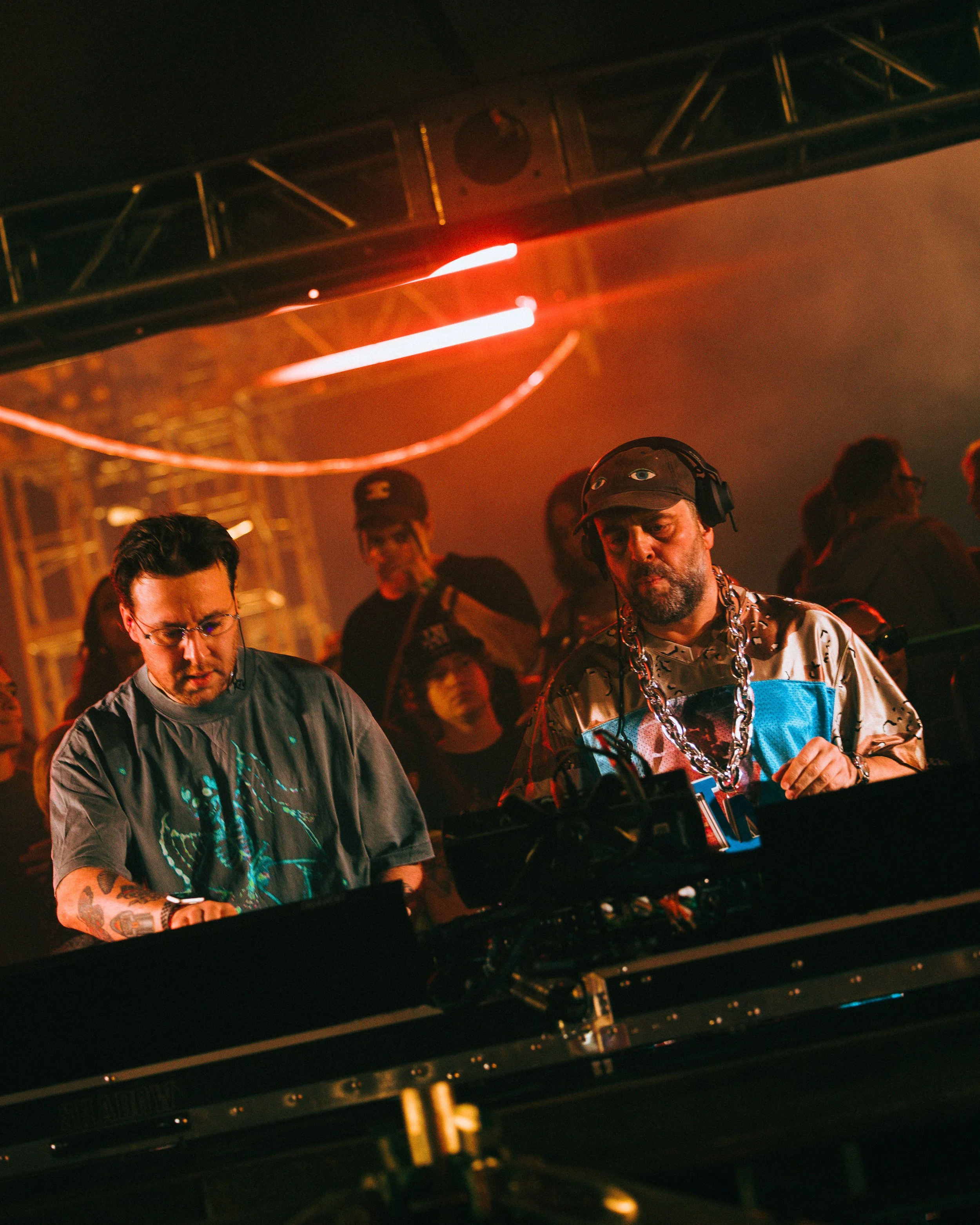
The Downtown stage, hosted in partnership with Resident Advisor, became a hub for forward-thinking club music. Tucked between buildings within the venue, the stage featured an immersive 360-degree audio system that surrounded fans with sound from every direction.
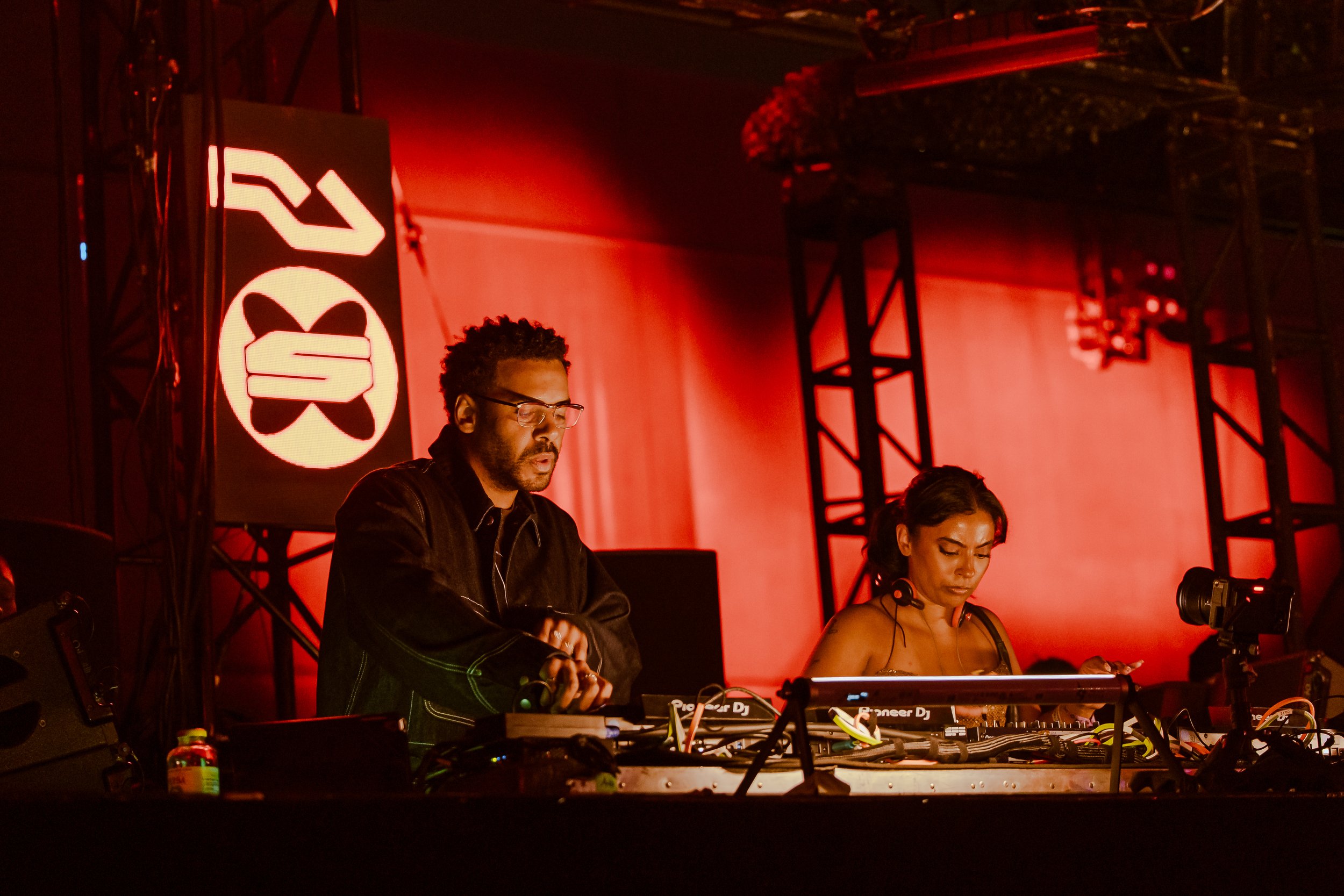
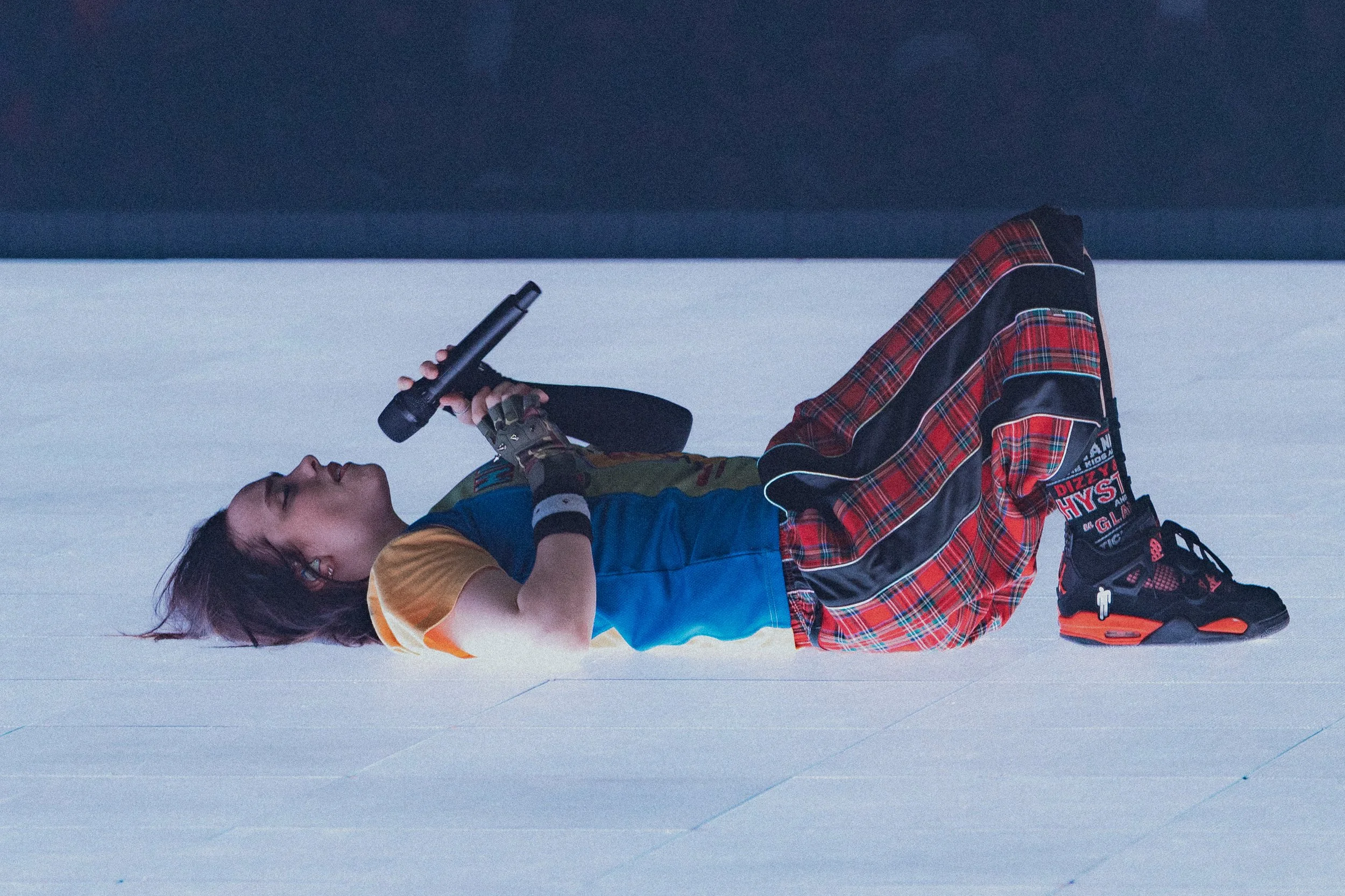
Jyoty B2B Zack Fox
Photo by: Keiki-Lani Knudsen
This stage led to one of the weekend’s most electric collaborations - Jyoty went back-to-back with Zack Fox. The pairing felt perfectly suited for Skyline’s anything-can-happen atmosphere. Jyoty, known for her fearless selections and instinct for turning a dance floor inside out, approached the set with the same unpredictability that has made her one of the most exciting selectors in contemporary club culture. Fox matched that energy beat for beat. While many know him for his comedic work, his reputation behind the decks has steadily grown thanks to high-energy sets that move effortlessly across genres. Together, the two created a thrilling push-and-pull dynamic, shifting between house, club edits, and left-field selections that kept the crowd guessing. The Downtown stage, already wrapped in its immersive 360-degree sound design and haze-filled lighting, became a pressure cooker of movement as fans packed the floor well past the edges of the speaker stacks. They were playful, unpredictable, and fueled by the kind of crowd response that turns a good set into one of the weekend’s defining memories.
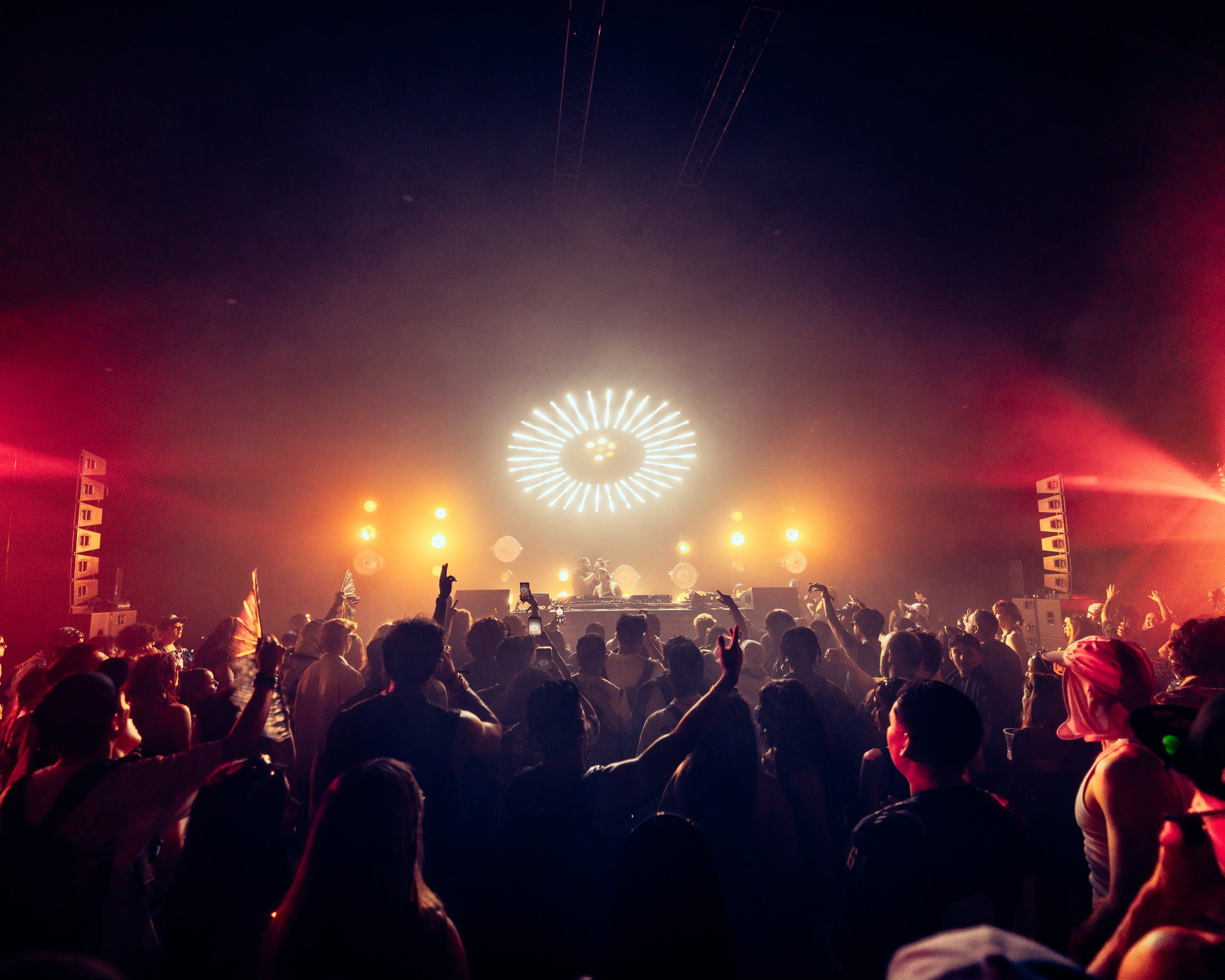
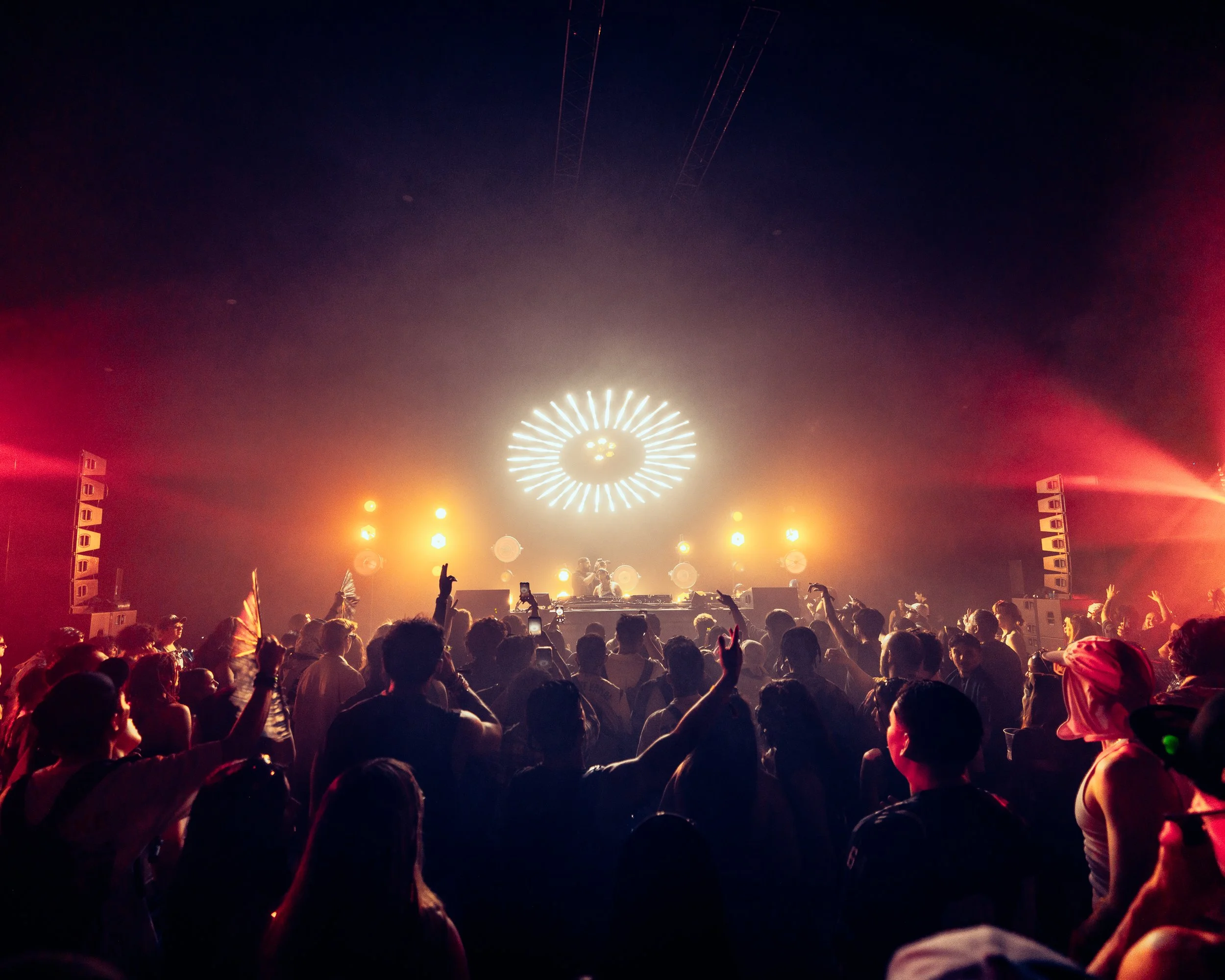
The Arts District stage much more intimate than the others and housed indoors, the space evoked the atmosphere of a traditional warehouse party. Floodlights, fog machines, and compact lighting rigs stretched across the dance floor, creating an environment where the focus remained squarely on the music and the dancers. The stage also hosted the festival’s official afterparties, keeping the dance floor alive until the early morning hours. Programming here leaned heavily into Los Angeles’ local underground scene, spotlighting DJs who have spent years cultivating community-driven events across the city.
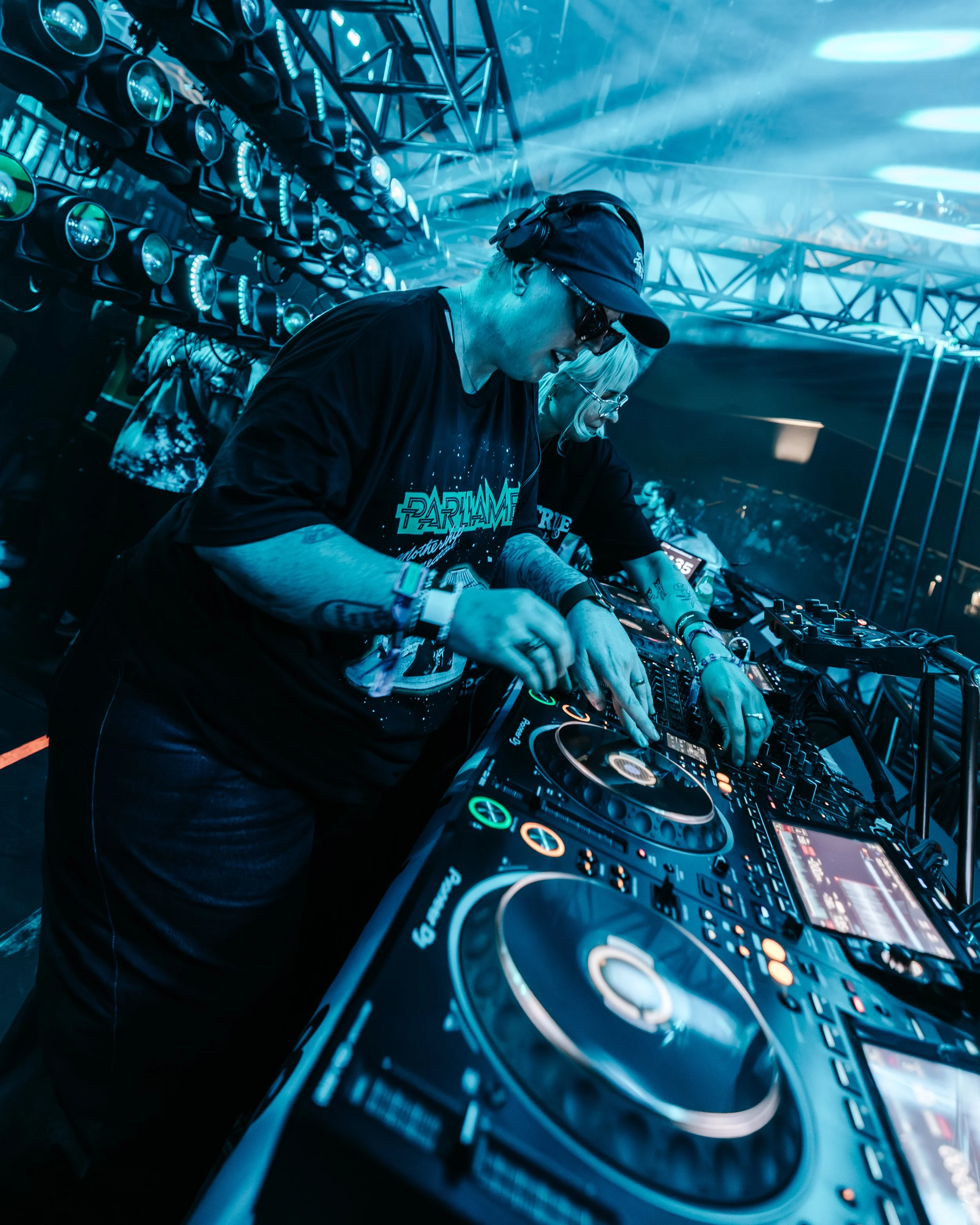
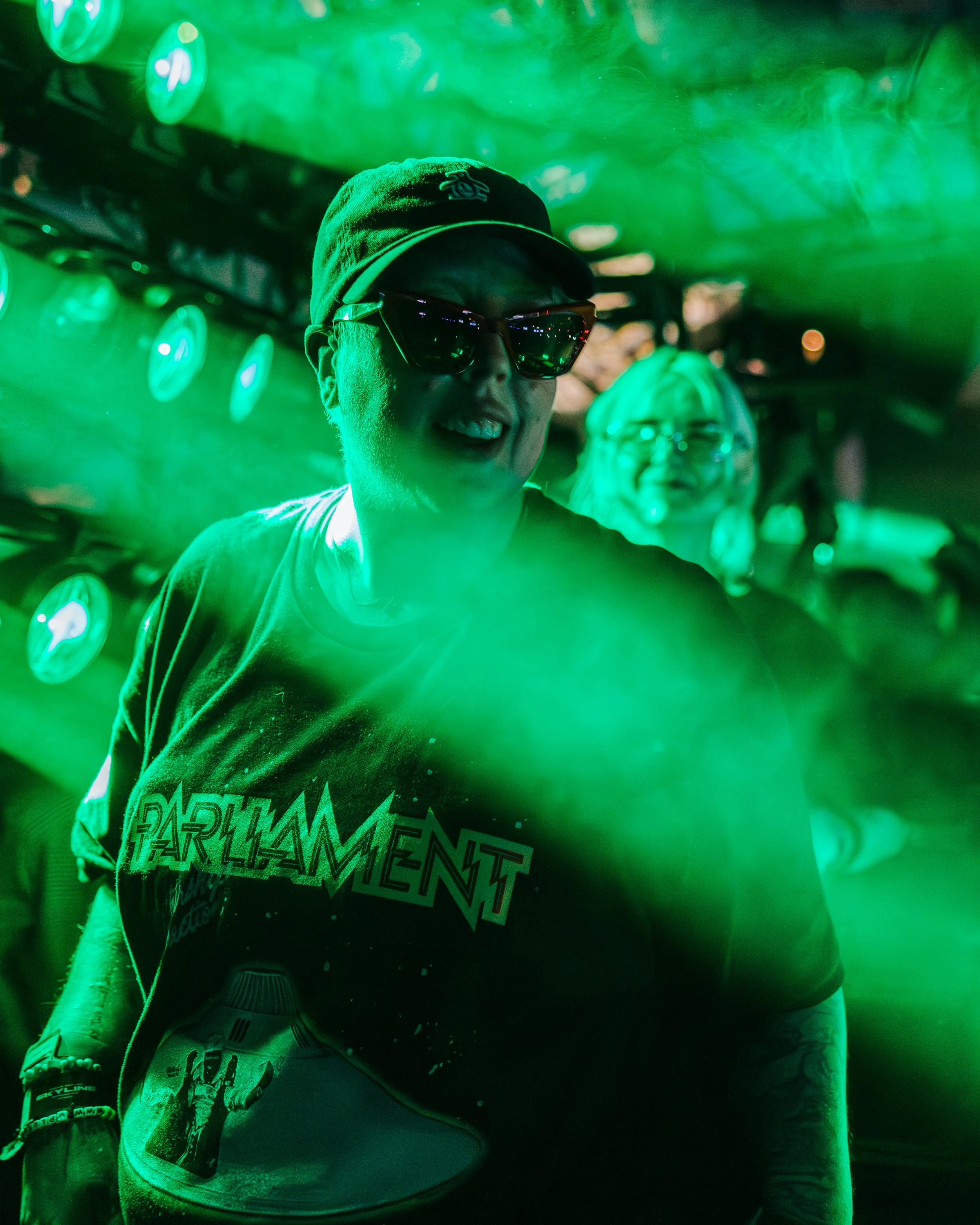
Another memorable performance was the sunset back-to-back set from HAAi and The Blessed Madonna. Their collaborative appearance embodied the sense of spontaneity that defines great dance music moments. As the sun dipped behind the downtown skyline, the two DJs traded tracks that moved fluidly between genres, building an atmosphere that felt both celebratory and intimate.
Beyond the music, Skyline’s success was also reflected in the overall experience of the festival grounds. The layout allowed attendees to move easily between stages without the overcrowding often associated with city-based festivals. Wide dance floors offered space to move, while installations, food vendors, and merchandise booths filled the campus with activity.
Perhaps the most striking aspect of the weekend, however, was the crowd itself. Los Angeles festival audiences can be unpredictable, but the atmosphere throughout Skyline remained overwhelmingly positive. Dance circles formed organically across the grounds, strangers exchanged smiles and compliments, and the shared rhythm of the music created a sense of unity that is sometimes difficult to achieve at events of this size. While peak performances naturally drew dense crowds near the stage fronts, most areas maintained enough space for people to move comfortably. The result was an environment that felt energetic without becoming chaotic.

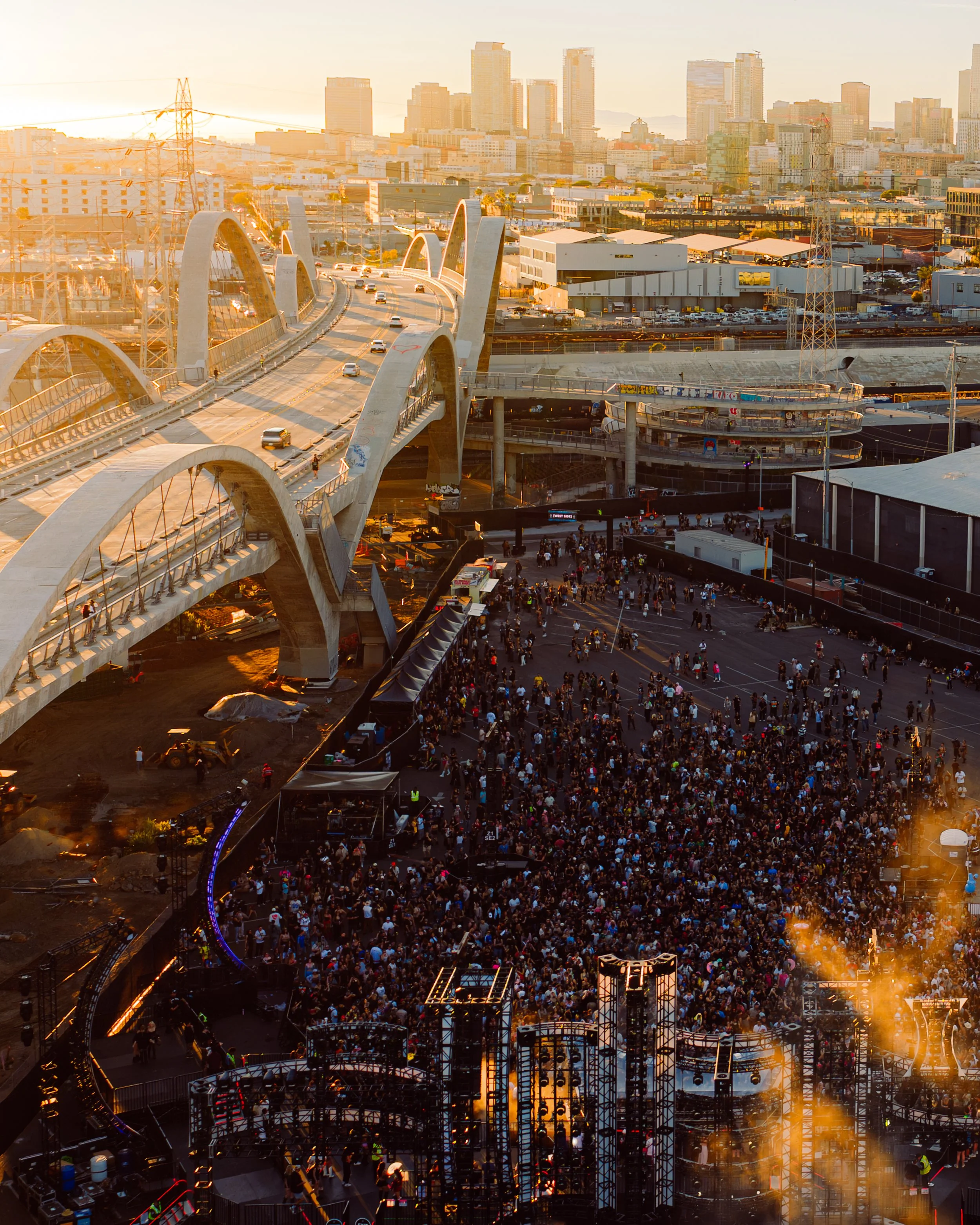
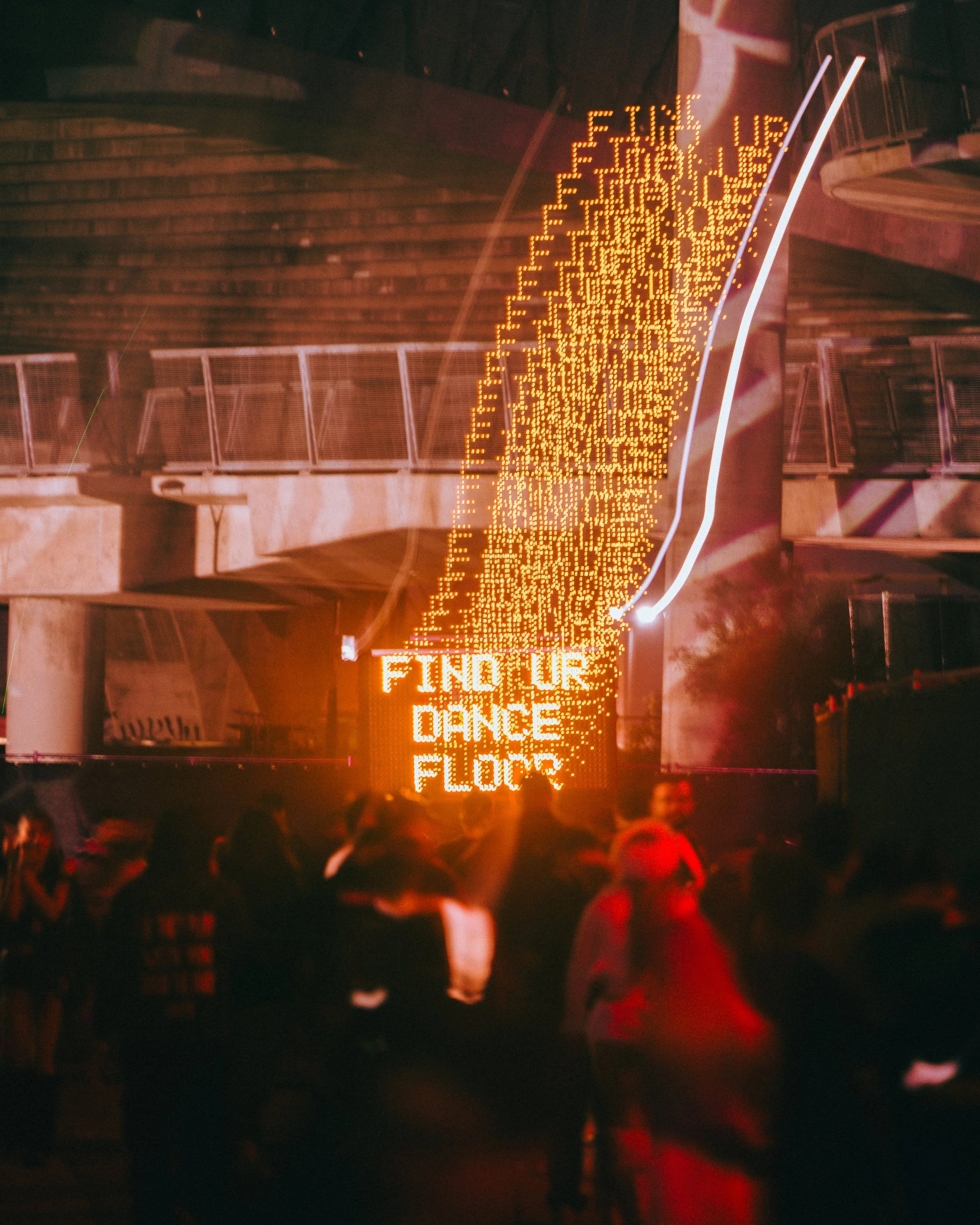
Five years into its evolution, Skyline Festival appears to have found the setting that suits it best. The industrial backdrop of Ace Mission Studios reflects the aesthetic and cultural roots of house and techno, while the venue’s scale allows the event to grow without sacrificing its underground spirit. Framed by railway lines, bridges, murals, and the glow of the downtown skyline, the atmosphere captured something distinctly Los Angeles—where grit, creativity, and community converge. Skyline’s debut in its new home did more than deliver a successful weekend of music; it reaffirmed the city’s place as one of the most vital hubs for electronic culture in the United States. By bringing together global icons, rising international talent, and the architects of the local underground, the festival created a space where the past and future of dance music could exist on the same dance floor, solidifying Skyline’s role as a steward of Los Angeles’ warehouse-born dance music tradition.
Learn more about Skyline LA at www.skylinefest.com