
CORTIS Is the Future of K-Pop, and Los Angeles Got a Glimpse of It
BY: JESSE ZAPATERO
There is something almost surreal about watching a group barely a year into its career command a room the size of YouTube Theater as though they have been doing it for a decade. On August 13, Cortis brought their Put Your Phone Down tour to Inglewood, transforming the venue into something far less formal than a traditional K-pop concert. By the end of the night, it felt less like a concert and more like the largest house party in Los Angeles—one where everyone somehow knew the words, the choreography, and exactly when to lose their minds.
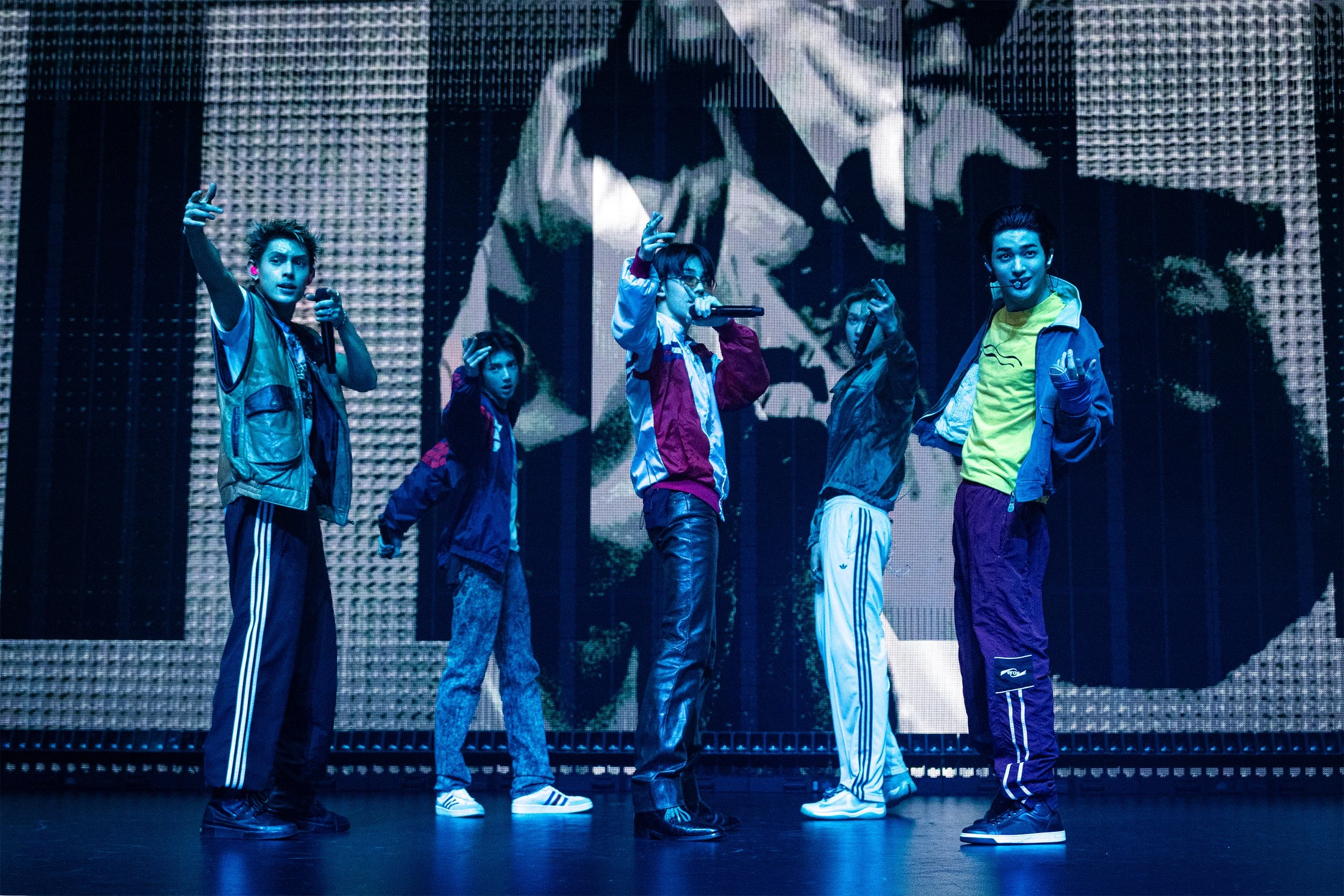
For the group, that kind of environment feels natural. The five-member group—James, Martin, Juhoon, Seonghyeon and Keonho—is still incredibly young in the grand timeline of K-pop. Their official debut anniversary is only days away, making the scale of their current momentum all the more remarkable. Yet there is very little about them that feels tentative. They carry themselves with the confidence of artists who already understand what they want their relationship with an audience to look like.
That relationship is built on proximity. They do not spend the entire night safely separated from the crowd. They move toward it. They run through aisles, dance alongside fans, grab moments of eye contact, encourage entire sections of the theater to sing and repeatedly blur the line between performer and spectator. At one point, members made their way into the audience during “TNT,” while “Wassup” pushed that interaction even further. Suddenly, the enormous YouTube Theater felt considerably smaller.
It is an approach that says a lot about who they are. The Put Your Phone Down tour is built around the idea of actually being present. Even the concept's name challenges the reflex that has become almost inseparable from modern concerts: holding a phone in the air from the opening note to the final encore. The group took that idea beyond a slogan, creating an accompanying experience that encourages fans to participate physically and collectively rather than simply document what is happening in front of them.
And perhaps that is one of the most interesting things about the group. For artists born into an era where virtually every performance can be clipped, reposted and consumed within seconds, they are building their identity around what cannot be captured by a screen.
You had to be there.
The production itself reflected that philosophy. There were no elaborate costume changes or long cinematic VCR sequences breaking up the performance. Instead, the stage remained relatively stripped back, with a couch positioned off to the side and enormous screens providing lyrics and visual support. The members were the production.
That simplicity worked in their favor. Rather than overwhelming the audience with spectacle, they kept attention on their personalities, choreography and live delivery. Every member had a handheld microphone, allowing them to move freely while maintaining control of their vocals. Their performance style is physical without feeling overly rehearsed, and polished without losing the looseness that makes the group feel young.
That youth is important. They are not simply a young group in terms of age. They perform with the kind of unfiltered personality that comes from artists who are still discovering what their own limits are. There is a playfulness to them. They tease each other, interact with the audience, improvise and seem genuinely excited by the reaction happening around them. They are not attempting to project an unreachable image of perfection. They are letting people see the personalities underneath the choreography.
That makes their chemistry particularly compelling. It also helps explain why their music works so well in a live setting. Their sound sits comfortably between K-pop's precision and the looseness of contemporary hip-hop and Western pop. Their songs lean heavily into rhythm, rap and hooks designed to be shouted back by a crowd. The result is music that does not simply ask you to listen—it asks you to participate.
“What You Want” became one of the clearest examples of that during the Los Angeles show. The song managed to occupy both sides of their identity: performance-driven enough to keep the room moving, but vocally open enough to let the members show what they can do beyond choreography. The audience eventually became part of the arrangement itself, with different sections responding to the members' direction and thousands of voices filling the theater.
For a group this young, those moments matter. They currently have a relatively small catalog, and the limitations of that catalog were noticeable across the roughly two-hour performance. Several songs returned in alternate versions, extended arrangements or remixes. While that occasionally made the set feel repetitive, the group understood that simply repeating a studio recording would not be enough. Their performances were altered, expanded and intensified, giving familiar songs new purpose.
“GO,” for example, received a particularly explosive treatment, while “TNT” was stretched into a larger live experience. Instead of pretending they have the discography of a veteran group, they leaned into what they do have and found new ways to present it.
That is also why the quieter portion of the show became so important. Songs like “Joy Ride,” “Lullaby” and “Blue Lips” allowed the members to step away from the nonstop adrenaline and let their vocals and harmonies breathe. Those moments revealed another side of the group—one that can easily become buried underneath the screaming, choreography and sheer physicality of their performances.
Then, naturally, they turned the energy back up. The encore felt less like a formal conclusion and more like the party refusing to end. Confetti filled the room. Familiar songs returned with renewed intensity. During “Motion,” the members took the chaos one step further, throwing Hot Cheetos into the crowd. It was ridiculous, spontaneous and completely in keeping with the personality of the night.
They seemed less interested in delivering a perfectly controlled finale than in creating one last memory. And that may ultimately be their greatest strength.
There is an authenticity to the group that feels particularly suited to where K-pop is heading. The genre has become increasingly global, but the next generation of artists will have to do more than simply export an established formula. They will need to understand multiple cultures, musical influences and forms of communication simultaneously while still creating an identity that feels distinctly their own.
Cortis appears to understand that instinctively. Their connection to Los Angeles is especially revealing. The city is not simply another stop on their tour itinerary. It is intertwined with their creative beginnings. The members have written, produced and developed music here, and they have spoken about Los Angeles as something close to a second home.
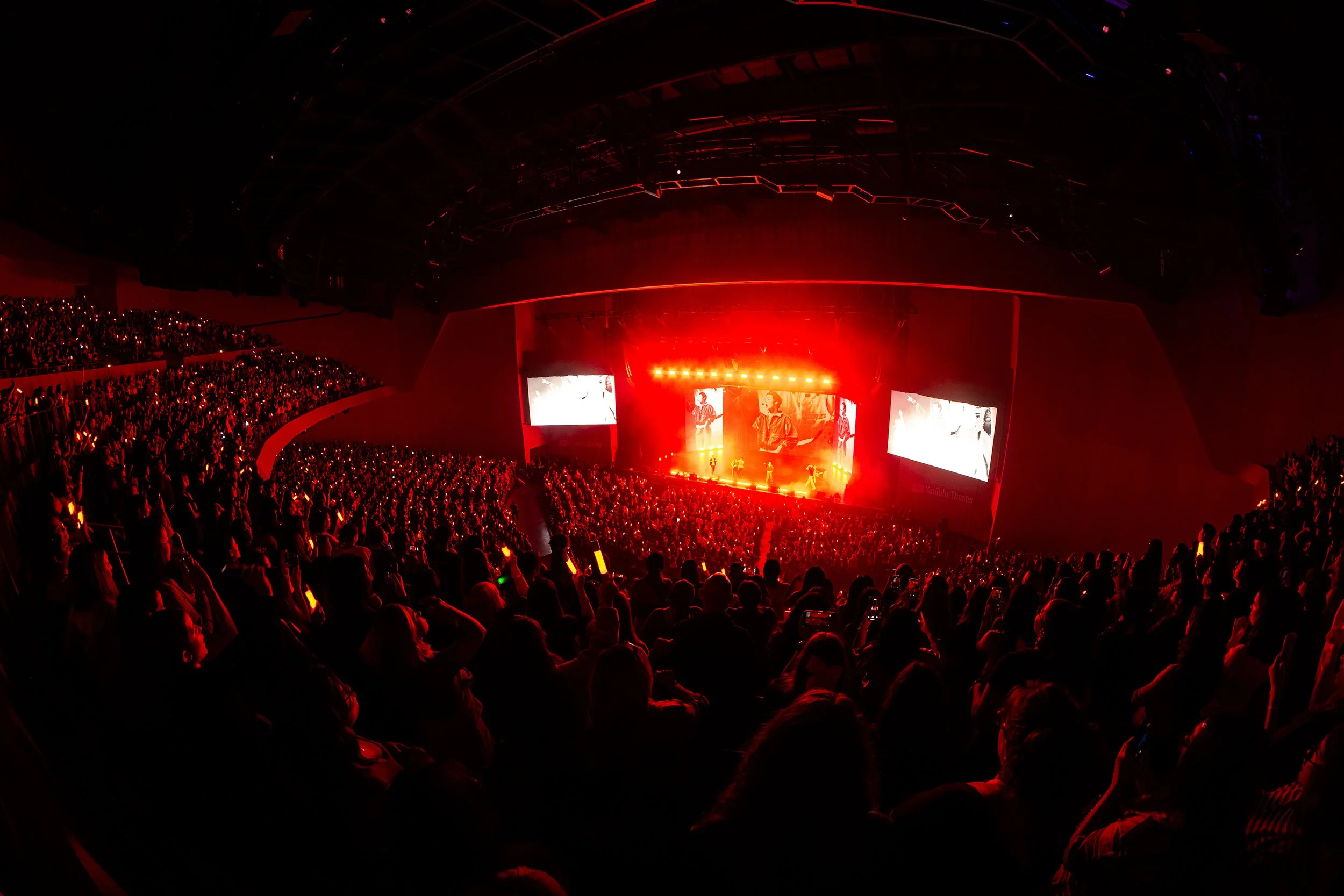
During the show's closing speeches, James reflected on that history, remembering the city's role in the group's earliest creative moments—from writing their first lyrics to developing choreography and eventually creating the album that introduced them to the world.
His words gave the night a sense of full-circle significance. Los Angeles represents exactly the kind of cultural collision that the group seems built around. It is a city where different musical traditions constantly overlap, where hip-hop, pop, electronic music and countless global influences exist alongside one another. Their sound and identity fit comfortably inside that environment without feeling like an attempt to imitate it.
That distinction is crucial. Cortis does not feel like a group trying to become Western. They feel like a group that grew up in a K-pop system while absorbing a world that extends far beyond it.
And that could be the blueprint for the next era of the genre. The most exciting thing about them is not necessarily what they are doing today. It is how much room there is for them to grow.
James and Martin already entered the industry with considerable creative experience, having contributed to music and choreography for other major K-pop artists before the group's debut. But the group does not feel like a collection of industry résumés assembled into a supergroup. Their appeal comes from how naturally the five members function together.
They are young enough to still be experimenting, but experienced enough to understand the mechanics of performance. They are polished without appearing manufactured. They are ambitious without taking themselves too seriously. And perhaps most importantly, they seem to actually enjoy being onstage.
Keonho's presence made that especially apparent. After suffering fractures to both pinkies following a fall, he was unable to participate fully in some of the choreography and spent portions of the performance seated on the couch. But rather than disappearing from the show, he remained engaged—singing, moving along with the others and maintaining his presence within the group's chemistry.
It was a small reminder that live performance is unpredictable. They did not allow the unexpected to derail the night. They adapted. That adaptability is something audiences may come to recognize as one of the defining characteristics of the group.
By the time “Joy Ride” arrived as the final song, the choice felt almost poetic. Written while driving along the Malibu coast, the song carries a personal connection to Southern California that made it an especially fitting conclusion to the Los Angeles show. After spending the evening turning YouTube Theater into a frenzy, they ended somewhere more reflective.
The party finally slowed down.But the feeling remained.
There is still a great deal of road ahead for Cortis. Their catalog will grow. Their stages will become larger. Their production will inevitably become more elaborate. The expectations surrounding them will increase as quickly as their audience does.
For now, though, there is something exciting about seeing them at this particular moment. They are still new. They are still figuring things out. They are still young enough to approach a major Los Angeles performance with the excitement of kids who cannot quite believe the room belongs to them.
And yet, when the lights come up and the music starts, they look completely at home.
That contradiction may be exactly what makes Cortis so compelling. They represent a generation of K-pop artists that does not seem interested in choosing between polished idol performance and genuine individuality. They want both. They want choreography and improvisation, precision and chaos, global pop and hip-hop, screens and real-life connection.
Most importantly, they want the audience involved.
At YouTube Theater, they did not simply perform for Los Angeles. They turned Los Angeles into part of the performance. And if this is what Cortis can accomplish less than a year into their career, the most intriguing part is not what they have already done.
It is what happens next. Because they do not feel like a group waiting for the future of K-pop to arrive.
They look like the beginning of it.





![LA3C 2023 [PHOTO GALLERY]](https://images.squarespace-cdn.com/content/v1/56c3533a37013b198dcdb996/1699938738185-D6CPQZLQPC3ECU0LJL43/IRVIN_RIVERA_ERYKAH_BADU_ABOOKOF_+%2810%29.jpg)


