AURA MAYARI ON WHY ’HERE LIES LOVE’ IS MORE THAN A PARTY
BY IRVIN RIVERA
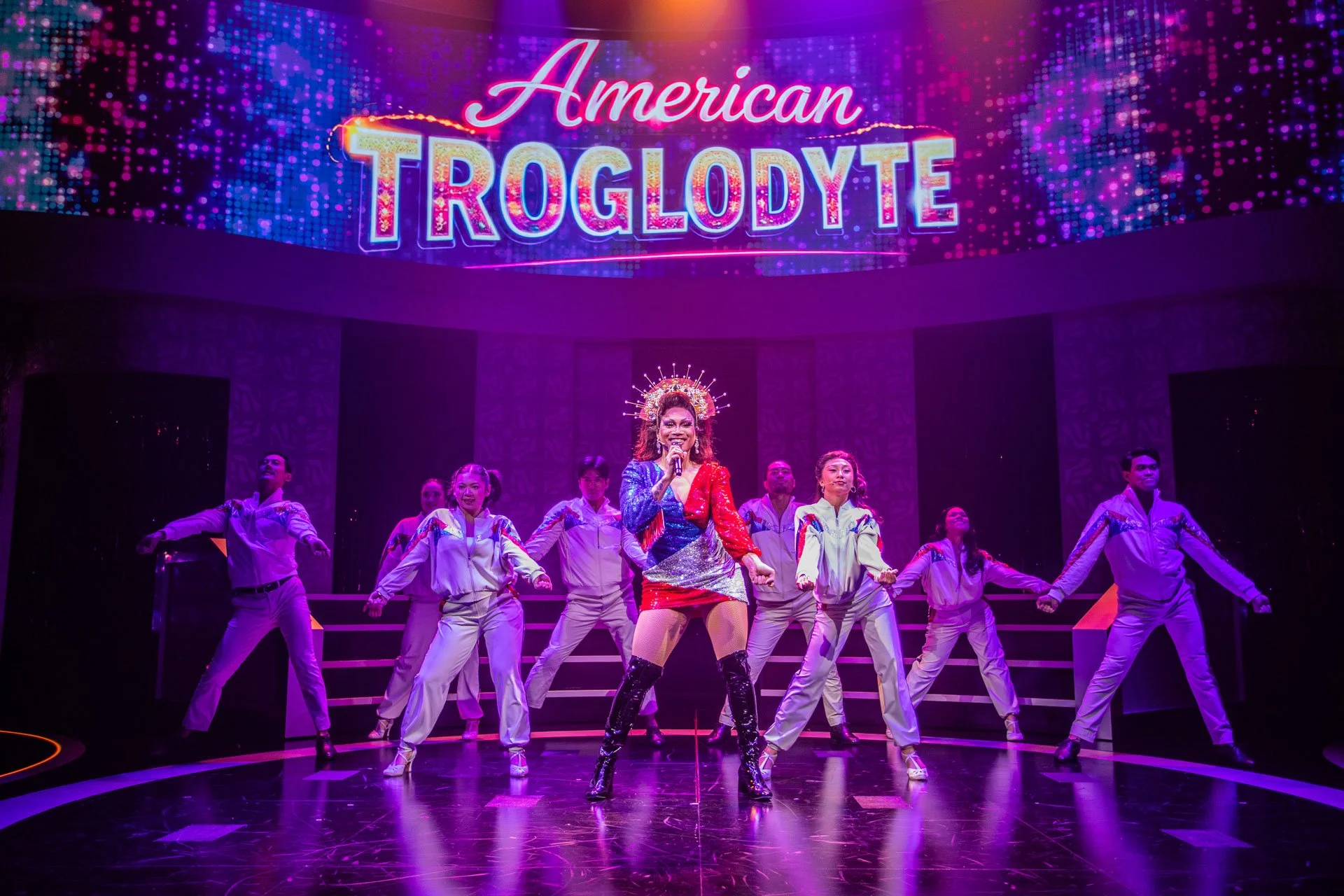
HERE LIES LOVE at the Mark Taper Forum Photo by JEFF LORCH
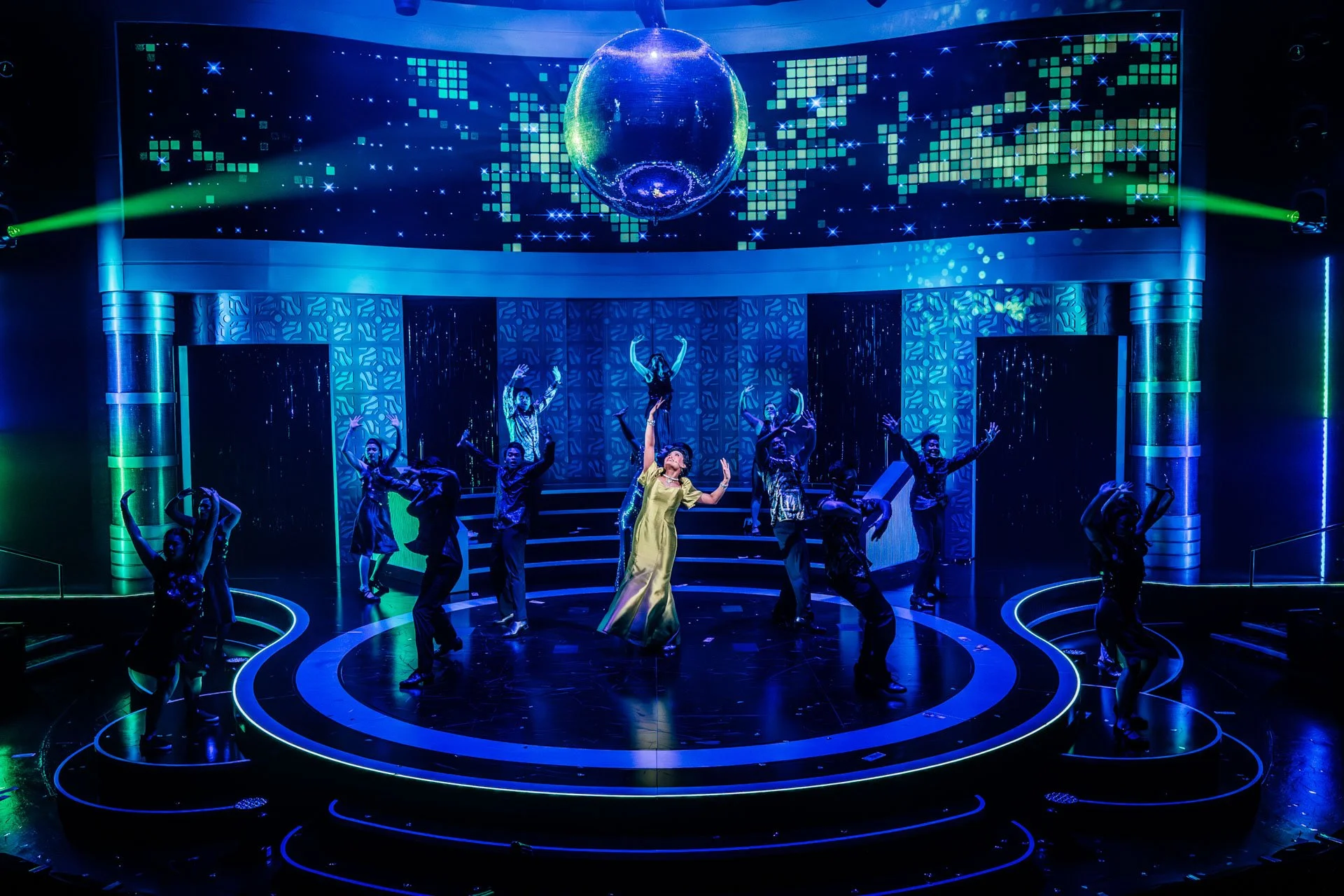
AURA MAYARI knows how to make an entrance, but what makes her turn in Here Lies Love feel so electric is what flickers underneath the sequins. In Center Theatre Group’s Mark Taper Forum staging of David Byrne and Fatboy Slim’s disco musical, directed by Snehal Desai and featuring Reanne Acasio as Imelda Marcos, Joshua Dela Cruz as Ninoy Aquino, Chris Renfro as Ferdinand Marcos, and Mayari as the newly created Imeldific, the room pulses with beauty, rhythm, and danger.
It is, as much as anything, a disco social commentary on the complicit nature of the masses when blinded by the fragmented reflections of Imelda Marcos’ disco ball of beauty, glitz, and glamour. Mayari understands that duality instinctively. She speaks about Imeldific not as a flashy add-on, but as someone who “starts out as someone who fantasizes about Imelda,” then moves “from celebratory to denial and then suddenly to awakening,” a journey that mirrors the seduction and disillusionment at the heart of the show itself.
That tension between sparkle and truth runs through Mayari’s own story, too. Long before she was commanding a Los Angeles stage in heels and full voice, she was an 11-year-old immigrant from the Philippines trying to survive suburban Chicago by sanding down her difference, hiding her Filipinoness, and learning how to blend in. What makes her so compelling now is the way she has turned that history inside out, reclaiming culture, queerness, drag, and performance as a language of presence rather than disguise.
In conversation, she is funny, thoughtful, and refreshingly unguarded, talking about drag as politics, beauty as misdirection, and the responsibility of telling a Filipino story that history once tried to bury. By the time she gets to the real nerve of Here Lies Love, she lands on the question that gives both the show and this interview their pulse: “Wait, why? Why am I cheering? And why am I clapping for her right now?”
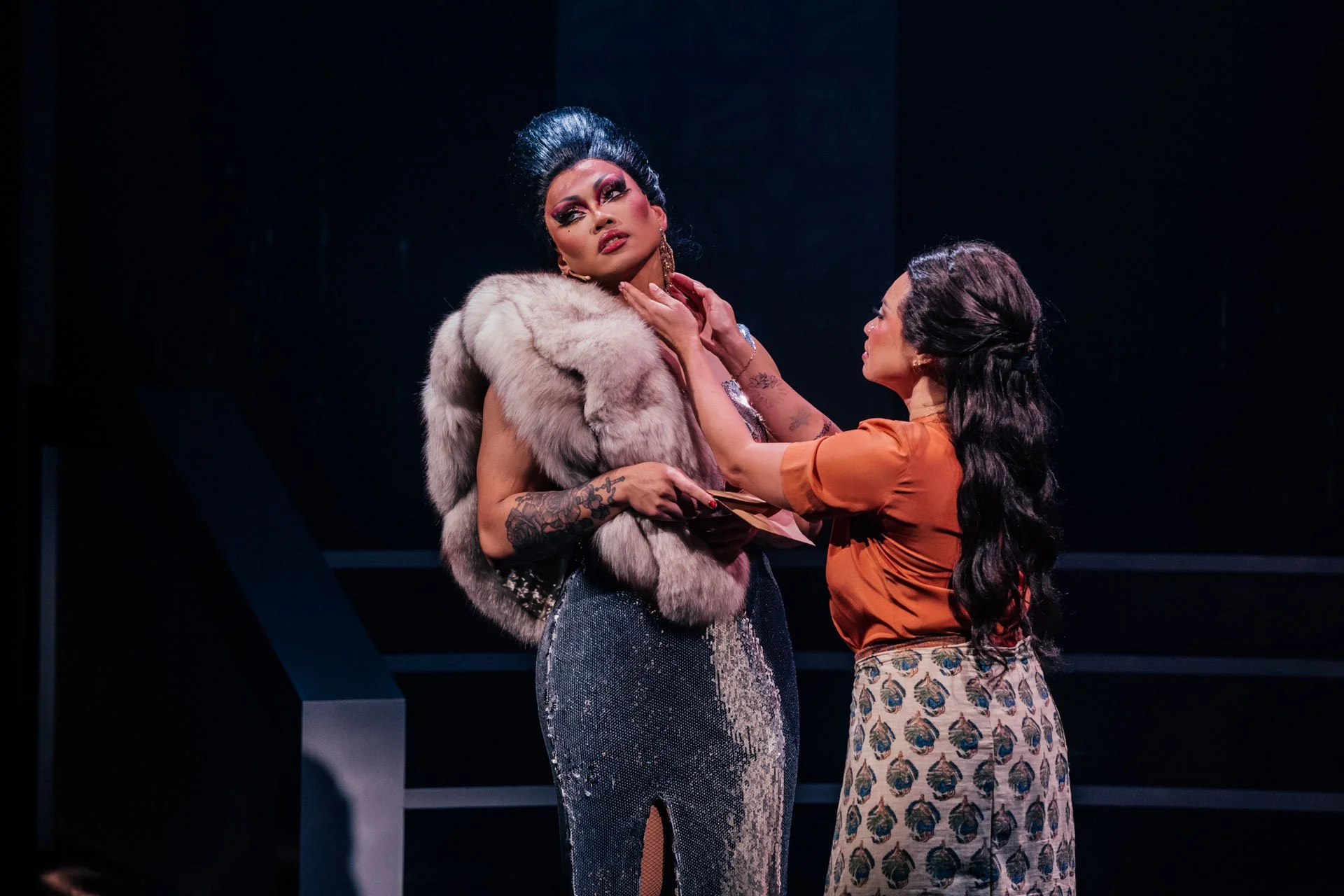
HERE LIES LOVE at the Mark Taper Forum Photo by JEFF LORCH
I saw you in your full glory as Imeldific. You did incredible.
Oh, thank you.
Let's just say I was gagged.
Hey, Have you seen the show before? Do you know anything about or did you know anything about the show prior to this one?
Well, yes, I know about the show and the music but I haven't seen the New York run. This is my first time watching the play. Years ago, when this album came out (2010), I got the album, I was actually looking for the CD. But yeah, I have the original release album so I was familiar with the music. And then they did the New York run, but unfortunately I wasn’t able to watch it. But when I heard that there will be an LA run, I got so excited. I learned about the changes, and then you as Imeldific being a huge part of it.
It's great, yeah. I mean, I've never seen the show before the auditions, I really didn't hear or know anything about the show at all. Wow. I mean, I've come across several Lea Salonga interviews, just randomly, you know, on Tiktok. And I was like, Oh, it's a Filipino show! Amazing! but never really got a chance to go to New York and actually see it in person. But when I was told about the show coming to LA, and was asked to audition for it, I was like, You know what, let's freaking do it! I mean, that sounds exciting, you know. An all FIlipino cast about a Filipino story. It's crazy,
HERE LIES LOVE at the Mark Taper Forum Photo by JEFF LORCH
And here you are doing it.
It's amazing. It's really amazing. So thank you for the time. Yeah, of course. And I want to talk a little bit more about you today and a little bit more about the show. So first off, what do you remember about arriving in the US as a kid, and how did that early sense of starting over shape the way you build confidence on stage now?
Yeah, good question. So I moved here back in 2003, and you know, like my father was an OFW (Overseas Filipino Worker), and he had been living in the US for a few years, and he kept coming back to the Philippines just to visit. And so he was able to bring us over here, to Chicago, and that was back in 2003. It was a totally crazy experience as a kid. I was 11 years old, and I didn't know what to expect, really. Back in the Philippines, English is an official language, but I wasn't fluent, you know, like I understood it, I could communicate, and I was really anxious and nervous coming into a country where the entire culture is going to be different. It was a culture shock to me. I had built so much insecurity and anxiety.
It's always been that as a kid, and growing up, I felt like I had to hide my Filipino-ness, if that makes sense. I felt like I had to really put that aside and try to be as American as possible, to blend in. That was kind of like a coping mechanism, right? You had to survive in a world where you stood out a lot, especially in the Midwest, Irvin. I didn't live on the East Coast or on the West Coast, where there are a lot of Filipinos and a big community. Back in the Midwest, in the suburbs of the Chicago land area, I was totally a minority, and so I didn't really have a lot of Filipino friends during that time, and so I felt like I was losing touch in my Filipino culture, because I was kind of just trying to blend in with my American friends and whatnot. But then I think I started to really embrace my uniqueness and being Filipino was when I went to college- when I was actually going to school for nursing. Shocking (laughs), very surprised. And I met a lot of Filipinos there. I have become so immersed in the culture again, and I feel like a big part of my life was missing. I found it through those girls I'm still friends with today. It's been, like, over a decade of friendship. And I found drag, you know, like, yeah, so the whole story about my degree and also my drag journey, being involved in theater then, but anyways, I wasn't confident enough to take on that journey in the entertainment, because I really didn't see a lot of Filipinos on the screen, and there's not a lot of representation. So I didn't go to school for that, but I did musical theater on the side, because I could with the time that I had with my nine-to-five job, but then I discovered drag when I did rent in Chicago over a decade ago, and that was my last theater production until now. And, you know, with my drag, as you know, I really tried to embrace my Filipino culture and add a lot of Filipino flair into my art.
And it's very evident how much you love your craft and how much you're rooted in our culture as Filipinos. So I really commend you for that.
I think that was also my payback to my Filipino culture, because I, you know, like as a kid, as I said earlier, I felt kind of like embarrassed, and I wanted to shove it in a closet. You know, I needed to fit in so bad when I was a kid, and thinking about it now, looking back, I was like, Why did I do that? And I got to give myself grace for it, because that's how I felt, like I had to survive in a new place.
Yeah, I mean, we have different, I guess, survival methods, coping mechanisms to be able to just thrive here in this country. And now that you're in this stage, when you step into a room, your makeup and silhouette often speak before you do. Now, how do you decide what you want the audience to understand in the first three seconds, and what do you want them to realize later, after you've already won them over?
I think drag is such a shock factor, especially in this musical. Well, not many people come to the show expecting a drag performer to start it. You know, a lot of performers love the sense of curiosity that they give to the audience. And I think the fun play about being an entertainer is that you get to play whatever it is that you want to play, and you want to convey to the audience. It's for the audience to really take in whatever message they take from it. And you know, when we talk about drag, also, like I perform certain types of numbers based on how I feel that night. I'm one of those people or entertainers who don't pick my songs until like, the last minute, because you just never know.
That's a talent though.
Is it? Or is that procrastination (laughs)
It's so funny to me because the bars would be like, hey, so what songs do you want to do? I'm like, I really don't know. I'll send you, like, five different numbers and then we'll decide on the last minute what we're gonna do.
HERE LIES LOVE at the Mark Taper Forum Photo by JEFF LORCH
That means you already know how to perform those things, and that you’re ready.
I guess so. Like, I don't like to choreograph things. I just like to come out there and like, really feel the music, really feel the audience, and whatever the audience gives me, I give it back. And so what's different with a musical production is that it's almost the same thing every night. I'm not gonna say it's repetitive, because every show is a totally different experience, but we know what we're about to perform and the blocking. We know how to, you know, you know the way around throughout the whole show. But what I love about every night is the people's responses to you the moment you come out. It's live, and anything can happen.
Like a drag show!
And, I'm not lip syncing anymore. You know, lI am singing.
You are singing live, and you sound incredible. You also danced in those high heels.
Now let's go to your character Imeldific, the host figure in Here Lies Love. How did you design the hosting energy so it feels seductive and welcoming, but still carries the show’s sharper political teeth?
Yeah, it's really interesting because, you know, in my drag persona, I'm not the most extravagant or the most flamboyant character out there, but it's really fun to play this role, because she is that, and I feel like she really represents the glitz and glamor that the Marcus's had presented themselves as back then to sell themselves to the people.
It's drag. She’s very drag, Imelda.
Yeah, and she was a drag queen, honey, you know, yes, a drag queen.
And she had her delulu moments
And I wish I really had her delusions, to be honest. That would give me some type of level of confidence that I don't know if I could ever reach, you know, like, this is a very glamorous and fabulous role. And yeah, she's a new character. She did not exist in the past productions, and it's a very challenging and very exciting process for me. But yeah, she starts out as someone who fantasizes about Imelda and someone who is very obsessed with her, and she goes through this whole emotional journey from like celebratory to denial and then suddenly to awakening, which in many ways, represents a lot of the experiences of the Filipino people during the Marcus's regime. And I feel like I (As Imeldific) represent a lot of those people then.
And the transformation of your character as well, from the beginning all the way till the end, you can kind of see how you mirror what the masses are feeling.
So it's it was really challenging to get there, but it's totally worth it and a fun process. And I don't know if you know what the word emotific means. It's a fun fact that I always tell people it's a it's actually a real term. People used to describe Imelda’s extravagant lifestyle, and so I love that they were able to use that term as my character's name.
HERE LIES LOVE at the Mark Taper Forum Photo by JEFF LORCH
Now back to the show, Here Lies Love is built like a party, but it's also built around power, myth-making, and consequence. How do you hold that tension in your body while you're literally moving people through a night out?
Isn't that a fun concept?
I love how you guys are picking people from the audience. You guys are performing around the audience. It's pretty immersive.
I think that's the challenge of the show. You come in and you see that this is a whole electric and very upbeat vibe. And sometimes you're like, What am I doing here? What is this? Why is this a celebration, rather than like, talking about the pain of the people, you know what I mean. But when we focus on the topic of complicity I think that is what our show is really telling people- and it's very timely in relation to today's events.
One hundred percent.
It's very timely to what's happening right now to the world. If you look around us, a lot of people are in the small talks like, What am I what are we going to do? We know this is terrible. Whatever's happening right now, you know what's going on. We can see it in the streets, people being kidnapped and taken in but all we're doing right now is a lot of whispering.
You know what I mean? Like talking to our friends and talking to our family members, saying, I think this is bad. But what are we doing? It's complicity and complacency. And I feel like that's a big theme in Here Lies Love as we take you into that journey. In the beginning, it's all about the glitz and the glamor, where you're cheering for me, and you cheer when I say, “Welcome Imelda Marcos,” and we're all having a great time. But if you really sit down and take a quick breath, and really think about it, and sit there and think to yourself, Wait, why? Why am I cheering? And why am I clapping for her right now?
HERE LIES LOVE at the Mark Taper Forum Photo by JEFF LORCH
Do you think there's like, a kind of pressure that comes with telling a Filipino story on a major Los Angeles stage, especially one that touches on real trauma. How do you and the cast talk about responsibility without letting fear flatten your joy of performing right?
I think it is a very sensitive topic. I know that, and you know, we were prepared to get some other opinions about the show and what we're doing, but we believe in the art of storytelling, and I think we're telling a really good part of the history here that a lot of people don't know about, whether you're Filipino or not. In my generation, our parents really didn't talk about the 60s, 70s, 80s, and what really happened then. I learned a lot about our history while doing the show. My father already passed away, and he was actually part of the People Power Revolution, and he didn't tell me anything about his experiences then. But, you know, yes, I know that it's a very sensitive topic, and I think what motivates us is the fact that we are telling real stories, and the history that the administration from the past tried to erase, and what we're trying to do now is pass along that knowledge we have learned through the arts, and hoping that people have the open mind to come in and learn about their own history. And also, hey, enjoy a show. I know it's a very electric and very entertaining show. But at the end of the day, it asks some very important questions about history, and it shows that history can repeat itself.
You know, it always does. Was there a moment, like during rehearsal, that genuinely shook you, like history stopped being material and became more personal to you?
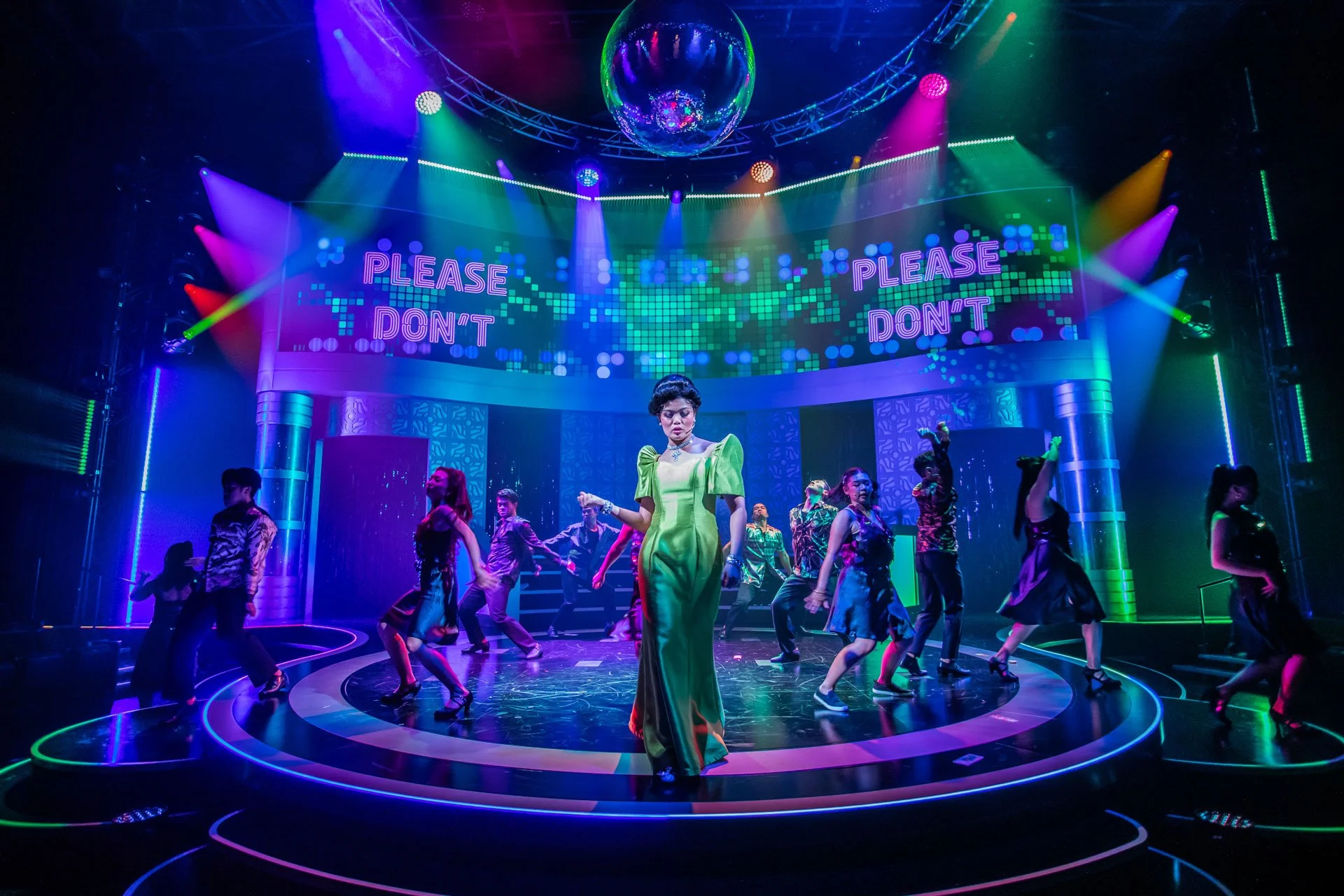
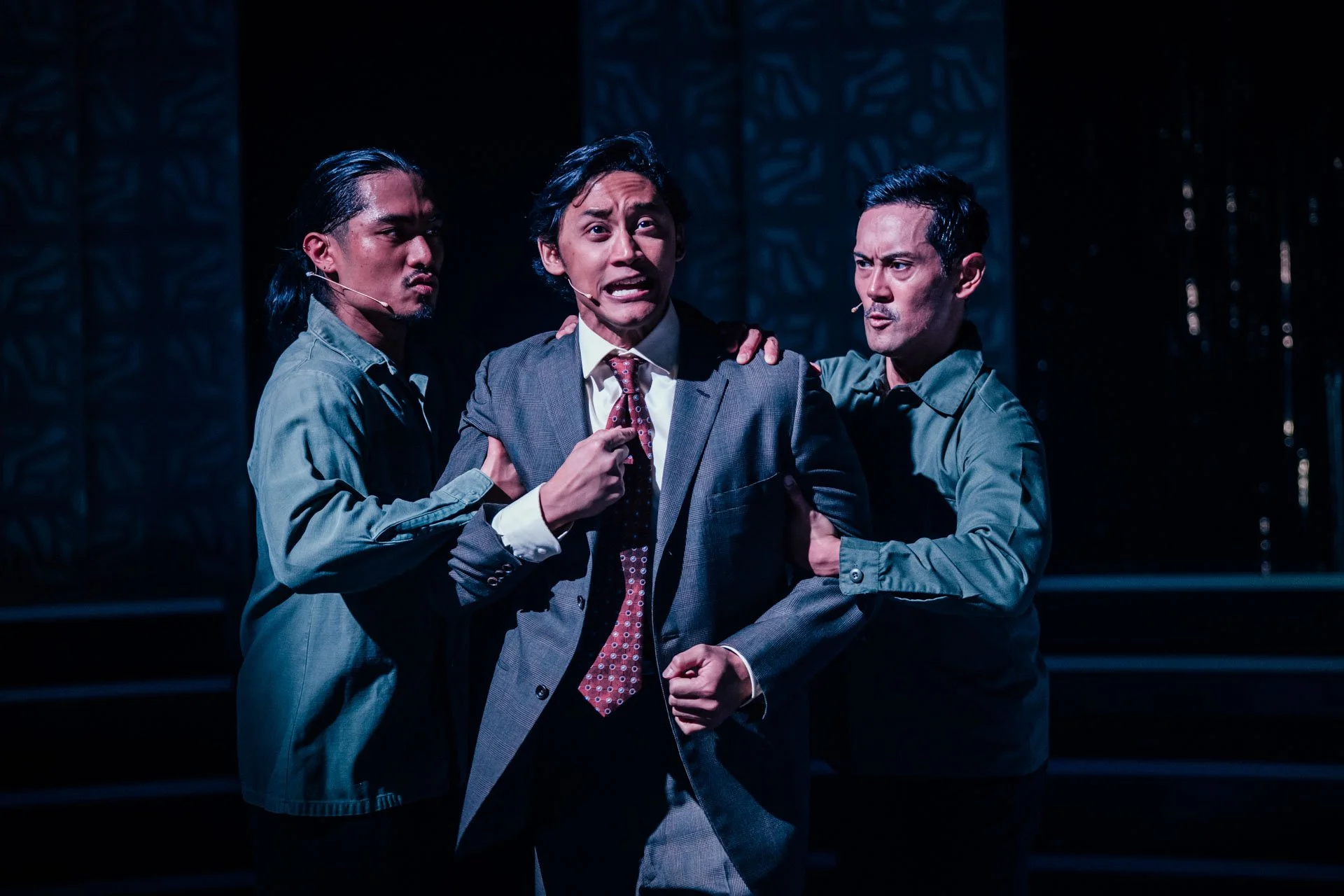
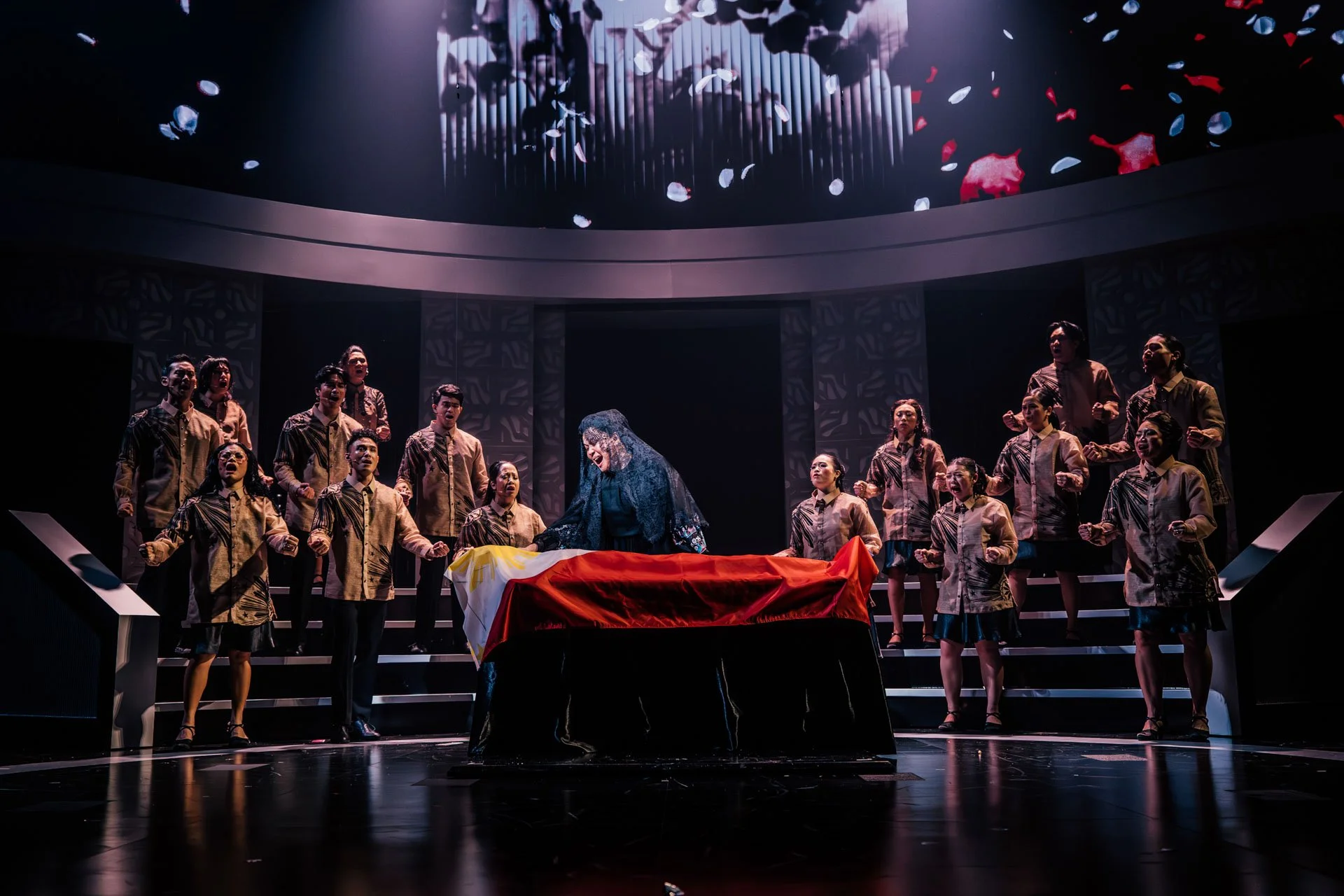
I think there's a lot of moments. I would say obviously would be Ninoy Aquino's assassination. But I've, I've always known that, you know, and that was one of those things that was always told and passed down in stories. But if I wanted to pick something else other than that, I think the song, Please Don't, I don't know if you remember the scene when there's a whole party on stage, NInoy Aquino is being interviewed about the atrocities that's just happened. People died, and there's the bombings and riots, and then there's Estrella on the other side, which is imelda's childhood friend and nanny, and they were being interviewed by the media, and they were talking about the truth that has happened, and the terrible things that happened because of the Marcoses and me, Imelda and the rest of the cast are on stage just trying to distract the audience from listening. And that really struck a chord, because it did happen. You know, a lot of things were happening. People were lost, people were never found, people died, and there were these riots and stuff like that. But the Marcoses had done some what's the word?
Unimaginable things.
Yeah, basically, but they did try to mask it with beauty, right? We talked about it a lot in the show. And they think that beauty would solve every Filipino's problems.
It's not about feeding the people. It's not about giving people jobs. It's the front of having a beautiful country. And that's why they wanted to build things rather than help the people. And so that scene, I think, was very eerie to me, even though I'm on stage dancing around, but right at the back of my mind, I'm like, this is, you know, it's pretty fucked up.
It's like, when art imitates life and vice versa. So, yeah, yes, aura, you've spoken up publicly about anti-drag laws, and what it feels like to live and perform under that kind of scrutiny. How has activism changed your artistry, not just your opinions, but your actual choices in movement, in your voice, and risk?
To be honest with you, I don't think it has changed that much, because I feel like drag has always been political. To me, the origin of drag is really going against the norm, going against the grain, and one of the reasons why I started drag is because of my own fight for my own rights. You know, I found that, like, accepting myself through my own artistry was the first step, and then I learned that it is such a big tool for being a voice for people who can't have a voice, who aren't confident enough, or don't have the right tools. And, you know, back in I think, 2023 when the ban was happening, it really, you know, fired up my ass. At every single venue I went to, I spoke out against the administration or whatever was happening in the southern states. And you know, a lot of it is just distractions, because they don't know what to do anymore, because we've won a lot, and right in our society, we've gotten gay marriage, we've gotten this and that, and they just didn't know what else to do anymore. And they said, so hey, let's do something with these drag queens.
To answer that question, how has it changed? I think just being more outspoken, I know, you know, some bars don't want to be too political, but I don't care. I'm going to speak out. Once you give me a microphone, I've got to say something. I feel like it's my duty. You know what I mean?
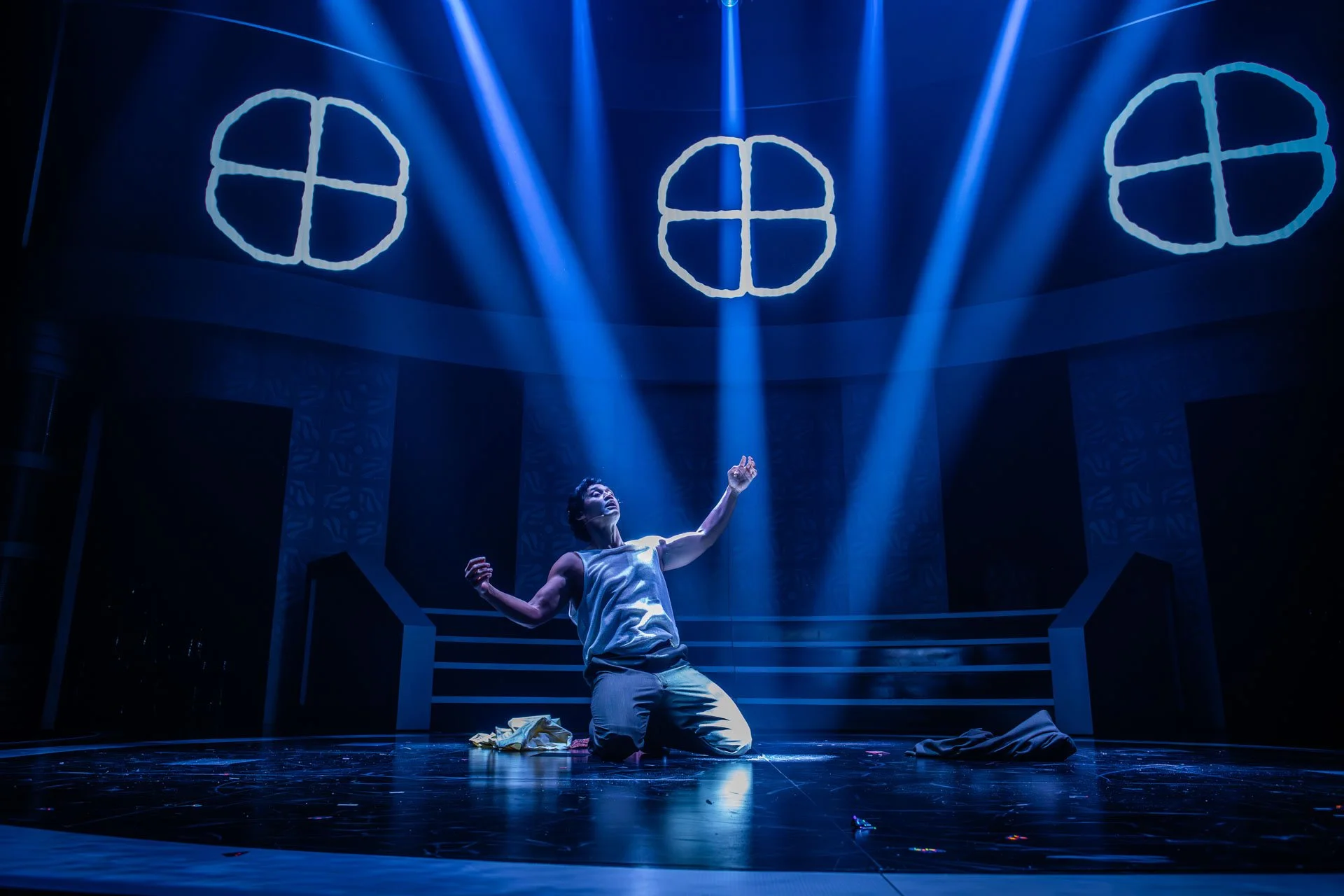
HERE LIES LOVE at the Mark Taper Forum Photo by JEFF LORCH
Use that voice. Use that throat chakra, as they say.
Final question. If you were a book, what book would you be and why?
Okay, well, based on the books that I read, I don't know if you've read The Butterfly Garden. And anyway, I love reading about very interesting dark books. And okay, like I have a very interesting, dark internal persona that a lot of people don't know about. And so I think it would be something like that, exploring, exploring something that looks polished and beautiful outside. But if you dive deep and read through the book, you get to experience the journey that person is actually experiencing, and you can build a front. I don't know what the name of that book is, but I think that would be the story. You have to peel it to go through its layers, right?