LINE OF FIRE'S TOMMY O'BRIEN: SAME NAME, DIFFERENT STORY
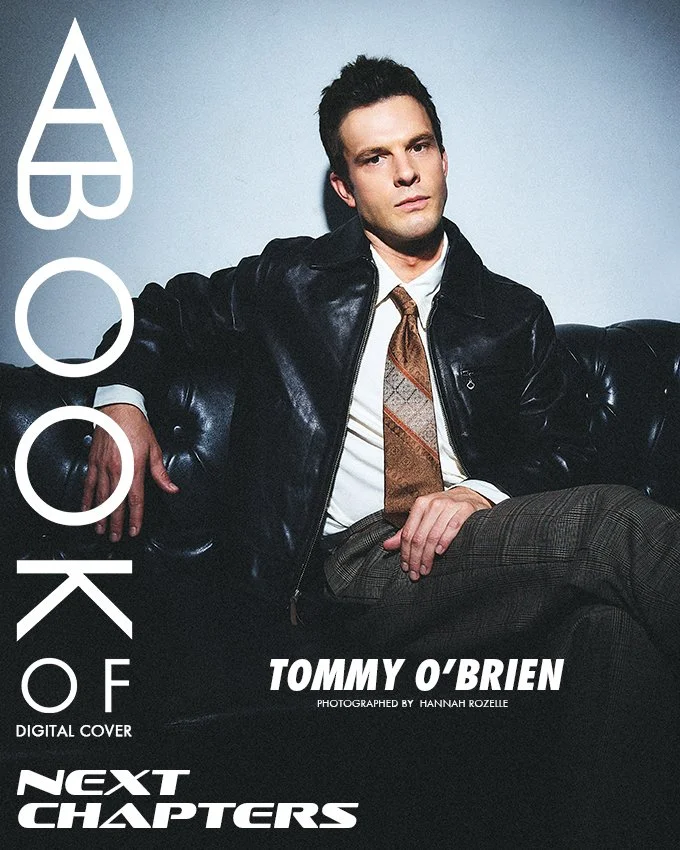
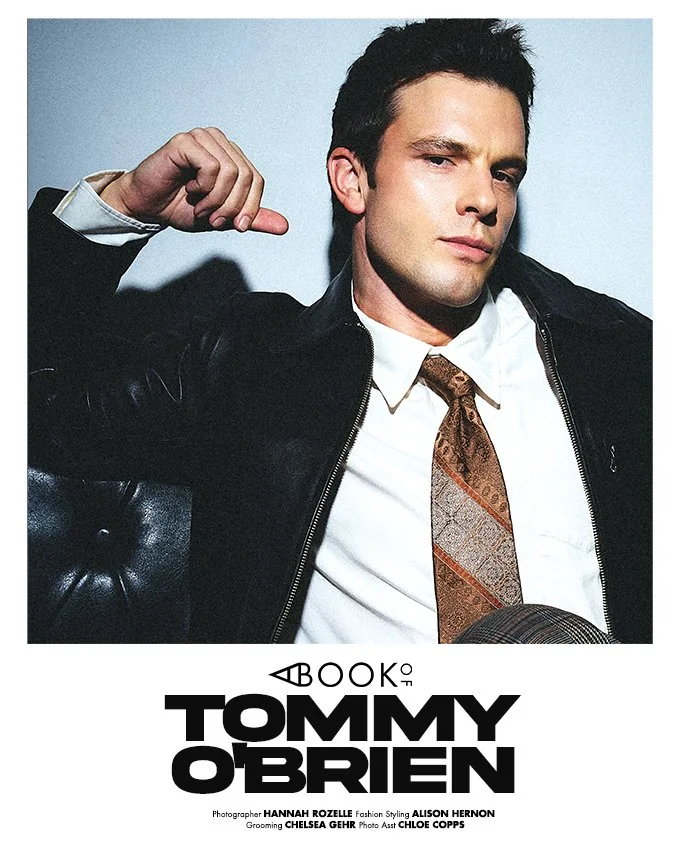
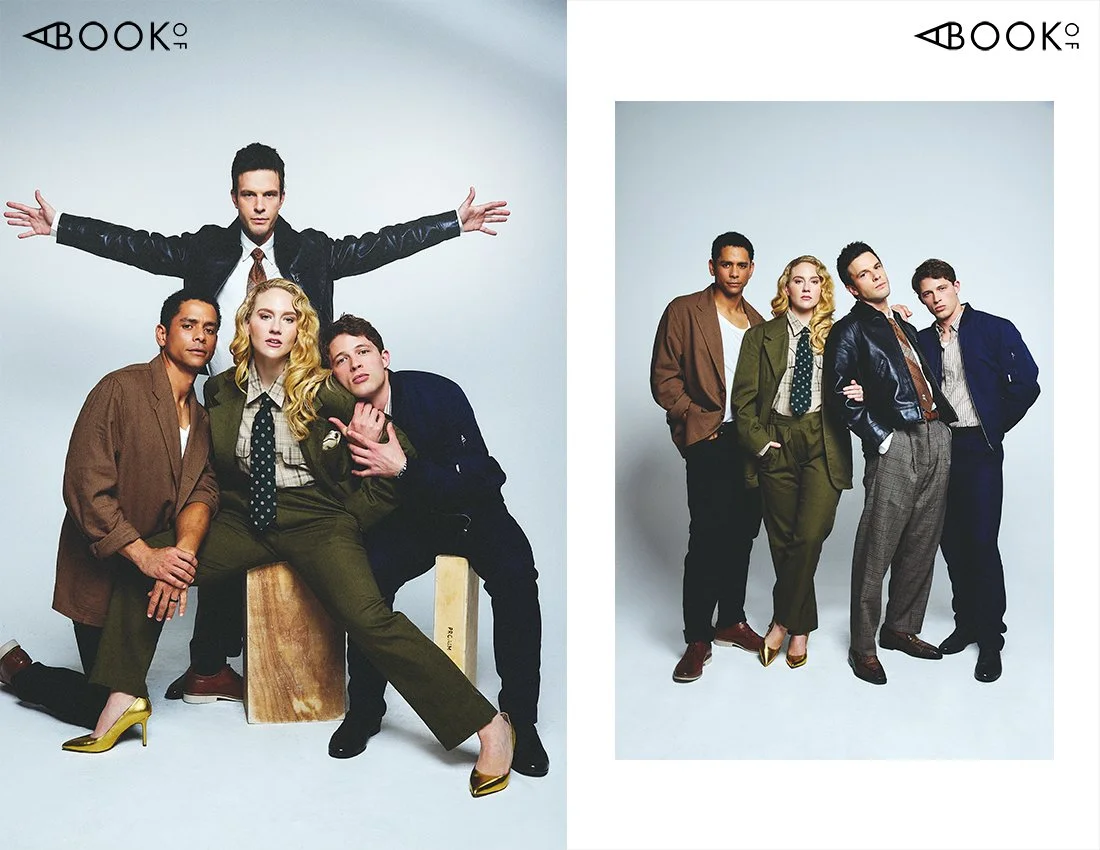
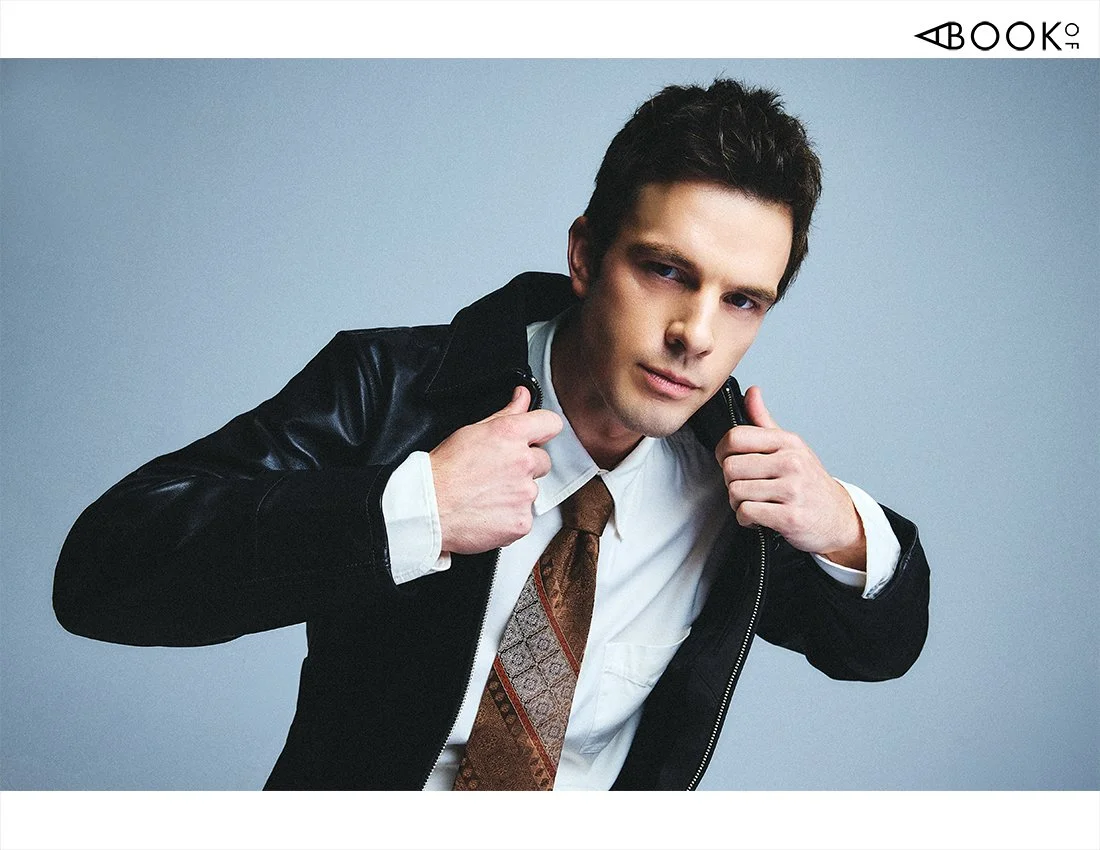
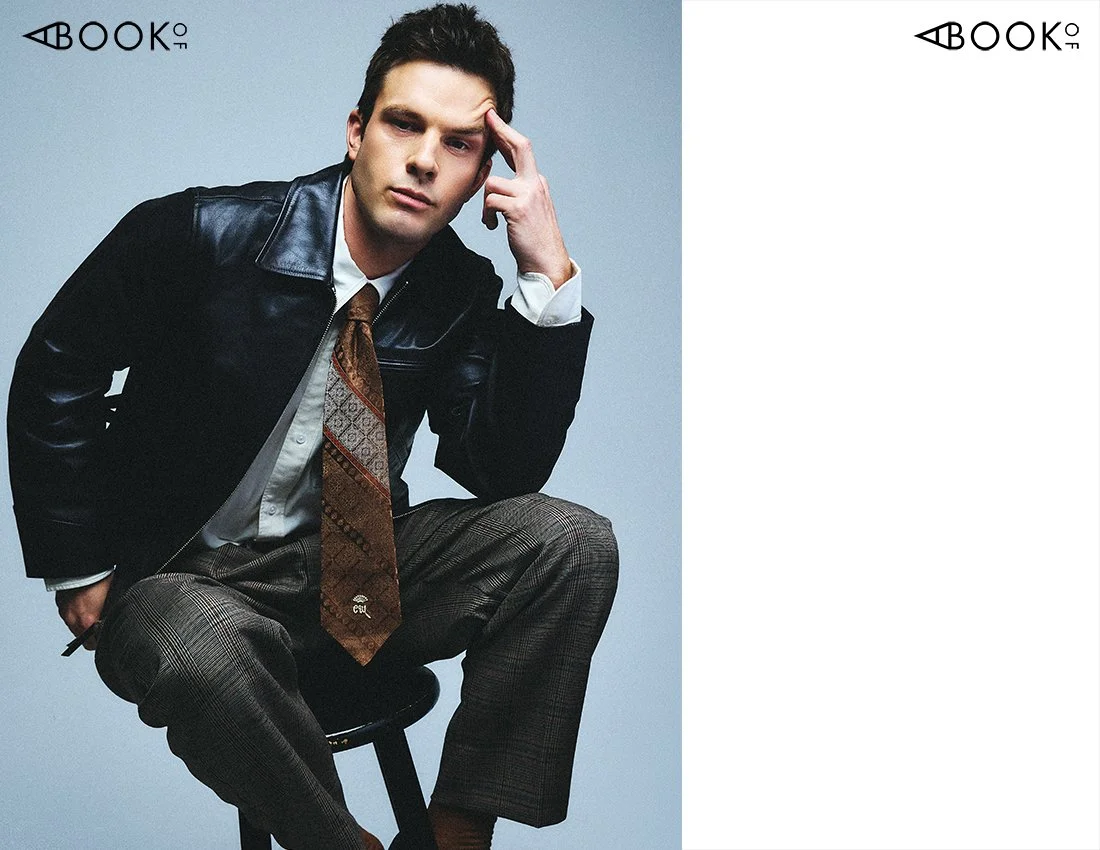
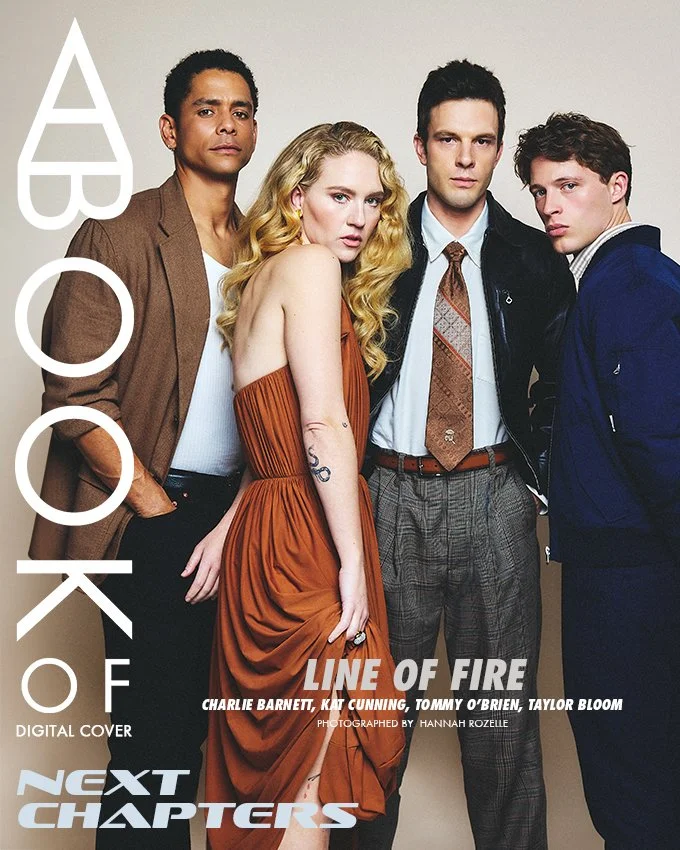
Photographer: HANNAH ROZELLE, Styling: ALLISON HERNON @ EXCLUSIVE ARTISTS, Grooming: CHELSEA GEHR for EXCLUSIVE ARTISTS Photo Asst: CHLOE COPPS, Art Director, Producer: PHIL LIMPRASERTWONG
TOMMY O’BRIEN once found himself driving through the South Australian night with no hotel room, a warning about kangaroos, and a movie still needing to be made. Eventually, he and his friends found shelter in Quorn, a dusty little town whose buildings had doubled as film sets, then picked up their cameras again the next morning. It's a fitting scene from the making of Road to Perth for an actor who has learned that the best adventures rarely come with a detailed itinerary. Growing up in Kennewick, Washington, O'Brien didn't discover theater until his senior year of high school, when curiosity finally got the better of fear. What followed were years of independent filmmaking, odd production jobs, and learning the craft from every possible angle, including taking out the trash between shoots. Now starring as Secret Service agent Mike "Micah" Hollingsworth Jr. in NBC's Line of Fire, alongside Peter Krause and Hope Davis, O'Brien plays a young man whose greatest challenge isn't necessarily protecting the people around him, but discovering who he is outside his father's shadow.
It's a tension O'Brien understands more personally than one might expect. Like Micah, he comes from a line of men who share the same name, carrying both admiration for the generations before him and an instinct to carve out something distinctly his own. But where Micah struggles to reconcile approval with independence, O'Brien has discovered that growing into yourself requires knowing when to let go, especially of the need to prove something. In this candid conversation with A BOOK OF, he reflects on the lessons hidden inside creative chaos, the unexpected tenderness of father-son relationships, and the freedom of working alongside actors he once admired from afar. Despite the bigger sets and higher stakes, his approach remains wonderfully grounded: making something meaningful should still feel like making something with friends. And when ambition threatens to become too serious, he returns to a simple philosophy: "Drop your ego, just have fun with it, and go for the ride."
You grew up in Kennewick, and you've said that theater wasn't really on your radar until your senior year of high school. You were frightened by it, but curious enough to try. How has that relationship between fear and curiosity changed for you? When something scares you creatively now, do you still take that as a reason to move toward it?
I think my relationship with fear has shifted from being something to avoid to more of a compass of what I need to overcome and probably an indicator of the direction I should head. I ignored that inner voice for a long time, and I trust it more than ever now. Everything I’m proud of now is on the other side of what I didn’t know if I was capable of beforehand, in every aspect of my life.
You've talked about wanting to make something in Eastern Washington because you don't see enough of that landscape or those communities onscreen. When you left Kennewick and entered an industry with very specific ideas about what is culturally interesting, how did you learn that where you came from was worth carrying with you rather than something you had to outgrow?
I don’t really think you outgrow where you come from. It’s always part of you and I have nothing but love for that landscape and the people who raised me. I have to go back there when I can or I get thrown off center a bit. I also know I needed to get out and expand my experience and worldview and certainly did. Not everybody gets the chance to do that.
I’d love to go back and make something at some point. I do think more rural communities at large would value seeing work that reflects their lives with relatability, empathy, and insight rather than a broad-stroke critique, cliché, or agenda. Chloé Zhao’s The Rider, for example, achieves that really well through gentle observation and reflection.
You've advised young performers to "pick up a camera," which makes sense when you look at something like Road to Perth. You weren't simply waiting for someone to cast you. You were acting, producing, and helping shape the story as you crossed Australia. How did making something with so little infrastructure change the way you behave now when you walk onto a production with hundreds of people and an entire network behind it?
Absolutely pick up a camera. Especially today. My entire experience before getting repped was through helping make films like Road to Perth or short films with my friends for fun. Most of the time we were just figuring it out as we went. Over time, I think the creative community I came up with in LA all got incredibly competent through just making things all the time. Actors, writer-directors, producers, DPs. It’s so fun to see a lot of them start to pop off as we get older. My friends are some of the most annoyingly talented people I know.
I worked in production for years as a PA, studio page, studio manager, coordinator, producer, a bit of wardrobe, and a lot of taking out trash. I could make a crafty spread that would change your life. I remember wrapping on Weird one day and literally jumping on trash from a shoot to pack it down inside of a huge garbage can the next day. It was amazing, and I owe a lot to the people who kept me employed over the years, who know who they are. I learned so much.
Working on a network show certainly feels high stakes in many ways I haven’t experienced, but when everything is stripped down in a community as we have on Line of Fire, it really just feels like I’m still making something for fun with my friends. Your face is just advertised on a bus instead of a one-sheet in your buddy’s living room.
That film was built in an unusually exposed way. You were traveling, improvising, making creative decisions as you went, and sometimes disagreeing about where the story should go. What was the hardest moment in that process? And what did it teach you about collaboration that you still carry onto a set today?
The craziest moment to me was one night when we were driving through South Australia without a hotel. The locals warned us that kangaroos have an affinity for jumping directly in front of your car at night, even more so than deer, so we had to drive inland slowly until we came across this dusty and seemingly vacant town that resembled an old western movie set. We pulled up to the one building with a light on, which, I kid you not, was actually connected to a production office with a B&B situation in the town of Quorn, where many of the buildings were facades that had been used for filming in South Australia. They let us crash there, and we filmed at a few locations around town the next day.
Making that movie with Chad and Hannah really just sparked the kid inside me that loves the creative process and the hilarity that often comes with it. Whenever I get in my head or start taking things too seriously, I remember that a lot of good can come from stumbling your way through it without worrying about how it's going to turn out. Drop your ego, just have fun with it, and go for the ride.
Now you're playing a man whose path appears to have been drawn before he ever chose it. Micah has his father's name, his father's profession, and, to some degree, his father's idea of what a man should become. How do you play someone who genuinely admires the person he's trying not to become?
The more Pete and I have gotten to flesh this out on screen, the more I think Micah’s concern is less about avoiding becoming his dad and more about wanting his dad to see him and approve of him as he is. I think both of them want to be seen and respected by one another, which causes a lot of friction when that doesn’t happen.
I’m also named after my dad, who was named after his dad, so while it's not a one-to-one, I get it. I very much wanted to be like my dad and grandpa in a lot of ways growing up and still do, but I also had a deep knowingness that I was cut from a different cloth and knew I needed to explore my individuality apart from that.
I’m excited to see what Micah will be tasked with in the coming episodes, as I think he is coming face-to-face with the reality that his development is completely his responsibility. That might not be as easy of a path as he thinks it is.
You recently said that getting older has given you more affection and understanding for your own parents because adulthood makes you realize they were navigating life for the first time too. Has playing a son opposite Peter Krause changed how you think about the moment we stop seeing our parents purely as parents and start seeing them as people?
I can’t imagine a better TV dad to work with for that reason. He’s available, genuine, and playful in a way that really demystifies any hierarchy on set. He’s an easy guy to look up to for many reasons, but is really there to engage with people and the work. He’s also a real-life dad, and I admire how much he clearly cherishes being one.
Pete’s also an inch or so taller than me, so unfortunately I have to look up to him every day against my will.
Micah's rebellion is interesting because it isn't really rebellion in the obvious sense. He joined the same institution as his father. He wants his father's respect. Yet he's also secretly doing something that could destroy that trust. How do you approach a character who wants approval and freedom at exactly the same time?
I think that duality comes back to Micah’s desire to be seen as a competent individual, both within the family and in the workplace. Living under someone’s expectations for you in any sense can feel claustrophobic, so any rebellion comes out of an impulse to break free from that surveillance. In certain moments, I also think he just loves a little chaos and can’t help himself.
The relationship with Sydney isn't simply forbidden romance. Micah is trained to protect someone whose presence is supposed to represent responsibility, protocol, and distance, yet she becomes the person with whom he seems most emotionally exposed. How do you play intimacy when the very act of being intimate is also a professional betrayal?
That cracks open an insight into Micah’s internal landscape that we’ll see more of as the show progresses. On the outside, his behavior is totally out of line, irresponsible, and dangerous, but it comes from the desire to earnestly connect with Sydney. Even when we see him have conflict with and rebel against his dad, at the end of the day he just wants approval. Those layers are fun to play because he’s actually incredibly vulnerable at the center.
You described yourself recently as someone who processes things inwardly, while Micah throws almost everything outward. Rather than asking what you have in common with him, I'm curious about the reverse. How has playing someone more impulsive, louder, and less guarded given you permission to explore parts of yourself that you might normally keep under control?
It’s been a challenge, but a fun one. Not to get actor-y, but since some of that bravado calls for a different physicality than mine, I did have to go into the toolbox a bit and have a trajectory of where I’d like to take it should things progress. I like the permission and think I needed it to find those parts in myself. I might never go back, baby.
Your earlier career involved walking into established shows like Grey's Anatomy, Unbelievable, Stumptown, Shameless and grown-ish, often needing to make a character register within limited screen time. Now you have the opposite challenge. You're building Micah over an entire season. How has having more time changed your instincts as an actor? Have you had to learn not to reveal everything at once?
It’s hard being a day player, and honestly, sometimes more of a challenge than having the luxury of time to prep a character and get your sea legs settled on set over the course of a series. Those roles helped me learn how to be a gun for hire in a way, to understand it’s really not about you, it’s about pushing the story forward and being effective and efficient, which I continue to work on.
Network TV production moves fast, and in this case, we don’t really know where our character arcs are specifically headed before we get the scripts, which in most cases is a week or so in advance. That’s a challenging but super fun way of working in my opinion. You get the chance to work on character details, focus on being present with your castmates who are in the same boat, and take the story in as it comes. It requires a level of letting go that has actually been quite enjoyable for me.
There is an interesting parallel between you and Micah right now. He's trying to establish himself outside the shadow of someone already accomplished, while you're stepping into a series alongside actors like Peter Krause and Hope Davis at a very different stage of their careers. How do you learn from people with that much experience without letting admiration make you smaller in the room?
I have so much admiration for Pete and Hope, as well as many other actors I’ve worked with that I’d previously been a fan of. It still throws me at times, but at the end of the day, you’re playing in a band. It doesn’t do anyone or any story any good to play too small or too big. It’s our job to play together. It’s taken me a long time to trust that. The best actors I’ve worked with lift you up to play at their level and that’s what I’ve experienced working with those two. They’re just the best.
Early in your career, your advice was to pick up a camera rather than wait for permission. Now more doors are opening, and more people are inviting you into rooms. How do you make sure that being chosen doesn't make you forget the person who learned how to choose himself?
I’m all good on that front. I had to choose myself in many non-career ways before landing this job and would have never been in a place to handle it had I not learned how to do so. I’m very grateful I did and have good systems and loved ones in place to hold me accountable to that. This is all surplus to the simplicity of my daily life now and if a lucky hand in the industry falls out, you’ll still probably find me trying to make something again somewhere just for the hell of it.
I’d also like to think my life’s purpose is not limited to having my face on a screen. I’ve found a lot of fulfillment outside of this line of work as well.
And lastly, if you were a book, what book would you be, and why?
The green, tattered-up copy of Peter Pan my friend gave me in college. Somehow it’s still holding itself together.